On 7 April 2020 in the Ecuadorian Amazon, the Napo and Coca rivers flowed dark with oil and fuel.

The spill, caused by three ruptured pipelines, triggered the worst environmental disaster to hit Ecuador in the past 15 years. Some 15,000 gallons of oil and fuel spilled into the rivers, affecting 35,000 people directly and more than 120,000 indirectly, many of them Kichwa Indigenous people from 105 communities.

“We can see oil coming down the riverbed, help us report what is happening,” Olger Gallo, president of the Kichwa community of Panduyaku, told me at the time.

“The young people went out fishing in the early morning and when they returned their bodies were covered in oil. We need urgent help,” he added.

The Ecuadorian government did not immediately admit what had happened and it took several hours for it to be made official, but through our own reporting, we already knew about the oil spill in detail. Testimonies from community members allowed us to spread the word and the story was picked up by national media via our digital platforms.

Months earlier, several human-rights organizations had warned the government about a sinkhole in the San Rafael waterfall, in the upper basin of the Coca River, but their voices were given short shrift.

Experts had warned this erosion could occur on multiple occasions during the construction of the Coca Codo Sinclair hydroelectric dam. “We had been telling the Ecuadorian government that it could bring us these problems, but the government never listens to us and now here are the consequences. Now let the president tell us who is going to answer for what happened, especially when we are living through this pandemic,” said Gallo, who watched with frustration as the disaster affected the community.

by Roger D. Harris / April 26th, 2021

The US role in the defeat of leftist Andrés Arauz in Ecuador’s presidential contest on April 11 was not overt because it did not need to be, according to a high-ranking Latin American diplomat. We met with the diplomat and others on an official election observation delegation with CODEPINK. Names of some sources remain anonymous due to a hostile political environment towards progressives.

This setback for the Citizens Revolution movement, founded by Rafael Correa, will have profound implications for Ecuador and beyond, fortifying the US-allied reactionary bloc in Latin America.

Former President Correa left office with a 60% approval rating. He had been twice elected president on the first round; unprecedented for Ecuador, which had a turnover of seven presidents in the previous decade. His Alianza País party had won fourteen elections, reflecting the popularity of their wealth redistributive programs, including reducing extreme poverty in half.

His chosen successor, Lenín Moreno, will exit on May 24 with a single-digit approval rating. Much happened in the ensuing four years. Correa went from being the most popular democratically elected president in the country’s history to having his party rejected by an electoral majority.

¿Qué pasó? – What happened?

In 2017, Correa had campaigned for his former vice president to carry on their Citizens Revolution. However, once in office, sitting President Moreno turned sharply right against his former colleagues, employing lawfare to decapitate the leadership of the Citizens Revolution. His own vice-president, Jorge Glas, is now in prison and other top officials have been forced to flee Ecuador. Correa, accused of using “psychic influence,” was convicted in absentia in an evidence-weak corruption trial that prevented him from returning to Ecuador.

According to Correa’s attorney, Fausto Jarrín, Moreno was assisted by the US in this legal dismantling of his own party. Casting pretenses aside, Moreno was in Washington on the day of the first round of the Ecuadorian presidential elections. Just before the second round, Moreno and his top officials flew to the Galapagos to meet with the US ambassador.

Moreno handed the shop over to the US.  He revoked Julian Assange’s Ecuadorian citizenship, allowing Assange to be arrested in the UK. He recognized Juan Guaidó’s bogus claim to the presidency of Venezuela. After US Vice President Pence visited Ecuador, the FBI was welcomed back. Even a US military base in the Galapagos (part of Ecuador) was gifted to Washington.

Moreno expelled the Cuban doctors and withdrew from key regional alliances: UNASUR, CELAC, and ALBA. At a time of COVID, these actions had lethal consequences. Had Ecuador instead maintained its membership in the regional organizations, their collective power could have been used to obtain vaccines and other resources to fight the pandemic.

Moreno imposed an IMF austerity package on Ecuador, only to be partly withdrawn in the face of a massive indigenous-led protest in October 2019. Then under the cover of the presidential election campaign and pandemic, Moreno reinstated the unpopular measures.

The turncoat Moreno adopted a full-throated neoliberal program and is scrambling to enact additional “economic reforms” before his term is over to prevent the next administration from “putting the toothpaste back in the tube.” But he needn’t worry. Incoming President Guillermo Lasso not only shares the same neoliberal program, but members of Lasso’s right wing political party collaborated with Moreno in the National Assembly.

This has been a brilliant strategy for the right. Ecuador is in economic crisis with the impacts of austerity measures exacerbated by the pandemic. By putting in place a full neoliberal program before leaving office, Moreno spares Lasso the onus of the unpopular measures while serving international finance represented by Lasso and the US.

Lawfare used to rig the electoral playing field

Ecuador’s electoral authority, the CNE, did not recognize the Arauz campaign until December for a February 7 first-round election. Arauz, who was sick with COVID in December, had spent the last four months battling for party certification while the other campaigns were gaining momentum.

Unlike their rich banker opponent, the Arauz campaign was strapped for funds to build an on-the-ground campaign infrastructure. More importantly, lawfare measures prevented them from even using their party’s name, forcing them to cobble together UNES as their new party.

Further, Correa with his considerable name recognition and popularity was banned from running as Arauz’s vice president. Worse, the party was prohibited from using Correa’s image, name, or voice in their campaign materials. Yet other parties could invoke Correa to smear the Arauz campaign by falsely accusing Correa of corruption and associating Arauz with Correa as also corrupt.

Despite all these hurdles, Arauz won the first-round election with a 32% vote, giving him a 13-point lead over second-place Lasso, but short of the 40% or more needed to avoid a second-round contest. Arauz also was leading in the polls, but that was to change with a massive disinformation campaign.

Right-wing propaganda campaign

The right-wing mobilized its near monopoly of mass media to spin sworn enemies Moreno and the Citizens Revolution as allied, in what an Arauz campaign leader characterized as the “TikTok and meme-ification” of political discourse.

Arauz, an energetic 36-year-old economic wiz, was portrayed as stupid and lethargic. In contrast, the 65-year-old conservative Lasso put on a pair of red shoes and was marketed as hip.

A four-year rightist media campaign portrayed Correa and associates as corrupt.  A Citizens Revolution militant explained, “if you repeat a lie ten times, it becomes a truth.” The “NGO left,” funded by the US and its European allies, contributed to this inversion of reality.

Struggle ahead in Ecuador

Guillermo Lasso, owner of the second largest bank in Ecuador, won with a 5-point lead. Arauz said in his concession speech: “This is an electoral setback but by no means a political or moral defeat.”

With 49 out of 137 seats in the National Assembly, his party remains the single largest bloc. The task of the Citizens Revolution politicians, according to party leaders, will be to maintain unity within their own ranks while forging coalitions with potential allies.

Meanwhile, they will have to fend off continued lawfare attacks and repression from the right. Some militants have already left the country.

The second largest bloc in the assembly with 27 seats is the ideologically diverse and indigenous Pachakutik. The Citizens Revolution’s relationships with the leadership of some indigenous organizations and, for that matter, certain labor unions have at times been contentious.

Correa opposed the clientelism of the past and shunned “selling” ministries and other positions to politically influential leaders in return for their support. Correa concentrated instead on serving the interests of their constituents with infrastructure projects for underserved indigenous regions, granting water rights, and promoting multi-cultural education and health policies. Likewise, workers got wage gains.

In retrospect, the Citizens Revolution is now openly self-critical about running roughshod over some indigenous and labor leaders. Amends will have to be made, according to a former Correa minister.

“Promoting democracy” in service of the US empire

Ruling elites hold elections to legitimize their rule, not because they believe in democracy. By the time of the 2021 presidential election in Ecuador, the playing field had been rendered so precipitously unlevel that the US had little need to overtly intervene as it did in Bolivia in 2019.

But that did not mean that the US was not actively intervening. The websites of USAID, NED, NDI, and IRI make no secret of the imperial hubris of pretending to “promote democracy” in Ecuador. The US laid the groundwork, according to a high-level diplomat, to unify the right and rig the contest against the left.

As William Blum revealed, US intelligence had prior to Correa and likely since, “infiltrated, often at the highest levels, almost all political organizations of significance, from the far left to the far right…In virtually every department of the Ecuadorian government could be found men occupying positions high and low who collaborated with the CIA for money.”

Commenting on the new Biden administration, Correa’s former Ambassador Ricardo Ulcuango observed that US foreign policy is the same with Democrats and Republicans. The Democrats, he added, are more dangerous because they are better at speaking about cooperation when they are, in fact, intervening.

On May 1st, the date Donald Trump signed onto for the withdrawal of the remaining 3,500 American troops from Afghanistan, the war there, already 19 years old, was still officially a teenager. Think of September 11, 2021—the 20th anniversary of the 9/11 attacks and the date Joe Biden has chosen for the same—as, in essence, the very moment when its teenage years will be over.

The military high command’s never-ending urge to stick with a failed war was complemented by the inside-the-Beltway Blob’s doomsday scenarios and tired nostrums.

In all that time, Washington has been fighting what, in reality, should have been considered a fantasy war, a mission impossible in that country, however grim and bloody, based on fantasy expectations and fantasy calculations, few of which seem to have been stanched in Washington even so many years later. Not surprisingly, Biden’s decision evoked the predictable reactions in that city. The military high command’s never-ending urge to stick with a failed war was complemented by the inside-the-Beltway Blob’s doomsday scenarios and tired nostrums.

The latter began the day before the president even went public when, in a major opinion piece, the Washington Post’s editorial board distilled the predictable platitudes to come: such a full-scale military exit, they claimed, would deprive Washington of all diplomatic influence and convince the Taliban that it could jettison its talks with President Ashraf Ghani’s demoralized U.S.-backed government and fight its way to power. A Taliban triumph would, in turn, eviscerate democracy and civil society, leaving rights gained by women and minorities in these years in the dust, and so destroy everything the U.S. had fought for since October 2001.

By this September, of course, 775,000-plus Americans soldiers will have served in Afghanistan (a few of them the children of those who had served early in the war). More than a fifth of them would endure at least three tours of duty there! Suffice it to say that most of the armchair generals who tend to adorn establishment think tanks haven’t faced such hardships.

In 2010 and 2011, the Obama surge would deploy as many as 100,000 U.S. troops to Afghanistan. The Pentagon states that, as of this month, 2,312 American soldiers have died there (80% killed in action) and 20,666 have been injured. Then there’s the toll taken on vets of that never-ending war thanks to PTSD, suicide, and substance abuse. Military families apart, however, much of the American public has been remarkably untouched by the war, since there’s no longer a draft and Uncle Sam borrowed money, rather than raising taxes, to foot the $2.26 trillion bill. As a result, the forever war dragged on, consuming blood and treasure without any Vietnam War-style protests.

Not surprisingly, most Americans know even less about the numbers of Afghan civilians killed and wounded in these years. Since 2002, at least 47,000 non-combatants have been killed and another 43,000 injured, whether by airstrikes, artillery fire, shootings, improvised explosive devices, or suicide and car bombings. A 2020 U.N. report on civilian casualties in Afghanistan notes that 2019 was the sixth straight year in which 10,000 civilians were killed or wounded. And this carnage has occurred in one of the world’s poorest countries, which ranks 187th in per-capita income, where the death or incapacitation of an adult male (normally the primary breadwinner in a rural Afghan home) can tip already-poor families into destitution.

So how, then, can the calls to persevere make sense? Seek and you won’t find a persuasive answer. Consider the most notable recent attempt to provide one, the Afghanistan Study Group report, written by an ensemble of ex-officials, retired generals, and think-tank luminaries, not a few of them tied to big weapons-producing companies. Released with significant fanfare in February, it offered no substantive proposals for attaining goals that have been sought for 19 years, including a stable democracy with fair elections, a free press, an unfettered civil society, and equal rights for all Afghans—all premised on a political settlement between the U.S.-backed government and the Taliban.

Still Standing After All These Years

Now, consider Afghanistan’s bedrock reality: the Taliban, which has battled the world’s most fearsome military machine for two decades, remains standing, and continues to expand its control in rural areas. The U.S., its NATO allies, and the Afghanistan National Security and Defense Forces have indeed killed some 50,000 Taliban fighters over the years, including, in 2016, its foremost leader Mullah Akhtar Mohammad Mansoor. In 2019-2020 alone, several senior commanders, also members of the Taliban’s shadow government, were killed, including the “governors” of Badakshan, Farah, Logar, Samangan, and Wardak provinces. Yet the Taliban, whose roots lie among the Pashtun, the country’s historically dominant ethnic group, have managed to replenish their ranks, procure new weapons and ammunition, and raise money, above all through taxes on opium poppy farming.

It helps that the Taliban continues to get covert support from Pakistan’s military and intelligence service, which played a pivotal role in creating the movement in the early 1990s after it was clear that the leaders of the Pakistan-backed Pashtun mujahedeen (literally, those who wage jihad) proved unable to shoot their way into power because minority nationalities (mainly Uzbeks and Tajiks) resisted ferociously. Yet the Taliban has indigenous roots, too, and its success can’t be attributed solely to intimidation and violence. Its political agenda and puritanical version of Islam appeal to many Afghans. Absent that, it would have perished long ago.

Instead, according to the Long War Journal, the Taliban now controls 75 of Afghanistan’s 400 districts; the government rules 133 others, with the remaining 187 up for grabs. Although the insurgency isn’t on the homestretch to victory, it’s never been in a stronger military position since the 2001 American invasion. Nor has the morale of its fighters dissipated, though many are doubtless weary of war. According to a May U.N. report, “the Taliban remain confident they can take power by force,” even though their fighters have long been vastly outmatched in numbers, mobility, supplies, transportation, and the caliber of their armaments. Nor do they have the jets, helicopters, and bombers their adversaries, especially the United States do, and use with devastating effect. In 2019, 7,423 bombs and other kinds of ordnance were dropped on Afghanistan, eight times as many as in 2015.

Tallying Costs

As 2019 ended, a group of former senior U.S. officials claimed that the Afghan campaign’s costs have been overblown. American troops killed there the previous year, they pointed out, amounted to only a fifth of those who died during “non-combat training exercises” and that “U.S. direct military expenditures in Afghanistan are approximately three percent of annual U.S. military spending” and were decreasing. It evidently escaped them that even a few fatalities that occur because a country’s leaders pursue outlandish objectives like reshaping an entire society in a distant land should matter.

As for the monetary costs, it depends on what you count.  Those “direct military expenditures” aren’t the only ones incurred year after year from the Afghan War. Brown University’s Costs of War Project, for instance, also includes expenses from the Pentagon’s “base budget” (the workaday costs of maintaining the armed forces); funds allotted for “Overseas Contingency Operations,” the post-9/11 counter-terrorism wars; interest payments on money borrowed to fund the war; the long-term pensions and benefits of its veterans; and economic aid provided to Afghanistan by the State Department and the U.S. Agency for International Development (USAID). Do the math that way and the price tag turns out to be so much larger.

But even if you were to accept that 3% figure, that would still total $22 billion from the $738 billion fiscal year 2020 Pentagon budget, hardly chump change—especially given the resources needed to address festering problems on the home front, including a pandemic, child poverty, hunger, homelessness, and an opioid epidemic.

Nation-Building: Form vs. Substance

Now, consider some examples of the “progress” highlighted by the proponents of pressing on. These would include democratic elections and institutions, less corruption, and inroads against the narcotics trade.

First, the election system, an effective one being, of course, a prerequisite for democracy. Of course, given the way Donald Trump and crew dealt with election 2020 here in the U.S., Americans should think twice before blithely casting stones at the Afghan electoral system. In addition, organizing elections in a war-ravaged country is a dangerous task when an insurgency is working overtime to violently disrupt them.

Still, each of Afghanistan’s four presidential elections (2004, 2009, 2014, 2019) produced widespread, systematic fraud verified by investigative reporters and noted in U.S. government reports. After the 2014 presidential poll, for instance, candidate Abdullah Abdullah wouldn’t concede and threatened to form a parallel government, insisting that his opponent, Ashraf Ghani, had won fraudulently. To avert bloodshed, U.S. Secretary of State John Kerry brokered a power-sharing deal that made Abdullah the “chief executive”—a position unmentioned in the Afghan constitution. (Incidentally, elections to the national legislature have also been plagued by irregularities.) Although USAID has worked feverishly to improve election procedures and turnout, spending $200 million on the 2014 presidential election alone, voting fraud remained pervasive in 2019.

As for key political institutions, which also bear American fingerprints, the respected Afghanistan Analyst Network only recently examined the state of the supreme court, the senate, provincial and district assemblies, and the Independent Commission for Overseeing the Implementation of the Constitution (ICOIC). It concluded that they “lacked even the minimum independence needed to exercise their constitutional mandate to provide accountability” and aggravated the “stagnation of the overall political system.”

The senate lacked the third of its membership elected by district assemblies—the remaining senators are appointed by the president or elected by provincial assemblies—for a simple reason. Though constitutionally mandated, district assembly elections have never been held. As for the ICOIC, it had only four out of its seven legally required commissioners, insufficient for a quorum.

When it comes to the narcotics trade, Afghanistan now accounts for 90% of the world’s illicit opium, essential for the making of heroin. The hectares of land devoted to opium-poppy planting have increased dramatically from 8,000 in 2001 to 263,000 by 2018. (A slump in world demand led to a rare drop in 2019.)  Little wonder, since poppies provide destitute Afghan farmers with income to cover their basic needs. A U.N. study estimates that poppy sales, at $2 billion in 2019, exceeded the country’s legal exports, while the opium economy accounted for 7% to 11% of the gross domestic product.

Although the U.S. has spent at least $9 billion attempting to stamp out Afghanistan’s narcotics trade, a 2021 report to Congress by the Special Inspector General for Afghan Reconstruction (SIGAR) concluded that the investment had next to no effect and that Afghan dominance of the global opium business remained unrivalled. The report didn’t, however, mention the emergence of a new, more insidious problem. In recent years, that country has become a major producer of illegal synthetic drugs, especially methamphetamine, both cheaper and more profitable than opium cultivation. It now houses, according to a European Union study, an estimated 500 meth labs that manufacture 65.5 tons of the stuff daily.

As for the campaign against corruption, a supposed pillar of U.S. nation-building, forget it. From shakedowns by officials and warlords to palatial homes built with ill-gotten gains by the well-connected, corruption permeates the American-installed system in Afghanistan. 

Though U.S. officials have regularly fumed about the corruption of senior Afghan officials, including the first post-Taliban president, Hamid Karzai, the CIA funneled “tens of millions” of dollars to him for years (as he himself confirmed). Investigative reporting by the Washington Post’s Craig Whitlock revealed that many notorious warlords and senior officials were also blessed by the Agency’s beneficence. They included Uzbek strongman and one-time First Vice President Abdul Rashid Dostum, accused of murder, abduction, and rape, and Mohammed Zia Salehi, the head of administration at the National Security Council under President Karzai.

In 2015, a U.S. government investigation revealed that $300 million earmarked to pay the Afghan police never actually reached them and was instead “paid” to “ghost” (non-existent) officers or simply stolen by police officials. A 2012 study traced 3,000 Pentagon contracts totaling $106 billion and concluded that 40% of that sum had ended up in the pockets of crime bosses, government officials, and even insurgents.

According to SIGAR’s first 2021 quarterly report to Congress, one U.S. contractor pled guilty to stealing $775,000 in State Department funds. Two others, subcontractors to weapons giant Lockheed Martin, submitted nearly $1.8 million in fraudulent invoices, while hiring local employees who lacked contractually required qualifications.  (They were asked to procure counterfeit college diplomas from an Internet degree mill.)

And lest you think that this deeply embedded culture of corruption in Afghanistan is a “Third World” phenomenon, consider an American official’s recollection that “the biggest source of corruption” in that country “was the United States.”

Hubris and Nemesis Strike—Yet Again

While writing this piece, a memory came back to me. In 1988, I was part of a group that visited Afghanistan just as Soviet troops were starting to withdraw from that country. After a disastrous 10-year war, those demoralized young soldiers were headed for a homeland that itself would soon implode. The Red Army had been sent to Afghanistan in December 1979 by a geriatric Politburo leadership confident that it would save an embattled Afghan socialist regime, which had seized power in April 1978 and soon sparked a countrywide Islamist insurgency backed by the CIA and Saudi dollars that spawned a small group that called itself al-Qaeda, headed by a rich young Saudi.

Once the guerillas were crushed, so Soviet leaders then imagined, the building of a modern socialist society would proceed amid stability and a shiny new Soviet-allied Afghanistan would emerge. As for those ragtag bands of primitive Islamic warriors, what chance did they stand against well-trained Russian soldiers bearing the latest in modern firepower? 

Moscow may even have believed that the Kabul government would hold its own after the Soviet military left what its new young leader, Mikhail Gorbachev, had then taken to calling “the bleeding wound.” The Afghan president of that moment certainly did. When our group met him, Mohammed Najibullah Ahmadzai, a burly, fearsome fellow who had previously headed the KHAD, the country’s brutal intelligence agency, confidently assured us that his government had strong support and plenty of staying power. Barely four years later, he would be castrated, dragged behind a vehicle, and strung up in public.

The Politburo’s experiment in social re-engineering in a foreign country —no one said “nation-building” back then—led to more than 13,000 dead Soviet soldiers and perhaps as many as one million dead Afghans. No two wars are alike, of course, but the same vainglory that possessed those Soviet leaders marked the American campaign in Afghanistan in its early years. The white-hot anger that followed the 9/11 attacks and the public’s desire for vengeance led the George W. Bush administration to topple the Taliban government. He and his successors in the White House, seized by the overweening pride theologian Reinhold Niebuhr had long ago warned his fellow Americans about, also believed that they would build a democratic and modern Afghanistan.

As it happened, they simply started another, even longer cycle of war in that unfortunate country, one guaranteed to rage on and consume yet more lives after American soldiers depart this September—assuming Biden’s decision isn’t thwarted.

The United Nations will release a report next month on methane, calling for a reduction in emissions of the main component of natural gas to play a greater role in fighting the climate crisis—a step that could result in relatively rapid benefits for public health and the climate, according to scientists.

The report, which will be released by U.N.’s Climate and Clean Air Coalition and the U.N. Environment Program in the coming weeks, follows a pledge by U.S. President Joe Biden to reduce the country’s carbon emissions by 50 to 52% below 2005 levels.

“If we can make a big enough cut in methane in the next decade, we’ll see public health benefits within the decade, and climate benefits within two decades.”
—Dr. Drew Shindell, Duke University

As Common Dreams reported earlier this month, a study released by the National Oceanic and Atmospheric Administration (NOAA) showed that both carbon and methane emissions rose in 2020 to levels unseen on the planet in more than three million years—despite the slowing of economic activity due to the coronavirus pandemic.

Recent studies suggest that the amount of methane released each year from oil and gas production, mainly from leaks in infrastructure, have been underestimated in the past while releases from cattle ranching and other sources may have been overstated.

Methane emissions could plummet by 45% by 2030 with a concerted effort to reduce the gas by the fossil fuel, agricultural, and waste sectors, according to the New York Times, which obtained a detailed summary of the U.N. report. That reduction would help keep the planet from warming by nearly 0.3°C by the 2040s.

As it stands, methane emissions are projected to rise through at least 2040, according to the U.N., and the report states that expanding the use of natural gas—which proponents have claimed is a cleaner and safer alternative to oil and coal—is not compatible with keeping the heating of the planet at or below 1.5°C.

Author and 350.org co-founder Bill McKibben called the upcoming report a “crucial study” for its clear-cut message about natural gas.

The fossil fuel industry is in the unique position of being able to quickly effect change, according to the U.N. Because methane lasts in the atmosphere for only about a decade after its release—unlike carbon, which lasts for hundreds of years—cutting methane emissions now could help to meet midcentury targets for fighting the planetary emergency. 

“It’s going to be next to impossible to remove enough carbon dioxide to get any real benefits for the climate in the first half of the century,” Drew Shindell, the study’s lead author and a professor at Duke University, told the Times. “But if we can make a big enough cut in methane in the next decade, we’ll see public health benefits within the decade, and climate benefits within two decades.”

While much of the focus in discussions about halting the climate crisis has revolved around carbon, methane warms the atmosphere more than 80 times as much as carbon does over a 20-year period.

The U.N. reports that slashing methane emissions from the fossil fuel sector could prevent more than 250,000 premature deaths and more than 750,000 hospitalizations each year starting in 2030. Methane is also responsible for the loss of more than 25 million crops per year, the Times reported. 

The report comes days after U.S. Sen. Ed Markey (D-Mass.), a co-author of the Green New Deal, called on Biden to include specific language regarding methane in the country’s nationally determined contribution (NDC), or its commitment to greenhouse gas reduction under the Paris climate agreement.

“Momentum is building for international action to curb dangerous methane pollution and mitigate the immediate threat of accelerated global warming,” Markey wrote. “The United States has an opportunity to cement its position as a global leader through robust methane reduction targets and strategies.”

The U.S. Senate is expected to vote this week on reversing former President Donald Trump’s regulatory rollback regarding methane emissions.

A journalist from Siberia who had to leave her native city of Kiselyovsk in the Siberian region of Kemerovo earlier this year after she was attacked says she has fled Russia fearing for her safety.

Natalya Zubkova, the chief editor of the News of Kiselyovsk website, told RFE/RL on April 26 that she moved to an unspecified country a week ago after police and an investigator from Kiselyovsk visited her at her new residence in the Urals city of Yekaterinburg to question her as “a witness” in a criminal case.

Zubkova said she refused to answer any questions and called her lawyer. According to her, the case might be an another move in ongoing attempts by Kiselyovsk authorities to take her daughter from her in retaliation for her articles criticizing authorities in the Kemerovo region for the “illegal widening of coal-mining territories” in the region.

In late February, Zubkova said an unknown attacker pushed her down with her face in snow as she was walking her dog. The man threatened the journalist and her daughters with further violence if “you open your mouth again.”

Several days after the attack, Zubkova fled Kiselyovsk for Yekaterinburg, hoping that authorities in her native region will leave her alone.

Russia’s Investigative Committee said on April 6 that it had sent an investigator to Yekaterinburg to question Zubkova in the case.

Zubkova told RFE/RL on April 26 that she will continue her journalistic activities, writing about the rights of Siberia’s indigenous ethnic groups, environmental damage from mining activities in the region, and corruption among officials in Kiselyovsk.

Last August, lawyer Anton Reutov physically attacked her in a courtroom during a hearing based on Zubkova’s report about alleged fraud involving Reutov that led to an elderly woman losing her apartment.

Zubkova said that following that incident she received several death threats.

In August 2019, Mayor Shkarabeinikov accused Zubkova of inciting social discord for interviewing Kiselyovsk residents who had asked Canadian Prime Minister Justin Trudeau and the UN Secretary-General Antonio Guterres to provide them with asylum after local authorities were unable to solve environmental problems they faced.

He was born in the balmy waters of Florida on December 30, 2008, and migrated thousands of miles up to Canada, his mother by his side, when he was less than a year old. Spotted more than 125 times by scientists, Cottontail was a welcome fixture in Cape Cod Bay.

But Cottontail, one of about 350 remaining North Atlantic right whales, did not have an easy life. He became entangled in fishing gear as a calf, and then his mother disappeared somewhere in the Atlantic when he was just three years old. She is presumed dead, and Cottontail was her only calf.

The North Atlantic right whale is one of the most critical endangered animals on the planet.

Cottontail got entangled a second time as an orphaned 8-year old, but the third entanglement is what ultimately led to his demise. In October of 2020, just shy of his 12th birthday, he was spotted off Nantucket with hundreds of feet of fishing rope trailing from his mouth and wrapped tightly around his upper jaw. Cottontail swam laboriously for hundreds of miles, dragging the fishing line and unable to eat. He struggled through his annual fall migration to more subtropical waters, and was re-sighted at the beginning of his spring migration northward on February 18th off the mid-Florida coast. With ropes still wrapped around him, Cottontail was emaciated.

Cottontail was found dead off the coast of Myrtle Beach on February 28th. A teenager for a species that can live to be over 70, his probable cause of death was starvation due to strangulation. Gifted with complex cognitive abilities and feelings, whales are curious, playful, animals that grieve their dead. Cottontail probably enjoyed little of his life; much of it was spent struggling to free himself of ropes and fishing gear.

His gruesome manner of death stunned Florida fisherman Joey Antonelli, who spotted Cottontail south of Cape Canaveral swimming north, and alerted wildlife officials. Researchers boated out to the whale to attach telemetry buoys to the ropes, hoping to track his migration while considering disentanglement efforts, but the buoys fell off and Cottontail was lost. It was the last time he was seen alive.

Antonelli posted a video of Cottontail on his YouTube fishing page, normally reserved for the joys of hooking tarpon, wahoo, snapper and other prized sports fish. Atonelli said he was moved as to how “insanely skinny” Cottontail was and reminded his thousands of viewers that we all have to be better conservationists.

The North Atlantic right whale is one of the most critical endangered animals on the planet. Up in Canada, the government recently announced measures to move more quickly on fishing closures and speed limits for ships when right whales are in an area, and to boost its support of ropeless lobster and crab traps.

But the United States has done nothing significant to reduce the 900,000 ropes dangling between traps on the sea floor and buoys at the surface in U.S. North Atlantic waters. The desire for cheap seafood rules the day.

Cottontail’s death touched many people. It was noted in newspapers and television stations along the east coast. Antonelli’s video has received almost 9,000 views. Perhaps it serves to remind us—extinction is a choice, and we are making that choice for right whales and millions of other species. We all need to be better conservationists.

It is an epitaph worth repeating.

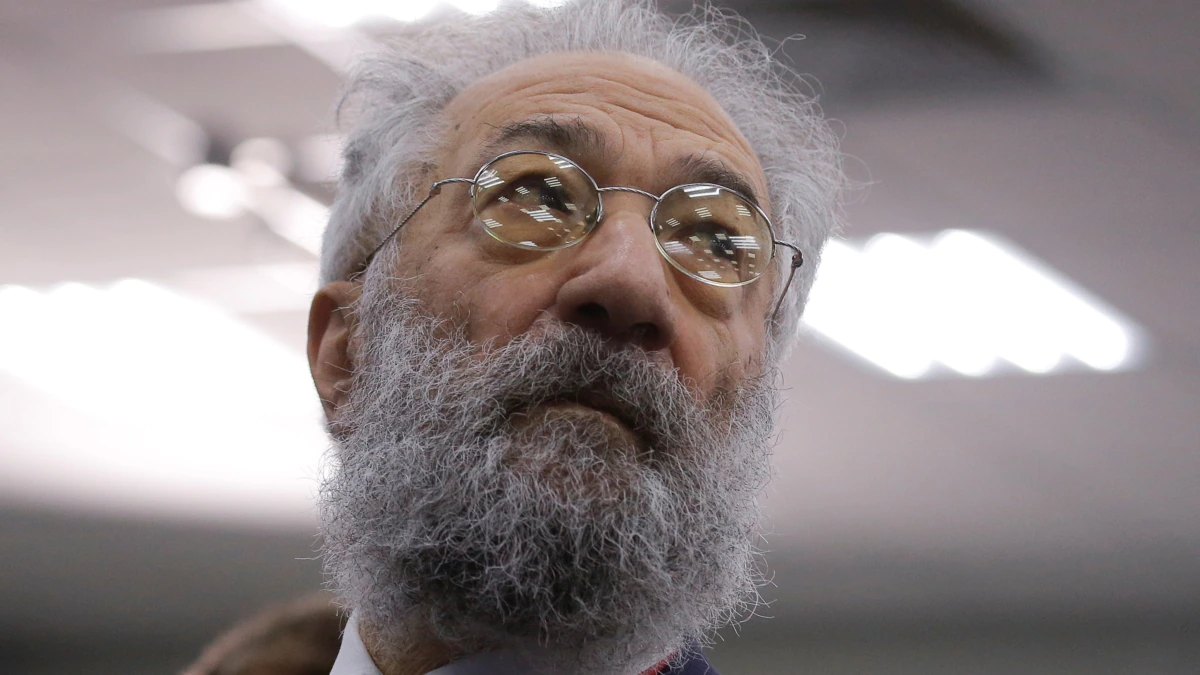
Police in Russia’s second-largest city, St. Petersburg, have arrested a man suspected of stabbing the sister of a member of the Russian parliament’s lower chamber, the State Duma, Artur Chilingarov.

The Investigative Committee said on April 26 that the 59-year-old suspect, whose identity was not disclosed, stabbed the 71-year-old woman, injuring her arm and head in the hall of an apartment block on April 20.

According to the statement, the woman was saved by a neighbor who scared off the attacker.

The suspect, who has a criminal record, was apprehended shortly after the attack. The motive for the attack remains unclear.

Chilingarov, 81, is also a well-known Russian polar explorer.

Aleksandr Bastrykin, the head of the Investigative Committee, has ordered an investigation into the incident.

In the wake of the Chernobyl nuclear disaster on April 26, 1986, parents in the hard-hit regions of Ukraine, Belarus, and western Russia were desperate to get their children out of the irradiated zone, if only for a few weeks.

Ultimately, tens of thousands would spend summer vacations in the West, including Ireland, where a local longtime nuclear disarmament activist was at the vanguard of efforts to help the children of Chernobyl, as they came to be called.

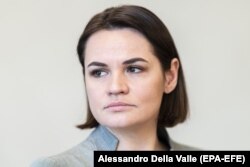
One of those who spent time in Ireland was 14-year-old Svyatlana Tsikhanouskaya. Thirty-five years later she is the leader of the beleaguered Belarusian opposition to Aleksandr Lukashenka, the authoritarian long-time ruler she challenged in a presidential election last August.

Tsikhanouskaya, who was forced out of Belarus amid massive protests following the election, in which she and supporters say she beat Lukashenka despite his claim of a landslide victory, now travels across Europe to drum up diplomatic support for the opposition and a new, free and fair election.

But back in 1996 — a decade after the disaster — Tsikhanouskaya was a first-time visitor to the West, taking a trip that both shocked and amazed her.

In an interview with Current Time, Tsikhanouskaya recounted the kindness and hospitality she was shown in Ireland – not to mention the potato chips and ketchup.

Tsikhanouskaya was three years old and lived in the village of Mikashevichy, in the Brest region of western Belarus, when the explosion that destroyed Reactor No. 4 at Chernobyl, to the southeast in Ukraine, spewed windblown radiation over a territory the size of Germany.

A Brief Escape

Hundreds of thousands of people were relocated, and nearly 600,000 so-called ‘liquidators’, many working with no protection, sacrificed their health to contain and seal the fiery reactor, as well as clean the contaminated area.

For children, Chernobyl posed its own unique health risks. Affected areas of Ukraine, Belarus, and Russia – Soviet republics at the time — also witnessed “a significant increase in the incidence of childhood thyroid diseases including thyroid cancer,” according to the World Health Organization. For example, thyroid cancer rates rose “about 100 times” in the Belarusian region of Homel after the accident.

In 1991, Adi Roche, active in the Irish Campaign for Nuclear Disarmament, would establish the Chernobyl Children International (CCI), to provide medical and other aid to the nuclear disaster’s youngest victims, as well as organize trips abroad for many of them.

Adi Roche at a children's home in Belarus. (file photo)


Adi Roche at a children’s home in Belarus. (file photo)

The CCI said it has delivered some 107 million euros of aid to impoverished communities and children across Chernobyl-affected regions since 1986. More than 26,500 children have also traveled to Ireland to stay with host families on rest and recuperation holidays, that, according to CCI’s website, continue to this day.

Modelled after the CCI, the Chernobyl Lifeline also organized trips to Ireland for the youth affected by Chernobyl. In 1996, when she was 14, Tsikhanouskaya was included in one such group.

“I don’t know why I qualified for that program. Probably because I had studied well,” Tsikhanouskaya told Current Time, the Russian-language network led by RFE/RL in cooperation with VOA.

Now 38, Tsikhanouskaya said that even at that time, 10 years after the world’s worst nuclear disaster, few in Belarus – which had gained independence when the Soviet Union collapsed in 1991 — fully grasped the scale of what had happened at Chernobyl.

“All the time in Belarus, in my hometown, we were taken for tests. Medical teams would come to examine our thyroid glands. At that time, it wasn’t understood the scale of it. Chernobyl, radiation — we heard it at the time, but that at that age we couldn’t comprehend how bad it was,” Tsikhanouskaya recounted.

Belarusian oppostition leader Svyatlana Tsikhanouskaya earlier this year.


Belarusian oppostition leader Svyatlana Tsikhanouskaya earlier this year.

“That understanding only came later after you could study the topic and then there was the Internet, and you could find out more. Up till then, all you knew came from rumors, from your parents, who themselves didn’t really know much as well.”

The nuclear disaster, however, was apparently far from the minds of most of the children picked for the program, explained Tsikhanouskaya.

“You know, the kids in the polluted zone were happy, because it was an opportunity to go abroad. That’s how it was seen,” she said.

‘Lots Of Kindness, Lots Of Love’

Her first visit abroad, Tsikhanouskaya was awed by much of what she saw and experienced.

“Of course, I was also struck by the people themselves — open, friendly, smiling, saying ‘thank you,’ ‘you’re welcome.’ It was kind of gloomy at home, at least in my town,” Tskikhanouskaya told Current Time. “And then suddenly you arrive at the home of complete strangers, and they treat you like family, lots of kindness, lots of love. They tried to entertain all the kids as much as possible.”

The food, some of which she tasted for the first time, also fascinated her.

“More than anything else, I was surprised by some of the food that we didn’t have – potato chips, french fries, hamburgers,” she said. “Maybe it was already there in the capital of Belarus, but I had never been there with my parents, so it was all unknown to me. I tried ketchup for the first time there, not our tomato sauce, but real ketchup.”

Svetlana Tikhanovskaya in Ireland


Svetlana Tikhanovskaya in Ireland

Tsikhanouskaya stayed with the family of Henry Deane, who had organized the group’s trip. She remained in touch with the family afterwards, and he invited her back a few years later to help organize similar trips for others.

“My job was to prepare documents, arrange flights, assign the kids to families. They would call me if there were any problems. If the child was sad, homesick, they called me, and I talked to the child on the phone. If the child needed to go to a doctor or dentist, I was called to go along to act as a translator,” Tsikhanouskaya, who worked as an English teacher and translator before she was thrust into politics ahead of the August 2020 election, recounted.

During her time in Ireland, Tsikhanouskaya had many opportunities to remain there, but said the pull of home was always too strong.

I was and still am very attached to my parents, to home, to those family ties,” she said, and at the time Ireland “just seemed far away” from home. “Now the borders are a bit more open; you get a Schengen visa and can travel at any time and return home. Back then, there were a lot more complications and at the time I picked my family, my parents, and my homeland.”

Written by RFE/RL Senior Correspondent Tony Wesolowsky based on reporting by Current Time Correspondent Alena Shalayeva

Images of falsified a Taiwan Presidential Office memo circulated widely online this month, angering the island’s democratic government by claiming that Taiwan had agreed to receive the nuclear wastewater from Fukushima, Japan.

In a world of increasingly sophisticated fakes and forgeries, the bogus Taiwan Presidential Office memo posted on Twitter announcing “the government will receive wastewater from Japan” was sloppy with fingerprints from the communist mainland, experts said.

Among the telltale signs, were the use of the mainland’s simplified Chinese characters, terms that betrayed unfamiliarity with the government system of Taiwan, and improper memorandum terminology.

Kolas Yotaka, Taiwan’s presidential spokesperson, wrote on Facebook that there were five obvious and ridiculous mistakes in the falsified memo, beginning with the fact that memo was dated April 16, but was already being circulated on Twitter on April 15.

“Whether it is the way the memo was dated or how the recipient agency is addressed, it is just not how we write our memos. Not to mention there are simplified Chinese characters used. Under no circumstances would this be an official document issued by our government,” she told RFA last week.

“This is a fake memo. We urge our citizens not to believe in that disinformation and stop sharing the fake memo. This is absolutely not a memo issued by the Office of the President,” Yotaka added.

On April 16, the Presidential Office of Taiwan filed a report with the police, the ruling Democratic Progressive Party, and President Tsai Ing-wen posted respectively on Facebook that the widely circulated fake memo is a typical cognitive warfare tactic.

Tsai noted that the fake documented was tweeted the day after she had received an unofficial U.S. delegation.

‘Cognitive warfare’

She wrote that “cognitive warfare” is spreading information in an attempt to influence the opponent’s thinking and actions.

She wrote that she told the U.S. delegation that Taiwan is quite experienced in responding to disinformation from China, and that she looks forward to Taiwan-U.S. cooperation in countering it.

“The democracy and freedom in Taiwan are hard-earned, and we will not let cognitive warfare tear up Taiwan’s society,” wrote the president.

Taiwan’s ruling Democratic Progressive Party (DPP) Liu Kang-yan said the DPP condemns cognitive warfare that directly targets “Office of the President of the Republic of China” with online rumors and opinion-swaying disinformation to sabotage the internal unity of Taiwan and to burn out democratic resources with “grey-zone conflicts.”

The Office of the President further noted that any memo to the Department of Defense would simply address the recipient as “Department of Defense,” rather than “Department of Defense, Republic of China,” as in the fake memo. The office also said that while the memo referred to “cabinet meetings” in the Office of the President of Taiwan, there are no such things.

Information warfare experts found that the same Twitter account that spread the disinformation had also carried bogus media reports carrying the fake memo that purported to be from RFA and Radio France Internationale.

Puma (Pao Yang) Shen, assistant professor of Graduate School of Criminology at National Taipei University told RFA that mainland fake news purveyors regularly pose as credible media outlets as a typical example of Chinese Communist Party cognitive warfare tactics against Taiwan.

 “Of course they would pick Radio Free Asia as their enemy, because RFA often report unfavorable news about China. They see RFA as the enemy,” he said.

“In the past they would intentionally create fake Radio Free Asia accounts and lead readers to believe that RFA reported biased news. Most of these accounts shared fake RFA screenshots to other platforms, and then they came back to laugh at RFA,” added Shen.

Shen said a Twitter user surnamed “Sun” appears to be behind the fake Taiwan memo, its reproduction on RFA and RFI, and a series of accounts that tweet fake content. The Sun account has been actively targeting RFA for more than a year, he said.

Little Pinks at work

One of Sun’s accounts, with the handle “@us_ned_chinese” mimics the National Endowment for Democracy, a U.S.-backed foundation China views as its enemy, said Shen.

Although tweets from Sun’s accounts are not sophisticated and are ridden with errors – Shen called them “low-level Little Pinks tricks” after young Chinese jingoists on the internet – they create chaos and confusion, serving Beijing’s purpose.

Sun’s accounts also post about repression in Xinjiang to trick readers who are sympathetic to the plight of Uyghurs into believing that the fake accounts share the same point of view. Later these accounts post disinformation to mislead readers, said Shen.

Shen says at least a dozen tweets that contain either disinformation or fake videos about Taiwan are posted daily, and some are so sophisticated that it is hard for the public to determine their authenticity. Sometimes those who spread fake news enlist local to produce misinformation, he said.

“Using the name of a foreign media outlet makes the disinformation more credible. The RFA is today’s unfortunate victim, and tomorrow it could be Taiwan’s Central News Agency (CNA),” said Hsiao-Huang Shu, assistant research fellow of the Chinese Politics, Military and Warfighting Concepts division at the Institute for National Defense and Security Research.

“The purpose may be to leverage the media’s credibility to propel the spread of the fake news, because once the disinformation goes viral, it will be shared quickly on the internet or social media groups,” said Shu.

Shu said the CCP finds it particularly easy to carry out influence warfare because it is quite simple to copy and paste disinformation and share on the internet, where messages containing disinformation can last for as long as five years, before they are discovered and deleted.

Meanwhile, those messages containing clarification or correct information may either not be shared as quickly as the original disinformation or not reach platforms where disinformation spreads far and wide, added Shu.

Yotaka said attacks on Taiwan’s government agencies vary greatly, from “disinformation, misinformation mixed with some truth, (to) incorrect information”

“We could only urge the media to be cautious,” she said.

Reported by RFA’s Mandarin Service. Translated by Min Eu. Edited by Paul Eckert.

As President Joe Biden makes history by explicitly describing the 1915 massacre of Armenians by Ottoman Turks as a “genocide,” we speak with Peter Balakian, Pulitzer Prize-winning Armenian American poet and professor at Colgate University. On April 24, 1915, the Ottoman Empire began a systematic, premeditated campaign targeting the Armenian people, an unarmed Christian minority living under Turkish rule. More than a million Armenians were exterminated through direct killing, starvation, torture and forced death marches. Another million Armenian people fled into permanent exile. “It’s an important statement,” responds Balakian to Biden’s decision. “The plan was systematic,” he says of the genocide. “It involved the implementation of parliamentary acts, military intervention, mobilization of killing squads in order to arrest and deport every Armenian family from Turkey.”