After Amazon waged an aggressive propaganda and intimidation campaign to successfully stave off unionization at its warehouse in Bessemer, Alabama earlier this month, the labor movement and its allies are now making progress in an effort to pass landmark legislation that would give workers across the country a fair shot at forming a union.

Passed by the Democratic-led House of Representatives in March and supported by President Joe Biden, the Protecting the Right to Organize (PRO) Act would dramatically reform labor law in the United States. Among other measures, it would prevent private-sector employers from using the kinds of underhanded anti-union tactics recently on display in Bessemer, and would also strengthen unions by banning right-to-work laws. And now just three Democratic senators stand in the way of it coming to the Senate floor for a vote. 

The International Union of Painters and Allied Trades (IUPAT) is spearheading a campaign to get the legislation to President Biden’s desk, backed by a coalition that includes 180 unions, 50 state labor federations and building trades councils, environmental groups like the Sunrise Movement and progressive advocacy networks like Indivisible. 

When the House sent the PRO Act to the Senate last month, the bill had the endorsement of all but five of the 50 senators who sit on the Democratic side of the aisle— West Virginia’s Joe Manchin, Maine’s Angus King, Virginia’s Mark Warner, and Arizona’s Mark Kelly and Kyrsten Sinema. 

But in just the past week, amid growing grassroots pressure, King and Manchin have signed on as co-sponsors. They reversed their position in large part thanks to a massive phone-banking drive organized by the Democratic Socialists of America (DSA), which so far has made over 525,000 calls and sent 134,000 texts in the five senators’ home states. 

King’s office was reportedly ​“inundated” with phone calls about the PRO Act in the weeks before he decided to change course, as was Manchin’s. As one of the most conservative Democrats in the Senate and a key swing vote, Manchin’s about-face is particularly significant for the campaign.

“The PRO Act has bipartisan support from the American people. We believe the pace of our campaign reflects that,” said IUPAT general vice president Jim Williams. ​“We’re glad that Senator Manchin and Senator King have come on board in the last week and we fully anticipate the remaining senators will in the near future.”

With Majority Leader Chuck Schumer pledging to bring the PRO Act to the Senate floor if it boasts 50 co-sponsors, only three Democratic senators now stand in the way of advancing the historic labor law reform: Warner, Kelly and Sinema.

Warner, the second wealthiest senator after Mitt Romney, received nearly $45,000 in campaign contributions from Amazon executives including Jay Carney and Dave Clark in the most recent election cycle. For her part, Sinema recently drew the ire of progressives after voting against the $15 minimum wage with an enthusiastic ​“thumbs down.”

Kelly—a former astronaut and Sinema’s fellow Arizonan—is up for reelection in 2022. He voted in favor of the $15 minimum wage and supports some progressive legislation like the For the People Act, which would expand voting rights. Winning Kelly’s support for the PRO Act is considered especially crucial, since it is widely believed Sinema won’t get on board before he does.

If Kelly, Sinema and Warner are successfully pressured into co-sponsoring the bill, its most likely path to the president’s desk would be through reforming the filibuster—a move endorsed by the AFL-CIO that Biden recently came out in favor of. Short of that, the legislation would need the support of at least ten Republican Senators to pass, which is highly unlikely.

Demonstrating his commitment to the PRO Act, Biden has included it as part of his $2.2 trillion infrastructure package, which Senate Democrats may attempt to pass through budget reconciliation. The Senate parliamentarian, however, could scuttle the effort by saying that labor law reform should not be passed through reconciliation, the same problem that helped stymie the $15 minimum wage in February.

Well aware of these obstacles, the coalition to pass the PRO Act is preparing to ramp up the pressure. The AFL-CIO is planning a week of action beginning April 26 and culminating on May Day, which will kick off a summer of organizing and mobilizing to get the legislation across the finish line. Organizers say over 1,000 events to demand passage of the PRO Act are scheduled all over the country as part of the week of action, including rallies, town halls and car caravans. 

“We’re going to dig our heels in and get to work,” Williams said. ​“Our coalition will continue to mobilize the working class in this country to fight for the PRO Act.”

Image Source: Unsplash

It’s impossible to ignore the effects of our actions on the environment. According to NASA, we’re dealing with rising global temperatures, warming oceans, glacial retreat, and many other environmental concerns that will have a lasting negative impact on our planet.

Because of this, more companies are taking the initiative to be more sustainable and reduce their carbon footprints. As consumers, getting on board with those companies can make a big difference.

Doing so requires an understanding of which kinds of companies and brands you should be supporting, and why that support can ultimately make a difference in our environmental future.

With that in mind, let’s look at some of the industries with the largest carbon footprint, and how you can support the right businesses within those sectors.

Travel and Transportation

It’s estimated that greenhouse gas emissions from transportation make up about 28% of all emissions in the U.S. Unfortunately, that’s also a number that continues to rise.

The biggest contributor to these emissions is the fossil fuels that are burned for almost all of our main methods of transportation, including:

  • Cars
  • Airplanes
  • Trains
  • Trucks
  • Ships

The problem starts with drilling for oil. It requires land clearing which disrupts entire ecosystems in the process. Oil drilling also contributes to dangerous emissions thanks to the extraction process, further contributing to climate change.

The easiest way to support certain transportation brands is to look for those who are “steering” away from traditional fossil fuels. Thankfully, electric vehicles are becoming more popular and prominent. Thanks to advancements in technology, some of today’s EVs can even outperform their gasoline counterparts.

Some of the most notable car manufacturers taking steps toward sustainability through EVs include Tesla, Hyundai, and Chevrolet. Looking for companies that are willing to change their methods is crucial when it comes to helping the environment, and all of these manufacturers have taken a step away from fossil fuels for a more promising future.

Personal Products

The manufacturing industry is another problematic area when it comes to greenhouse emissions. Support for these industries is usually steadfast since they create and produce products most people use daily. Unfortunately, most people don’t give the things they use and wear much thought when it comes to how they were created or sourced.

For example, that new shirt you just bought may not have been sustainably made. It might be a “fast fashion” item that wears out quickly, causing you to get rid of it. The problem is that the U.S. generates 25 billion pounds of textile waste each year, filling our landfills and causing major issues. Choosing to shop with brands that make quality clothing and use sustainable practices can help to combat this problem.

The jewelry you’re looking at in the window of your favorite shop might be pretty on the outside, but the process of sourcing it is certainly less attractive. Some mining tactics harm the environment since they utilize chemical pesticides and plasticizers. Supporting brands that promote ethical jewelry will help to ensure that the mining process was sustainable or the jewelry has been recycled.

The everyday items you use can all have an impact on the environment, including:

  • Hand soap
  • Laundry detergent
  • Toothpaste
  • Wet wipes

Thankfully, some brands offer eco-friendly alternatives for all of these. Doing your research and switching to those brands (and learning about why they’re different), will help you to see how these products traditionally do damage to the planet, and why a change is so important.

Agriculture

You might think agriculture and sustainability go hand-in-hand. Unfortunately, it’s an industry that is currently doing more harm than good. The agricultural industry has gotten out of control thanks to endless demands.

The vegetables on your plate may have been grown with pesticides and chemicals to speed up the process. They were likely harvested using large machinery that contributed to carbon emissions. Then, they were probably shipped across the country, contributing to even more emissions.

Instead of going to your local supermarket for things like produce, consider shopping locally at farm markets, or get to know some local growers. When you know the source of your produce, you can take comfort in the fact that it was organically grown and didn’t require hundreds of travel miles to get to you. In this case, supporting smaller businesses and brands is the way to go.

Alternatively, you could decide to grow your produce at home, reaping the benefits of spending time in nature. But, if you want to support businesses and the environment, go local whenever possible.

It can feel overwhelming when you consider how different industries have such a large impact on our planet. By doing your part to support brands that benefit the environment, you’re helping to keep those brands moving forward. As a result, it’s more likely that other businesses will start to follow sustainable practices, and we can see some positive changes in the alarming statistics surrounding the planet.

Beau Peters is a freelance writer based out of Portland, OR. He has a particular interest in covering workers’ rights, social justice, and workplace issues and solutions. Read other articles by Beau.

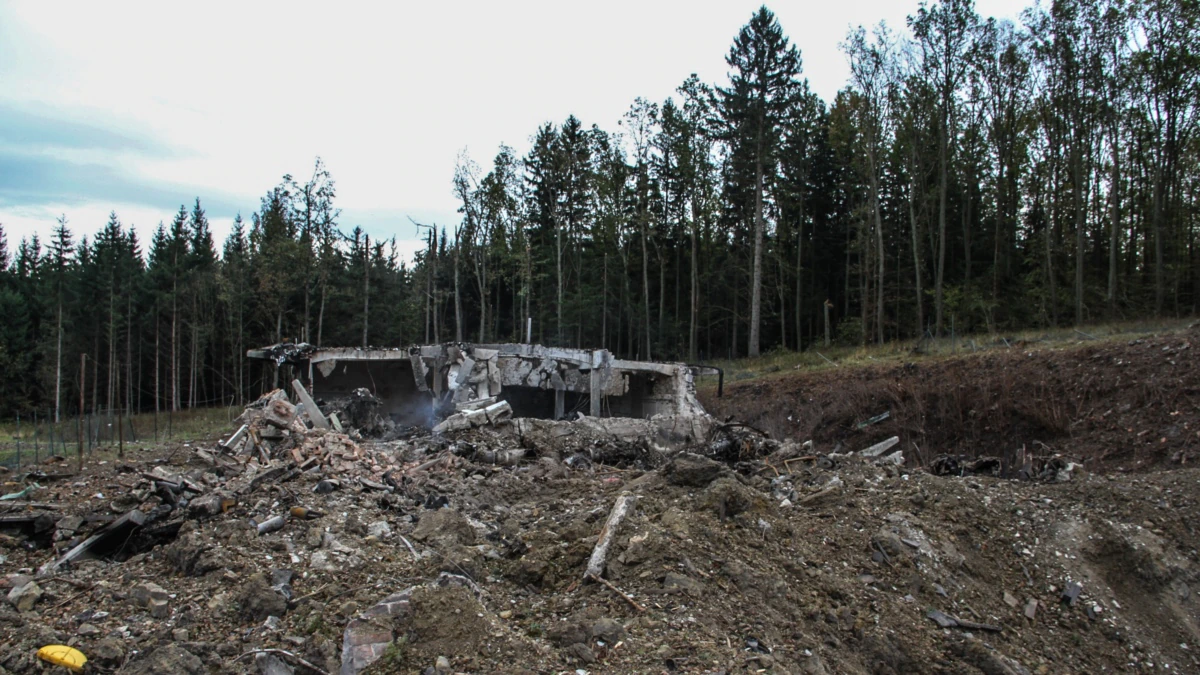
The Czech government on April 26 reiterated that evidence linking Russian GRU military intelligence to arms depot explosions in 2014 is “very convincing,” after President Milos Zeman cast doubt over allegations that have sparked a deep diplomatic rift with Russia.

Zeman, who is known for being sympathetic toward Moscow, said during a televised address to the nation on April 25 that there are two theories about what caused the explosion of a munitions depot near the eastern Czech town of Vrbetice in 2014.

He said that one version of events is that Russian intelligence was involved in the deadly explosion.

The other version, he said, was that the blast was caused by inexpert handling of ammunition.

“I take both lines [of investigation] seriously and I wish that they are thoroughly investigated,” Zeman said.

Prime Minister Andrej Babis on April 17 announced that investigators from the Czech intelligence and security services had provided “unequivocal evidence” that there was “reasonable suspicion regarding a role of members of Russian military intelligence GRU’s unit 29155 in the explosion of the munition depot in Vrbetice in 2014.”

In response, the Czech government announced the expulsion of 18 Russian diplomats it considered to be spies, setting off a string of tit-for-tat moves between Prague and Moscow.

GRU Involvement

Citing the report by the Czech Security Information Service, Zeman said that there was “neither proof nor evidence” that the two Russian GRU agents being sought regarding possible involvement in the explosion were at the arms depot.

“I hope that we will determine the truth and find out whether this suspicion [of Russian intelligence involvement] is justified,” Zeman said. “If that is the case — although I support fair relations with all important countries — the Russian Federation would have to pay the price of this presumed terrorist act.”

In response to Zeman’s comments, Deputy Prime Minister Jan Hamacek, who is also the interior minister, said information from intelligence, police, and investigators on the 2014 blasts was strong.

“As the Czech Republic we reacted very hard, so it is apparent the evidence was very convincing,” Hamacek said at a April 26 news conference.

“As far as I know, only one line of investigation exists on the Vrbetice case and that is the one connected with movements of those members of the [GRU] unit 29155,” Hamacek said.

“The president’s speech was such that everybody found something in it to please them including the Russian Federation, unfortunately,” he added.

Zeman, whose powers as president are largely ceremonial, has often expressed pro-Russian views and is seen as being friendly toward Moscow.

The explosion on October 16, 2014 in Vrbetice set off 50 tons of stored ammunition, killing two people. Two months later, another blast of 13 tons of ammunition occurred at the same site.

The Kremlin has denied any involvement in the incident, which has triggered anti-Russia protests in the Czech Republic.

More protests are planned for April 29 in Prague and other cities, this time also taking aim at Zeman for his position on Russia.

Czech media has reported that the ammunition and weaponry destroyed in the first Vrbetice blast was intended for Ukrainian forces fighting against Russia-backed separatist troops in eastern Ukraine.

The two Russian intelligence officers sought in relation to the explosion are the same GRU officers accused of a nerve-agent poisoning in England in 2018 that targeted former Russian double agent Sergei Skripal and his daughter.

With reporting by Reuters

The makeover of the prime minister’s flat, reported to have cost up to £200,000, has caused nothing but headaches for the government. Ever since the first carefully phrased denials were issued, this story has kept escalating.

As openDemocracy revealed last month, Boris Johnson has been breaking his own government’s transparency rules by failing to publish an up-to-date register of ministers’ interests. The prime minister’s own former senior adviser, Dominic Cummings, said Johnson planned to “have donors secretly pay” for the work.

Here’s what we do know. The civil service refused to pay £58,000 for luxury designer Lulu Lytle’s June 2020 invoice. There were also concerns about the total bill exceeding the £30,000-limit on taxpayer funds for the project.

In July 2020, with Lytle’s invoice deadline looming and Johnson unable to afford it himself, the Conservatives are said to have used Tory party funds to meet the bill.

In order to cover this amount, Tory donors from the Leader’s Group later dug deep – Tory peer David Brownlow paid £58,000 in October 2020. openDemocracy understands the amount was later repaid back to Brownlow, and that he looked at setting up a Trust with himself as chair, to avoid having to disclose the donation. Lord Brownlow has not commented on this.

The Conservative Party denies currently using its funds to pay the bill – but that was never the allegation. It has refused to be drawn in on whether it had previously used its funds in that way.

Last week, Cabinet Office minister Nicholas True told the House of Lords the extra cost had now been “met by the prime minister personally”. This raises even more questions – Boris Johnson has not declared any income windfall, so how can he suddenly afford a £58,000 bill that he couldn’t afford last July? Labour shadow Cabinet Office minister Rachel Reeves suggested Johnson was “Possibly breaking the law.”

This has all the signs of a government cover-up underway for nine months. But openDemocracy has identified at least seven different sets of rules that the prime minister, his party and his government may have broken.

1) Electoral law

Any political party receiving a donation of over £7,500 has to report it to the Electoral Commission, or the party would be breaking the law. Similarly, large loans also have to be reported, as do donations that are later returned – including rejected donations.

The Conservative Party’s detailed returns for 2020 made no mention of any £58,000 donation from Lord Brownlow, nor of any other donors to cover the flat. An Electoral Commission probe is underway.

At the very least, the Conservative Party is facing a fine, if it emerges – as suggested by a leaked memo – that a £58,000 donation went undeclared.

Dominic Cummings’ blog post last week suggests “donors” (plural) were approached – the first public confirmation that more than one donor may have contributed to the refurb fund. If so, that opens the possibility of more “phantom” donations emerging.

2) Ministerial Code

Johnson is covered by a strict Ministerial Code. It says “no minister should accept gifts, hospitality or services from anyone which would, or might appear to, place him or her under an obligation.”

It also says a list of “ministers’ interests will be published twice yearly”. As an openDemocracy exclusive in March showed, the government has been able to get out of Boris Johnson having to report the donation, by simply having the entire UK government breach the Ministerial Code, in failing to publish an updated list. The last list was published in July 2020, prior to the Downing Street donations.

Recently, Congress MLA Kunal Choudhary tweeted a photo purportedly of a child being taken to a temporary jail facility by the Indore police. The young boy can be seen holding some grocery staples like flour and oil. Choudhary wrote, “This child’s only crime was that he stepped out to get groceries for his family, and now he is being taken to a temporary jail. Shame on the Indore administration!” More than 5,600 handles retweeted the post. (Archive link)

Former MLA and Secretary of the Madhya Pradesh Congress Committee Satyanarayan Patel also posted the photo and viral claim. It had amassed over 1,200 shares at the time of writing.

Twitter user Shazia Tasneem wrote, “Madhya Pradesh: Indore, This boy is being taken to a temporary jail because he stepped out to buy groceries for his family. If he was in West Bengal, he would have received Rs. 500 to attend a rally.” This racked up over 900 retweets at the time of writing. (Archive link)

The image is widespread on both Facebook and Twitter with this caption.

A media portal called Newstrack even published a story on the incident.

Photo of boy in Delhi auto

A closer look at the viral image establishes that the boy is sitting inside an autorickshaw, and not a police vehicle. Those familiar with the tempos that run in several North Indian cities (or the Gramin Sewa transport vehicles in Delhi) would know that he is not sitting inside a police car.

Alt News performed a reverse image search and found no other versions of the photo apart from the one in the Newstrack article. Only social media posts appeared in the search results. A user had posted a screenshot of an Instagram post in reply to Shazia’s tweet and wrote that this claim was false.

The Instagram post is by the handle @inquallabi_soch. The caption discusses the lockdown in Delhi and the difficulties it brought for labourers.

We performed a keyword search on Facebook and Twitter using parts of the text from this caption. This led us to a number of Facebook posts, including one by Bharat Nbs. Several users attributed the image to Bharat. He had uploaded the photo on April 19 and we could not find any other post containing the picture before this date. In fact, a user commented on Bharat’s post informing him that the photo was viral with a false claim.

आज रात से दिल्ली में अगले सोमवार तक लॉकडाउन है। इस बच्चे को भी इस बात का इल्म है कि लॉकडाउन लगते ही, कोई सरकार कुछ नही…

Posted by Bharat Nbs on Monday, April 19, 2021

We reached out to Bharat and asked him if he had taken this picture. “I took this picture at Madhuban Chowk in Delhi. It was taken inside a Gramin Sewa vehicle. This boy was going towards Rithala, to his house. I spoke to him and he told me that he lived in Rithala. I took this picture of him during our conversation”, he revealed.

He shared the picture with us via email and an examination of its EXIF data confirmed that it was indeed taken by Bharat. He also shared a screenshot of his phone’s photo gallery. Bharat told us that through the photo, he was trying to show that the system had failed, and how no one was coming to the aid of the working class in such difficult times.

Therefore, a photo of a child in a Delhi auto was falsely circulated as the Indore police taking him to a temporary jail. It is noteworthy that those flouting lockdown rules in Indore are being taken into custody and placed in temporary jail facilities.

WASHINGTON – Last week, 40 world governments gathered to participate in the Biden Administration’s first step onto the international climate stage. The Leaders Summit on Climate took place on April 22nd- 23rd. The summit saw global heads-of-state make big promises on carbon emission reduction, but the biggest red flag from climate activists is the overall lack of explicit commitments to stop financing fossil fuel projects, one of the key areas to transition away from fossil fuel energy. 

Global: Agnes Hall, Global Campaigns Director at 350.org said:

“There can be no meaningful climate action if world leaders don’t make a decisive move to keep all fossil fuels in the ground. It’s one thing to make climate goals, but governments simply can’t afford to keep on funding the flames by pouring money into subsidizing coal, oil, and gas. The Biden Summit is a critical meeting of world leaders ahead of COP26 this November. Talk of “net-zero” emissions won’t cut it: we demand more from our world leaders than the false promises, false solutions, and empty negotiations we heard at Biden’s Climate Summit. The task now is to hold politicians to their lofty words,  and to do that the global climate movement needs to keep up the pressure on our governments at home as well as on the international stage to take urgent action now to reduce carbon emissions and ensure a Just Recovery from the global COVID-19, economic and climate crises by creating a sustainable, fossil-free world ”. 

Pacific: 350.org Pacific Managing Director Joseph Sikulu said:

“In a world recovering from COVID-19 and the climate crisis, governments need to quickly divest from the fossil fuel industry and begin investing in a just recovery for all. Countries with high emissions, such as the United States and Australia, must stop subsidizing oil, gas and coal and direct their investments toward clean and just renewable energy so that we can limit Earth’s warming to 1.5 degrees.

To date, Australian Prime Minister Scott Morrison has not announced a concrete plan to reduce emissions. Instead, he thinks that fossil fuel companies can solve the climate crisis, which is a massive irony. The Summit is an excellent opportunity for him and other leaders to look on the leadership of the Marshall Islands – the only Pacific island nation present. Australia must recognize that they have few options: either catch up by COP26 or remain a climate laggard who contributes to climate disaster.”

Japan: 350.org Japan Finance Campaigner Eri Watanabe said:

“This goal is highly insufficient if we want to achieve the Paris Agreement’s goal of limiting the warming of the Earth to 1.5 degrees. I strongly urge the Japanese government to set a more ambitious target with a minimum of a 62% reduction from 2013’s emissions. This is based on research published by Climate Action Tracker.

This target may be higher than previously at a 26% reduction, but if we look closely – this is a numbers game1. Compared to the United Kingdom’s and European Union’s targets, which are 78% in 2035 and 55% in 2030 respectively compared to emission levels in 1990, Japan’s target is much lower.

When the Paris Agreement was signed, we agreed that there were “common but differentiated responsibilities” across the world. As the world’s fifth-highest emitting country with a large number of historic emissions, Japan owes the world a carbon debt. This makes it necessary for our country to reduce as much carbon emissions as possible — or more than half of 2010’s emissions in order to be a solution to the climate crisis. We must start urgently setting bold and ambitious targets, and strengthening the measures necessary to achieve them. 

One of the policies urgently needed is a rapid phase-out of coal infrastructure. Another to direct Japanese banks to rule out fossil finance. Japan is the biggest lender to the global coal industry, and they must cut the flow of money to reduce their emissions.

Only if Japan government walks the talk, can they show climate leadership.”

Bangladesh: 350.org Organizer Shibayan said:

“We are heartened by the Chair’s response and his ambitious goals of targeting a 100% renewable transition by 2050. For Bangladesh to have a just recovery from the twin crises of COVID-19 and climate change, this transition away from coal must exclude gas, and bring about a Green New Deal focusing on clean and just energy such as solar and wind. At the upcoming Leaders Summit for Climate, we hope to see countries that have built their wealth based on fossil fuels such as the US working hand in hand with the most affected countries such as Bangladesh. World leaders must start cooperating and sharing resources to combat the climate crisis. They need to act now, while there is still time.”

Africa: Landry Ninteretse, the Africa Director of 350.org said:

“During the virtual summit, the world’s major economies will share their efforts to reduce emissions during this critical decade to keep a limit to warming of 1.5 degrees Celsius within reach.

“1.5 degrees is our global beacon for climate action. The safety and wellbeing of millions of Africans depend on keeping below it. But it is slipping from our grasp and we need to urgently halve global emissions by 2030, which means that we need to limit fossil fuel consumption and stop new developments such as the EACOP and Mozambique LNG projects that threaten this climate ambition.

Fixing the climate crisis requires more than simply cutting carbon; we need bold action that prioritizes alternative sources of energy that meet the needs of the people and accelerate investments in real climate solutions with the aim of driving a fast and sustainable transition away from fossil fuels.”

 Canada: Amara Possian, Canada Campaigns Director with 350.org said:

“The problem with Justin Trudeau’s new climate pledge can be summed up in two words – fossil fuels. Neither Trudeau’s new climate plan, nor his budget, nor this new climate promise include a plan to tackle soaring emissions from tar sands, fracking and other fossil fuel expansion that makes Canada the only G7 country whose emissions have gone up since signing the Paris Agreement. Canada needs to cut our emissions at least 60% by 2030 and pass legislation like a Just Transition Act to make sure we meet our Paris commitment and leave no one behind.  

“Since Justin Trudeau won’t act at the pace and scale of the climate emergency, we need the NDP and the Greens to form a Climate Emergency Alliance ahead of the next election to push Canada to set ambitious targets and follow-through with the policies to meet them. It’s not too late for Canada to do what’s necessary, but we can’t afford four more years of Trudeau’s status quo.” 

United States: Natalie Mebane, U.S. Policy Director of 350.org said:

“On Day 1 in office, Biden canceled Keystone XL. Now he must follow through on his promises and do the same with Line 3, the Dakota Access pipeline, and all new fossil fuel projects. A 50% emissions reduction falls short of the United States’ fair share and should be seen as the floor, not the ceiling. Ambitious climate action requires keeping all fossil fuels in the ground. Biden must show the world that the U.S. is serious about tackling the climate crisis at scale, centering communities most impacted, and creating millions of good, green jobs in the process.” 

Brazil: Ilan Zugman, Latin America Managing Director of 350.org, based in Curitiba, said:

“Bolsonaro lied when he said that Brazil is at the forefront of the climate efforts. It may have been true someday, but not in his government, which has been consistently attacking the policies and state agencies necessary to stop deforestation and lead the energy transition. He talked much about the past achievements of Brazil and too little about the future, not to mention that in the present, his environmental record is a disaster.”

“In the days before the Climate Summit, there was an impressive flow of open letters and social media campaigns in Brazil asking President Biden not to close any agreement with President Bolsonaro without hearing the Brazilian civil society first, and it seems to have worked. There is a very justified concern, based on the current attitude of the Brazilian government towards the environment, that no matter what the Bolsonaro government promises, it will be just empty words, and that an agreement with the US would end up endorsing the destruction of the Amazon and other biomes.”

“Brazil has the potential to be a global leader in the efforts to solve the climate crisis, and in fact it has been a very important voice in this conversation for many years, since the Rio Earth Summit in 1992. However, the Bolsonaro government shrank Brazil’s ability to take climate action, by dismantling major policies against deforestation in the Amazon and threatening conservation in Indigenous Lands and Protected Areas. The key to take Brazil back to its leading role in the climate efforts is to empower and support the civil society, especially Indigenous leaders, and strengthen community-based solutions as opposed to ignoring or even encouraging the irresponsible expansion of mining and agribusiness, as President Bolsonaro has been doing”, said Ilan Zugman, Latin America Managing Director of 350.org

Argentina: Ignacio Zavaleta, 350.org Campaigner said:

“What stood out in President Fernández’s speech was the fact that he did not mention any change in the government’s policies of investment in the expansion of oil and gas extraction in the Vaca Muerta area. Taxpayers’ money has been subsidizing a highly ineffective and environmental harmful operation, which benefits a few foreign companies and brings no development to the country or even the region where it is based. These billion dollars wasted every year in fossil fuels should be redirected to policies of energy transition, that are able to create more jobs in a moment when Argentinians desperately need it”, said Ignacio Zavaleta, 350.org Campaigner in Argentina.

BISHKEK — Kyrgyzstan’s Foreign Ministry has summoned the Tajik ambassador and handed him a note protesting the detainment of two Kyrgyz men by Tajik authorities near a disputed segment of the border between the two countries.

The ministry said on April 26 that Deputy Foreign Minister Nurlan Niyazaliev met with Tajik Ambassador Nazirmad Alizoda to express his concerns over the detainment of the two residents of Kyrgyzstan’s southern Batken region.

“The Kyrgyz side has called upon the Tajik side to undertake immediate measures to find out all of the circumstances of the incident, hold all individuals responsible for the situation accountable, and inform the Kyrgyz side about the results,” the ministry said in a statement.

The statement added that Bishkek is ready to cooperate with Dushanbe in efforts to “form conditions in the areas close to the border to secure peace, safety, a friendly neighborhood, and stability.”

The two Kyrgyz nationals disappeared in the Batken region’s Leilek district on April 24 while constructing a house close to a disputed segment of border.

It later turned out that the missing men had been detained by Tajik law enforcement.

On April 25, the men were released and handed to Kyrgyzstan.

Earlier in April, Tajik President Emomali Rahmon said during his visit to Tajikistan’s Vorukh exclave within Kyrgyzstan that agreements on almost half of the Tajik-Kyrgyz border have been reached during more than 100 rounds of negotiations between Dushanbe and Bishkek since work on border delimitation started in 2002.

Many border areas in Central Asia’s former Soviet republics have been disputed since the collapse of the Soviet Union in 1991.

The situation is particularly complicated near the numerous exclaves in the volatile Ferghana Valley, where the borders of Kyrgyzstan, Tajikistan, and Uzbekistan meet.

In recent years there have been numerous incidents along the border which in some cases involved deadly gunfire.

Let’s acknowledge at the outset that corporate liberal media—owned and sponsored by the mightiest economic forces in our society—have increased their talk about race and racism in recent years, especially since the rise of Trump. 

They’ve even learned to throw around the phrase “systemic racism”—while avoiding scrutiny of the corporate systems that propel and reinforce racism. 

The view of the world projected by such coverage is typically that of victims without victimizers. Although it’s acknowledged that Black people and other people of color are consistently at the bottom of the caste system, there’s no examination of the powerful interests that put them there—the profiteers who, for so many generations, have had their knees on the necks of poor people of color.

Chauvin has played a useful role for corporate media—a rare villain who could be identified and named, a symbol of deadly racism in news outlets that are structured to refrain from identifying the economic forces responsible for far more hardship and death in communities of color than Chauvin could ever inflict.

Enter killer-in-uniform Derek Chauvin. 

Let me be clear that I’m heartened by the media coverage of George Floyd’s murder, and even more heartened by the mass protests that erupted in the wake of that murder. But Chauvin’s willful, sadistic, public execution of a handcuffed Black man ended the beloved life of a single individual. 

At the same time, Chauvin has played a useful role for corporate media—a rare villain who could be identified and named, a symbol of deadly racism in news outlets that are structured to refrain from identifying the economic forces responsible for far more hardship and death in communities of color than Chauvin could ever inflict. 

Even before COVID, for example, we knew that the profit-driven U.S. healthcare system was causing the premature deaths of people of color, with substandard care leading to 260 premature African-American deaths every day by one estimate. Mainstream media will occasionally show us the victims of inadequate healthcare, but they never identify the villains—those powerful corporate interests that have lobbied so hard for so long to ensure that we live in the only “advanced” country on earth without universal health coverage.

 If you watch the network newscasts on ABC/NBC/CBS and count the commercials, you’ll notice that the all-powerful pharmaceutical industry is the number 1 sponsor.

Let’s turn from healthcare to housing. We have a homeless crisis far worse than any other advanced industrial country. Gentrification in major cities disproportionately causes the evictions of people of color. Our longstanding housing crisis was made worse by the “Great Recession” begun in 2007, which most affected homeowners of color and African Americans in particular—a disaster sparked by a handful of greedy Wall Street firms and their allies in Washington

Unlike Chauvin, not one of these Wall Street criminals was given a televised trial. Corporate media sometimes showed us the victims of the housing crisis, but hardly ever their victimizers—and the policymakers behind the Great Recession, like Robert Rubin, are still served up as media experts today. 

Wall Street banks aren’t just major sponsors of news media. They’re also major donors to politicians of both parties, heavily to Democrats. So are big urban real estate interests responsible for gentrification—donating to Democratic officials who might criticize “systemic racism” while consistently enabling it.

Black, Latinx and Native American communities are the ones hit hardest by pollution, cancer-causing refineries, and extraction. Death and disease have flourished, but the polluting corporations responsible don’t go on trial—and mainstream media rarely name the politically-connected perpetrators. Indeed, oil and gas companies have long been major sponsors of media, including “public broadcasting,” and coverageoften reflects that coziness

With his knee on George Floyd’s neck, Derek Chauvin became a symbol of racism for mainstream media, but he’s a mere symptom of the deadly problem of systemic racism. 

The main perpetrators and beneficiaries of systemic racism—whether in healthcare, housing, environmental pollution, employment, education or criminal justice—include powerful corporations that sponsor news outlets that have aimed a bright spotlight at this killer cop.     

It’s no surprise those corporations don’t get the mainstream media spotlight they deserve.

DUSHANBE — A Tajik court has sentenced nine people for smuggling large amounts of gold and cash from Dushanbe to Dubai and Istanbul, in a case that has been closely watched in Tajikistan.

The Dushanbe City Court said the men — all of them Tajik citizens — were handed prison terms ranging from two to 5 1/2 years on April 20.

Five of the men — whose occupations weren’t disclosed — were convicted of smuggling cash and gold from the Tajik-Afghan border to Dushanbe and further to foreign countries.

Four others — three border guards and a police officer — were found guilty of aiding the smugglers.

The defendants’ lawyers did not immediately comment, but several family members told RFE/RL on condition of anonymity on April 24 that they were not planning to appeal the sentences.

Investigations revealed that the group smuggled nearly 1.4 tons of gold bars and more than $100 million in cash between early September and mid-November last year, the court said.

The men used forged documents to transfer the goods from Dushanbe to the United Arab Emirates and Turkey, it said.

The probe began after Tajik authorities seized nearly 90 kilograms of gold bars and about $15 million in cash from smugglers at the Dushanbe airport on November 14.

According to the State Customs Service, the goods were discovered before they were loaded onto a Dubai-bound plane.

On February 27, an Afghan TV channel linked the smuggled gold and cash to Mohammad Mirza Katawazai, the deputy chairman of the Afghan parliament.

The report by the 1TV channel came on the same day as Katawazai arrived in Tajikistan as part of an Afghan parliamentary delegation.

Katawazai rejected the allegation. Upon his return to Kabul, he resigned from the deputy speaker’s post.

Tajik authorities have never publicly mentioned Katawazai’s name in connection with the smuggling case.

Authorities say the investigation continues.

BISHKEK — Thousands of people have paid their last respects to to Kyrgyz writer and journalist Beksultan Jakiev, who died at the age of 85 after a long unspecified illness on April 25.

Prime Minister Ulukbek Maripov, Parliament Speaker Talant Mamytov, former President Sooronbai Jeenbekov, and other officials attended the farewell ceremony on April 26 at Bishkek’s Opera and Ballet Theater.

President Sadyr Japarov’s letter of condolence to the late writer’s relatives, friends, and colleagues was read aloud at the ceremony.

Jakiev was known for his books and articles about Kyrgyz culture and history as well as about modern Kyrgyzstan and Central Asia.

One of his most popular books was about the history of RFE/RL’s Kyrgyz Service, known locally as Radio Azattyk, and its long-time Cold War-era director Azamat Altay.

Jakiev was the recipient of numerous national awards and titles, including Hero of Kyrgyzstan, for his contribution to the former Soviet republic’s literature, culture, and journalism.