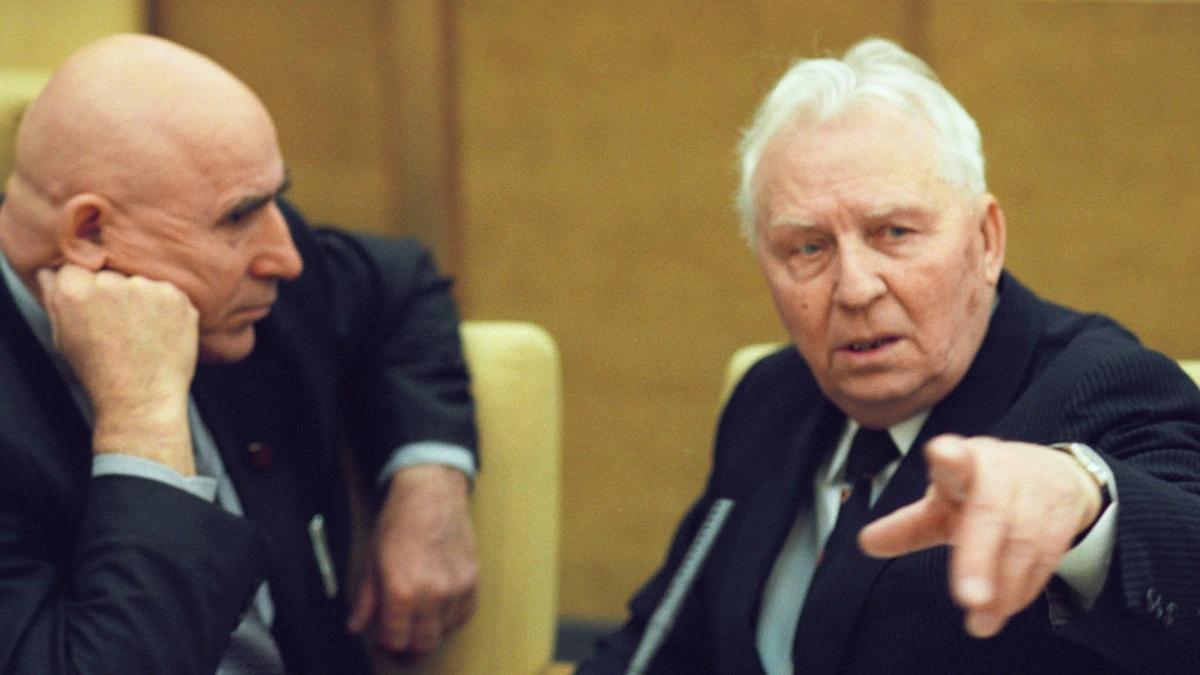
Yegor Ligachyov, a former member of the Soviet Communist Party’s Politburo who was once seen as Kremlin leader Mikhail Gorbachev’s right-hand man, has died at the age of 100.
Ligachyov, who in November 2020 became the first former top Soviet official to reach the century mark and was known for coming up with Gorbachev’s hugely unpopular anti-alcohol campaign, died in a Moscow hospital in the evening of May 7.
He was considered in the late 1980s as the second-most-powerful official in the Soviet Union after President Gorbachev, with whom he initially was seen as a close ally.
Ligachyov later became associated with anti-perestroika forces and was excluded from the Central Committee of the party in 1990.
After the collapse of the Soviet Union in 1991, Ligachyov expressed regret for supporting Gorbachev and joined the leadership of the Communist Party.
Ligachyov was a lawmaker from 1999 to 2003.
Having a tattoo or an unmarried sister or an Instagram account — all of these things can count against women seeking custody of their children in Russia’s North Caucasus region, where local court decisions often reflect communities’ beliefs that children belong to the father’s side of the family.
In Muslim-majority Chechnya and Ingushetia, and to a lesser extent, Daghestan, deep-seated customs dictate that children go to the father’s side of family following a divorce. And while Russian federal law has demonstrated its preference for such children to stay with their mothers, city and district courts in the North Caucasus often go their own way in the name of tradition.
The issue is the subject of an extensive report by Current Time that tells the stories of several women struggling to wrest their children from a firmly established patriarchal system.
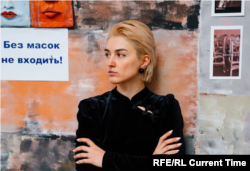
Nina Tseretilova’s efforts to be reunited with her three children have been thwarted for more than a year, despite the overturning of a local court’s decision to deny her custody because of her “lifestyle.”
Nina Tseretilova
In taking her kids away from her in July, Daghestan’s Kirovsky District Court was apparently swayed by testimony from Tseretilova’s ex-husband, Magomed Tseretilov, who argued that she had created an “unhealthy” moral and psychological environment for bringing up children.
As evidence, he presented photographs and videos from his ex-wife’s Instagram page in which she had conversations about “sex” and unconventional relations, and the court record noted that tattoos were visible on her body.
Tseretilova’s underage children, meanwhile, testified that she had hosted parties at which young people had smoked and consumed alcohol. The court was shown a music video by the Dagestani group Duet 11 in which Tseretilova plays a prominent role.
For her part, Tseretilova testified that she had married her ex-husband when she was 18 and that from the beginning he periodically beat her. She said she left him after he beat her while she was pregnant with their third child.
The court, taking into account the established traditions of Russia and of the Republic of Daghestan, determined that Tseretilova led a lifestyle “that does not correspond to the behavioral norms and rules of the majority,” and granted custody to her ex-husband.
Tseretilova, who tells Current Time that her ex-husband had “decided to punish” her after she pursued payment of alimony following their divorce in 2016, took the case to Daghestan’s Supreme Court.
But even though the high court ruled in her favor in March, her children have still not been handed over.
Zhanetta Tukhayeva has been working to get her eldest son back in an ordeal she says began seven years ago when her ex-husband, Ruslan Ibayev, kidnapped the boy for the first time, leaving their younger son with her only because she was still breastfeeding him.
Zhanetta Tukhayeva
In March 2020, the Leninsky District Court in the Chechen capital of Grozny ruled in favor of Ibayev, saying that both the couple’s sons should live with their father and that her parental rights be limited.
Ibayev’s argument in the case he initiated against Tukhayeva stressed the importance of “adats” — customary practices observed by Muslims in the North Caucasus — and cited her “divorced sisters” and “silicone lips” among reasons to deny her custody.
In its ruling, the court noted that Ibayev was an attentive father whose “social behavior was “completely based on the norms of Islam and Chechen traditions.”
It also backed Ibayev’s complaint about comments Tukhayeva made on Instagram in which she criticized the court proceedings as “laughable.” She wrote that her religious beliefs prevented her from getting any cosmetic procedures and accused her husband “of slinging mud and trying to intimidate her.”
The court, saying the post “shows what kind of person she is,” ordered her to delete her account.
The decisions were completely overturned just four months later by the Chechen Supreme Court, and Ibayev’s petition to appeal was denied. But Tukhayeva still has not been reunited with her eldest son and does not know where he lives.
Russian Islamic scholar Akhmet Yarlykapov explained that tradition- and religion-bound beliefs influence North Caucasus communities’ views on custody issues, particularly those involving women who married outside their clan.
“Following a divorce, the woman leaves for her father’s house, leaves for that clan. The children are considered to belong to the family of their father and, accordingly, remain in his family,” Yarlykapov told Current Time, the Russian-language network overseen by RFE/RL in cooperation with VOA. “With the grandmother, with an uncle, with anyone — but on the father’s side.”
In custody disputes, the influence of Shari’a law often leads the local court to side with the father’s family, according to Yarlykapov.
Olga Gnezdilova, a lawyer for the Legal Initiative project, which helps people file cases with the European Court of Human Rights (ECHR), said that in these cases it is common for local courts to scrutinize the “moral character” of the mother.
Gnezdilova says her organization has taken on many such cases from the North Caucasus. She highlighted multiple instances in which the fathers had died, yet local courts awarded custody to the deceased male’s families.
The lawyer added that Russian courts, referring to the 1959 UN Declaration on the Rights of the Child, have repeatedly enforced the declaration’s article stating that young children should not be separated from their mothers except in exceptional circumstances.
But while Russia does not officially recognize Shari’a law or adats, in practice Islamic law and tradition often compete against Russian secular law in the North Caucasus.
Gnezdilova said that while “regional judges have no legal basis to rely on in such decisions, they know that the Supreme Court of the Russian Federation does not like to review decisions about family disputes in the North Caucasus.”
She says that in some cases Russian judicial authorities have effectively upheld decisions by lower courts in the North Caucasus to deny the mother custody in favor of the father’s family.
In one example, Luiza Tapayeva’s four daughters were taken away by her husband’s family in Chechnya after his death in 2015. When she sued for custody, claiming that her four daughters had been kidnapped by their grandfather, the Urus-Martan city court decided the children should remain with the grandfather.
To the Legal Initiative’s surprise, Gnezdilova said, “the Supreme Court of Russia upheld this decision, even though the parents have a priority right in the upbringing of their children.”
The Russian government has been obligated in such cases to argue at the ECHR that the mothers’ rights had not been violated by the courts’ reliance on local customs.
“If the Russian authorities in an international court argue that the mother’s rights were not violated by deferring to tradition,” Gnezdilova asked, “then what can we expect from district judges?”
RFE/RL senior correspondent Michael Scollon contributed to this report
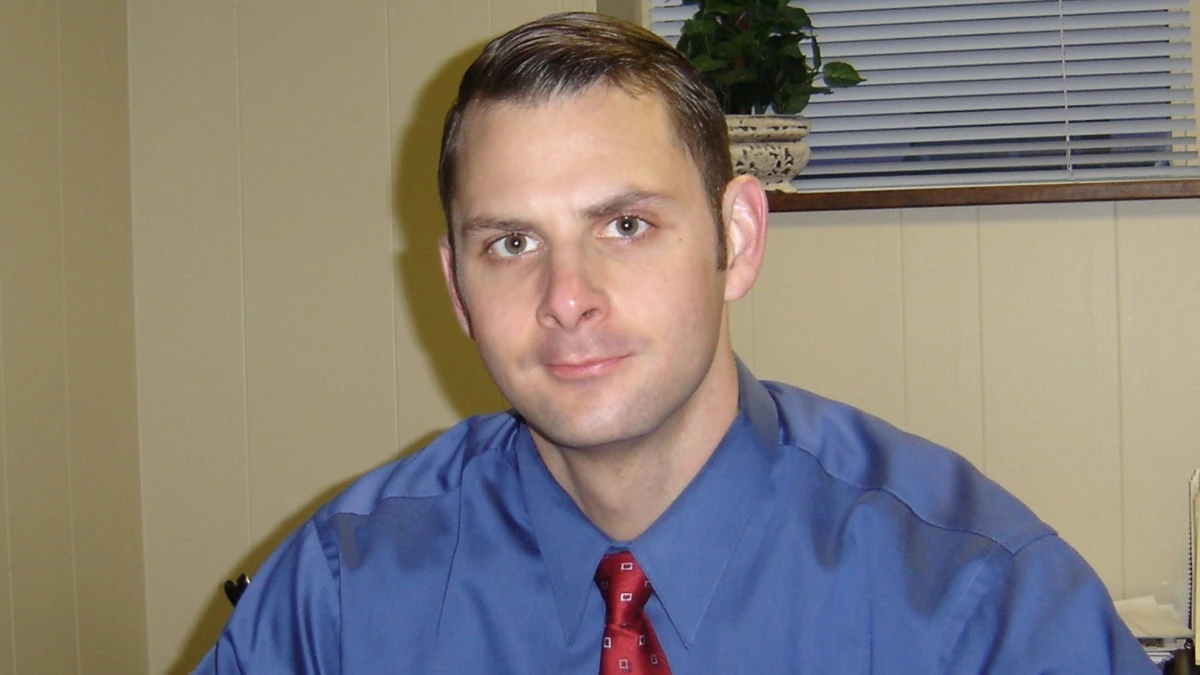
U.S. prosecutors said they were seeking a 17-year prison sentence for a former U.S. Army Green Beret who pleaded guilty last year to years of providing classified information to a Russian military intelligence agent.
The filing on May 7 in U.S. federal court in Virginia follows Peter Debbins’s guilty plea last November to a federal Espionage Act charge.
According to the court filing, Debbins, 46, had a 15-year relationship with Russian intelligence dating back to 1996 when he was an exchange student from the University of Minnesota and on a visit to Russia for an independent study program gave an alleged Russian handler the names of four Roman Catholic nuns he had visited in Russia.
Two years prior, according to U.S. prosecutors, Debbins, whose mother was born in the Soviet Union, traveled to Russia for the first time and met his current wife in the central city of Chelyabinsk. Debbins’s father-in-law was a colonel in the Russian air force.
Debbins told Russian intelligence he considered himself a “son of Russia,” and “thought that the United States was too dominant in the world and needed to be cut down to size,” according to the indictment filed last year.
Court filings show that Debbins joined the U.S. Army as an active duty officer in 1998 and served through 2005, the last two years as a Special Forces officer.
While on assignment in Azerbaijan, he was discharged and lost his security clearance after violating protocols. That included bringing his wife with him to Azerbaijan and allowing her to use a government-issued cell phone, according to the court filing.
After being discharged from the military, he worked as a civilian for U.S. military contractors, in some cases in counterintelligence, including work as a Russian linguist.
The original charging indictment alleged that he provided information and names of his fellow Special Forces members while he was on assignment in Azerbaijan and Georgia.
According to his guilty plea, Debbins admitted that the Russian agents used the information he provided to evaluate whether other Special Forces officers could be persuaded to cooperate with Russia.
It wasn’t immediately clear when Debbins will be sentenced.
Britain has accused Iranian authorities of abuse that “amounts to torture” of a dual national held by Iran for five years, while the United States has rejected an unsourced report that a prisoner swap had been agreed for Westerners held in Iran.
The renewed focus on Westerners held in Iran emerged a day after the parties to a 2015 nuclear agreement with Iran wrapped up a third round of tense talks on May 1 focused on bringing the United States and Iran back into full compliance with the deal.
British Foreign Secretary Dominic Raab on May 2 said that dual British-Iranian national Nazanin Zaghari-Ratcliffe, who has been held in Iran since 2016, is being held “unlawfully” and “being treated in the most abusive” way.
“I think it amounts to torture the way she’s being treated, and there is a very clear, unequivocal obligation on the Iranians to release her,” Raab told BBC television on May 2.
Raab spoke by telephone with former charity worker Zaghari-Ratcliffe on April 28, days after her lawyer announced that she had been sentenced to another year in prison in Iran for spreading “propaganda against the system.”
Zaghari-Ratcliffe was already serving a five-year sentence for plotting the overthrow of Iran’s government, a charge that she, her supporters, and rights groups deny.
Her husband, Richard Ratcliffe, has accused Tehran of holding Zaghari-Ratcliffe as a diplomatic ploy.
Iranian state TV on May 2 quoted an anonymous source as saying a deal had been agreed for the United Kingdom to pay hundreds of millions of pounds for the release of Zaghari-Ratcliffe.
The claims of a prisoner swap came in the hours before a nationally broadcast speech by Iranian Supreme Leader Ayatollah Ali Khamenei in which he made no mention of such a deal.
The U.S. State Department denied Iranian reports suggesting a deal including a prisoner swap had been made between Washington and Tehran.
“Reports that a prisoner swap deal has been reached are not true,” U.S. State Department spokesman Ned Price said. “As we have said, we always raise the cases of Americans detained or missing in Iran. We will not stop until we are able to reunite them with their families.”
The unsourced reports said four Iranians and “four American spies who have served part of their sentences” would be traded and $7 billion in frozen Iranian funds released.
Iran is known to be holding at least four Americans: father and son Baquer and Siamak Namazi, environmentalist Morad Tahbaz, and entrepreneur Emad Shargi.
Hawks in Iran and the West have opposed U.S. President Joe Biden’s stated aim of rejoining the so-called Joint Comprehensive Plan of Action, the nuclear deal his predecessor Donald Trump abandoned in 2018 to reimpose sanctions on Iran.
With reporting by AP and AFP
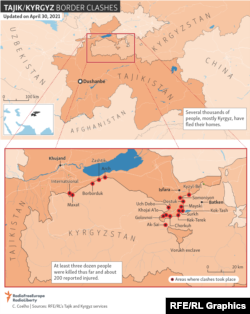
Both sides have reported calm on the Kyrgyz-Tajik border as a day-old cease-fire appeared to be holding and more than 40 people were being mourned from some of the worst clashes in decades on their disputed frontier.
A joint Kyrgyz-Tajik military commission reported finding an unexploded rocket embedded in a residence in the area as the group inspected the scene of 24 hours of intense violence on April 28-29.
Kyrgyzstan is observing two days of official mourning for 34 people who died in Batken Province. One hundred and seventy-eight more were reported injured on the Kyrgyz side, seven of them still in grave condition.
Some 30,000 Kyrgyz villagers were reportedly evacuated from their homes.
Fifteen people were thought to have been killed on the Tajik side and 90 more injured, according to RFE/RL’s Tajik Service, although Tajik authorities did not disclose casualty figures.
The Kyrgyz Interior Ministry said in a statement on May 2 that “the situation in all districts and villages of Batken Province on the Kyrgyz-Tajik border is stable and calm.”
The violence followed a dispute over the installation of surveillance cameras at a water-distribution point near Tajikistan’s Vorukh exclave, drawing in security forces from both countries.
Kyrgyz security officials at one point accused Tajik forces of using MI-24 helicopter gunships to shoot at Kyrgyz villages.
Kyrgyz reports say about 100 structures, including dozens of homes, three border checkpoints, a medical center, a police station, and two schools, were damaged.
The heads of national security for the post-Soviet, Central Asian neighbors agreed to the pullback during a crisis meeting on May 1.
The meeting of the Tajik and Kyrgyz delegations followed a telephone conversation between Kyrgyz President Sadyr Japarov and his Tajik counterpart, Emomali Rahmon.
The European Union, the Organization for Security and Cooperation in Europe (OSCE), and Russia have all urged both sides to respect the cease-fire agreement.
Kyrgyzstan and Tajikistan both host Russian military bases.
Human Rights Watch has urged an immediate investigation to hold either side responsible for laws-of-war violations against civilians.
Like many other border areas in Central Asia, almost half of the 970-kilometer-long Kyrgyz-Tajik border has not been demarcated, leading to tensions for the past 30 years.
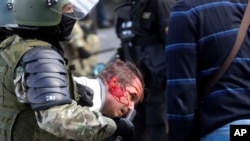
Anger spilled onto the streets of Minsk and across Belarus on August 9, 2020, shortly after polls closed and a state-run exit survey pointed to a big victory for Alyaksandr Lukashenka. Protesters marched through the streets of the capital, many facing off against armed riot police who dealt with them brutally.
No election in Belarus under Lukashenka, in power since 1994, had been deemed free or fair by the West, and this one was no different, although the strongman was suddenly more vulnerable than he had been going into past votes. He was under fire for refusing to institute lockdown measures to cope with the COVID-19 pandemic, which he dismissed as “mass hysteria.”
Crisis In Belarus
Read our coverage as Belarusians continue to demand the resignation of Alyaksandr Lukashenka amid a brutal crackdown on protesters. The West refuses to recognize him as the country’s legitimate leader after an August 9 election considered fraudulent.
He was also facing a strong challenge from Svyatlana Tsikhanouskaya, a political novice and last-minute fill-in candidate for her jailed husband, Syarhey Tsikhanouski. Her huge campaign rallies had fueled hopes, quickly dashed, that Lukashenka’s decades-long authoritarian rule was nearing an end.
Maryna Zolatava, editor in chief of the country’s most popular news website, the independent outlet Tut.by, was working the editorial desk that day when reports came in of unrest on the streets of Minsk after the polls closed.
“The recollections from August 9 are seared into my mind,” Zolatava told RFE/RL’s Belarus Service in a recent interview, describing the scene “when our reporters in the field began calling in to the editorial office to tell us what was happening in the city.”
“Explosions, gunfire…. I couldn’t believe the things the reporters were telling me,” she said. It was all remarkable, but we didn’t have time to reflect on what was happening.”
The protests, with crowds swelling to as many as 200,000 people in Minsk, have continued ever since, albeit with dwindling numbers. That has been put down to fatigue and the fear instilled by the Lukashenka government’s brutal crackdown. More than 30,000 Belarusians have been detained, and hundreds beaten on the streets and in custody.
Rights groups have documented some 1,000 cases of suspected torture. At least five people have been killed. Tsikhanouskaya was forced to flee to Lithuania after the vote amid threats to her and her family.
For the crackdown and alleged vote rigging, Lukashenka and his inner circle have been hit with sanctions by the United States, the European Union, and others, including Canada.
Lukashenka faces international isolation and is ever more reliant on support from larger, more powerful neighbor Russia, which commentators say is exploiting his weakness to squeeze out more concessions on a union treaty deal that critics say further erode what sovereignty it still possesses.
The practice of independent journalism, long dangerous work in tightly controlled Belarus, has become substantially riskier over the past year. And even journalists at state-run media weren’t safe: Dozens who voiced support for the opposition were thrown out of work and replaced by state TV journalists from Russia.
According to the Belarusian Association of Journalists, 481 journalists were detained in 2020, twice as many than the previous six years combined.
Fear And Courage
Belarus slipped five places, to 158th, in Reporters Without Borders’ (RSF) 2021 World Press Freedom Index. Three journalists were given hard prison time, including two facing two-year prison sentences.
“The authorities are trying to suppress all independent voices and to strike fear into the hearts of journalists,” said Jeanne Cavelier, the head of RSF’s Eastern Europe and Central Asia desk. “RSF hails the courage of those who continue to report on the crackdown in Belarus and calls on international organizations to take action to prevent such harassment and to secure the release of journalists jailed for doing their job.”
During the early days of postelection protests, journalists were not widely targeted by police, Zolatava said — but that changed quickly, and soon police were harassing even those with vests clearing identifying them as “press.”
“At the time I thought, ‘This can’t be!’ But it is, and it should not be so. The administrative arrests had started. It all seemed impossible — the fact that all this was happening was surreal.”
The risk of her reporters being beaten or snatched off the street by police began to weigh on Zolatava. “It wasn’t like that before. Now you’re under constant stress as you try to maintain a state of normality within your team. And you constantly think about how you can guarantee the safety of your people,” she said. “It has greatly changed the job. It doesn’t impact you physically, it’s more like constant psychological pressure. You really have to be prepared for it.”
Long targeted by the authorities for its hard-hitting reporting, Tut.by has found itself under even greater scrutiny over the past year. The Ministry of Information warned the news site over four articles before withholding its accreditation for three months starting on October 1.
Tut.by only registered as a media outlet in January 2019. Before that, it had operated without media credentials since the site’s founding in 2000.
Behind Bars
Despite the growing pressures, Zolatava said her reporting team remains largely intact. “Have people left due to security issues or political problems? Nothing like that has happened. In August, our work underwent huge changes. Everything that happened before and after that has hugely impacted all of our lives,” she said, adding that her reporters were detained 38 times by police in 2020.
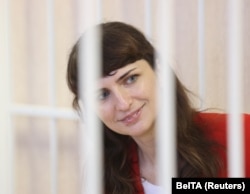
One of them was Katsyaryna Barysevich. She was arrested on November 19 after writing an article about Raman Bandarenka, who died several days earlier following a beating by a group of masked assailants. Barysevich disputed the official claim that Bandarenka was drunk, citing medical findings that no alcohol had been detected in his blood.
The doctor who provided the lab results, Artsyom Sarokin, was arrested, tried, and convicted along with Barysevich, ultimately receiving a suspended two-year prison sentence and fine of 1,450 Belarusian rubles ($560) for disclosing medical information. Barysevich was handed a six-month prison term and fined 2,900 rubles ($1,130) for disclosing medical information and instigating a crime by pressuring a first responder to share information.
Katsyaryna Barysevich is seen inside a defendants’ cage during a court hearing in Minsk in February.
“Katsyaryna is in good spirits. Barysevich is someone deserving of admiration. Katya is the best,” Zolatava said. “It is definitely very distressing that she is in there [prison]. And it’s awful that we can’t change that.”
“We are doing our best. We are writing appeals, trying to draw the attention of the international community to the situation of Katsyaryna,” she said, thanking the Belarusian Association of Journalists and human rights activists for their efforts. “But almost five months have passed since November 19, and Katya is still behind bars. And it’s just awful. How can this be happening?”
Barysevich’s arrest and sentencing served as wake-up calls to editors at Tut.by, Zolatava aid. “After Katya’s arrest, we began to discuss our future more often and consult with lawyers. Although, in principle, her arrest did not affect the editorial policy; self-censorship did not increase. Katya did nothing illegal. She did her job, did it as it should be done,” she said.
On April 20, the Minsk City Court upheld Barysevich’s conviction and sentence. She is now scheduled to be released from prison on May 19.
‘Nightmarish Events’
While Barysevich’s was one the harshest sentences, two other Belarusians suffered an even worse fate. Katsyaryna Andreyeva and Darya Chultsova, reporters for Belsat, a Poland-based satellite TV station, were arrested on November 15 while covering a rally in Minsk to commemorate Bandarenka.
A court in Minsk on February 18 found Andreyeva and Chultsova guilty and sentenced them to two years in prison each, sparking international condemnation, with EU foreign affairs spokesman Peter Stano denouncing it as a “shameful crackdown on media.”
Despite the dangers, more people than ever are turning to Tut.by for credible news coverage, although numbers are slipping as weariness creeps in, Zolatava said.
Visits to the site peaked in August, September, and October. By December, they began to dip and the downward trend continues, although there was a blip around March 25 and 27, when Tsikhanouskaya had called for a huge turnout coinciding with the anniversary of the founding in 1918 of the first free Belarusian republic.
“I think there is a fatigue factor with readers. A year ago, the coronavirus appeared, and the situation then was not completely normal. I think people were looking for something a bit lighter. The whole world is now stressed,” Zolatava said.
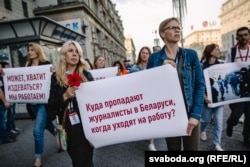
Maryna takes part in a march of solidarity of journalists in Minsk in September 2020.
Meanwhile, Lukashenka’s government is pushing ahead with more media restrictions. Changes to the country’s mass media law — passed by the rubber-stamp parliament earlier this month — would make it illegal for journalists to “discredit” the state, or livestream mass unauthorized gatherings, among other draconian measures. According to Human Rights Watch, at least seven reporters face trial.
Despite the bleak prospects and pangs of doubt, Zolatava says she is determined to continue her work at Tut.by. “There have been so many nightmarish events, so much that is unfair, that I’ve wondered whether it’s possible to continue the work. The injustice, the fact that so much is horribly illegal, and yet we are still working,” she said.
“On the other hand, what else can we do?” she continued. “We have to continue working so that all that has happened is not forgotten and remains a chapter of our history. So that people will know everything that happened.”
Written by Tony Wesolowsky based on reporting by RFE/RL’s Belarus Service
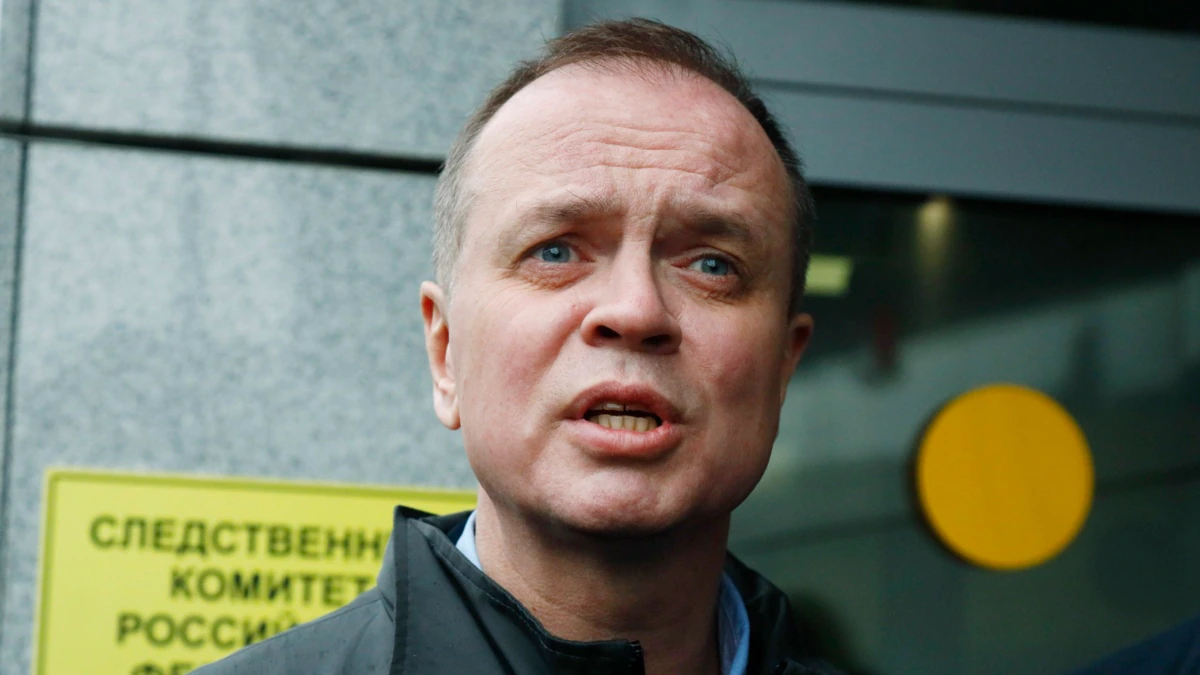
More than 80 Russian journalists, writers, historians, and translators have issued an open letter in support of prominent defense attorney Ivan Pavlov, who was detained in Moscow on April 30 and accused of disclosing classified information about the ongoing investigation of former journalist Ivan Safronov.
“The persecution of Ivan Pavlov and the seizure of confidential case files is an act of terror directed not only at Pavlov but at the entire law community and an attempt to drive Pavlov out of the Ivan Safronov case,” the open letter published on May 2 said.
The signatories of the letter represent the Moscow PEN Club and the Free Speech Association.
Pavlov, 50, is one of Russia’s leading human rights lawyers and the head of the legal-aid foundation Team 29. Law enforcement officers searched the Team 29 office in St. Petersburg, the home of the group’s IT specialist, and the apartment of Pavlov’s wife.
Safronov is accused of treason and has been in pretrial detention since July 2020. Authorities say he gave classified information about Russian arms sales in the Middle East to the Czech Republic, an accusation that Safronov denies.
Pavlov has also been representing the Anti-Corruption Foundation (FBK), which was created by imprisoned opposition politician Aleksei Navalny and which Russian authorities are pushing to have declared an “extremist” organization.
In a statement on April 30, Amnesty International described Pavlov as “one of the country’s most courageous lawyers” and said his detention was “a travesty of justice.”
Pavlov also defended physicist Viktor Kudryavtsev, who was also charged with treason. Kudryavtsev died of cancer on April 29 as his trial was pending.
Pavlov told journalists that the 14 months Kudryavtsev spent in pretrial detention had “completely damaged his health.” The case was “an example of how the secret services are literally killing Russian science in general,” he added.
Long persecuted by Iran’s Islamic regime, followers of the Baha’i faith in Tehran have now been told they must bury their dead upon the mass graves of political prisoners.
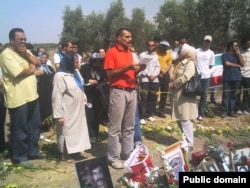
The Baha’i community in the Iranian capital has for years buried its dead in a special section of Tehran’s Khavaran cemetery, near the resting place for hundreds or even thousands of political prisoners who were victims of mass executions in the late 1980s.
Cemetery officials have in recent days reportedly told Baha’is that they are no longer allowed to bury their dead in that section of the cemetery.
Instead, they have been given two choices: they can bury their dead in the narrow space between existing Baha’i graves or use the area where the mass graves are located, says Simin Fahandej, the Baha’i International Community representative to the United Nations in Geneva.
Baha’is find the order unacceptable and want to be able to bury their dead with dignity and according to their religious rules. “With the destruction of many Baha’i cemeteries in the past four decades, Baha’is have experienced the pain caused by disrespect to the deceased and they don’t want others to experience the same pain,” Fahandej said in an interview with RFE/RL’s Radio Farda.
He added that this new pressure from the authorities is part of more than 40 years of state repression and discrimination that Baha’is have faced in Iran since the creation of the Islamic republic.
Victims’ families attend a remembrance ceremony in Khavaran cemetery in Tehran.
History Of Persecution
Baha’is — who number some 300,000 in Iran and have an estimated 5 million followers worldwide — have faced systematic persecution in Iran, where their faith is not officially recognized in the country’s constitution.
Since the Islamic Republic of Iran was established in 1979, hundreds of Baha’is have been arrested and jailed for their beliefs. At least 200 have been executed or were arrested and never heard from again — that includes all the members of three National Spiritual Assemblies from 1980 to 1984.
Thousands more have been banned from higher education or had their property confiscated. The community has long had its cemeteries desecrated and its loved ones’ gravestones destroyed.
The latest restriction put on Baha’i burials in Tehran, where most of Iran’s Baha’is live, has also upset the families of the executed political prisoners. They even wrote in an open letter dated April 25 complaining that several new graves had appeared near the site of the mass burials at Khavaran.
“On Friday April 23, while visiting the nameless land of our loved ones, we saw something that was shocking to believe: graves were dug in the mass graves’ site of our loved ones and two Baha’is were also buried in those graves,” said the letter, which was signed by 79 family members of the executed political prisoners.
“It is our right to know the exact burial place of our loved ones,” the letter said, adding that “after being deprived of this right for 40 years, we demand that there won’t be any changes and invasion at this cemetery.”
They also urged the Iranian authorities to refrain from forcing Baha’is to bury their loved ones on the area where the mass graves are located. “Don’t rub salt in our old wounds,” said the letter, addressed to Iranian President Hassan Rohani and Tehran Mayor Piruz Hanachi.
‘Salt In Our Wounds’
In a separate statement, some of the children of the executed prisoners said they opposed “any changes” at Khavaran, calling on the Baha’is not to submit to the order telling them where to bury their dead. “This is not the first time that the Islamic republic has attempted to cover up the remains of its crimes,” the statement said.
Several photos of the purported new graves at Khavaran, including two that had signs and flowers laid on them, have been posted online. The images appeared also to show white lines drawn in the dirt apparently as marks for new graves. RFE/RL cannot verify the authenticity of the images. Reports suggest about 10 new graves have appeared recently at Khavaran’s mass graves’ section.
Amnesty International said in a statement on April 29 that the Iranian authorities had attempted for years to destroy the mass-grave sites of the victims of the 1988 prison executions “in a bid to eliminate crucial evidence of crimes against humanity, denying truth, justice, and reparations to the families of those forcibly disappeared and extrajudicially executed in secret.”
“As well as causing further pain and anguish to the already persecuted Baha’i minority by depriving them of their rights to give their loves ones a dignified burial in line with their religious beliefs, Iran’s authorities are willfully destroying a crime scene,” said Diana Eltahawy, Amnesty International’s deputy director for the Middle East and North Africa.
The executions of political prisoners were carried out in the last days of the 1980-88 Iran-Iraq War, after the founder of the Islamic republic, Ayatollah Ruhollah Khomeini, declared that apostates and those who had taken up arms against the Islamic republic were “waging war against God” and should be sentenced to death.
The prisoners were sent to their deaths following very brief interrogations by a small group of state officials, dubbed by prisoners as “death commissions.”
The Iranian establishment has rarely acknowledged the executions while also enforcing a news blackout on the issue. They have also repeatedly harassed family members of the victims who seek answers about their loved ones.
The Baha’i faith is a monotheistic religion whose central figure is Sayyed Ali Muhammad Shirazi, better known as Bab, who was executed in Tabriz by the Persian authorities in 1850. Based on the teachings of Persian religious leader Bahaullah, it considers the founders of various faiths — including Buddha, Jesus Christ, and the Prophet Muhammad — as expressions of God.
The central tenet of Baha’is is to promote a “oneness of humankind” that treats people of different nationalities, races, and classes equally.
Elahe Ravanshad of RFE/RL’s Radio Farda contributed to this story
Russia’s Interior Ministry says that more than 527,000 people in parts of eastern Ukraine where Moscow-backed separatist formations are waging a war against Kyiv have been granted Russian citizenship over the past two years.*
The ministry’s press service made the announcement on May 2 to the state news agency TASS.
It said around 40 percent of applications had been rejected, citing expulsions or restrictions on entry to Russia.
Russian President Vladimir Putin in April 2019 issued an order for a simplified and expedited citizenship process for residents of those areas.
Moscow’s policy of handing out citizenship in Ukraine has come under intense international criticism as a bid to further destabilize the area, where more than 13,000 people have been killed since the fighting started in April 2014.
Ukraine has condemned the Russian naturalization of Ukrainian citizens as part of a hybrid-warfare campaign being waged by Moscow and a violation of Ukraine’s sovereignty.
Russia has provided military, economic, and political support to the separatists in parts of Ukraine’s Luhansk and Donetsk regions. Despite overwhelming evidence to the contrary, Moscow maintains it is not involved in Ukraine’s domestic affairs.
The developments come at a time of heightened tensions between Russia and Ukraine in recent weeks, when Russia launched a major military buildup along its border with Ukraine and in the Black Sea Ukrainian region of Crimea, which Moscow annexed in 2014.
On April 8, Putin’s deputy chief of staff, Dmitry Kozak, said Russia could “be forced to come to the defense” of Russian citizens in Ukraine, a statement that was repeated the following day by Kremlin spokesman Dmitry Peskov.
In November 2020, Peskov said, “Russia has always protected and will continue to protect the interests of Russians, regardless of where they live.”
Viktor Vodolatsky, deputy chairman of the Russian State Duma’s Committee on CIS Affairs and Eurasian Integration, told TASS on April 24 that Russia could issue up to 1 million new passports to Ukrainians by the end of the year.
On March 20, a Russian presidential decree came into force banning non-Russian citizens from owning land in most of Crimea.
“The European Union does not recognize the illegal annexation of the Crimean Peninsula by Russia, which is a clear violation of international law,” said an EU statement at the time.
“Therefore the European Union does not recognize this decree and considers its entry into force as yet another attempt to forcibly integrate the illegally annexed peninsula into Russia.”
With reporting by TASS, UNIAN, and The Atlantic
*CORRECTION: A previous version of this story gave an incorrect time frame for the issuing of Russian passports to residents of eastern Ukraine.