Gustavo Petro is a force to be reckoned with in Colombian politics.  The senator – once a member of the M-19 guerilla group, later elected to the House of Representations in the 1990s and then the mayorship of Bogotá (2012-2016) – has become the candidate to beat in next year’s presidential election.  He is such a prominent opponent of right-wing politics in the country that while Donald Trump was campaigning in Florida in 2020 he included Petro in one of his anti-socialist diatribes, tweeting that “Biden is supported by socialist Gustavo Petro, a major LOSER and former M-19 guerrilla leader. Biden is weak on socialism and will betray Colombia. I stand with you!”

Petro previously ran for president in 2018 and made a strong showing, but ultimately lost to the far-right Iván Duque of the Democratic Center party by approximately 12%.  It is worth noting that leaked recordings pertaining to the 2018 election contain evidence that Duque’s party conspired with individuals linked to narcotraffickers to commit electoral fraud, and subsequent investigations have uncovered at least six cases of fraud in both the House and the Senate.

Since 2018, Petro’s grassroots appeal has only grown.  Polls for the upcoming 2022 election consistently place him in first place, and a survey conducted by pollster Invamer in April 2021 shows that “if elections were held tomorrow, no candidate would stand a chance against Petro.”  Nestor Morales of the Mañanas Blu radio program remarked:

Petro is right to be celebrating, because [this survey] is well above its historical averages… what is impressive is that Petro is winning in absolutely everything…He has votes in sectors that were not related to him; for example, the upper strata, the old men who were so anti-petrist. There is a change, a transformation of public opinion.

The discrediting of Duque and Uribismo, the far-right political project of his mentor former president Álvaro Uribe (2002-2010), has contributed to Petro’s rise in popularity.  His already solid base has been supplemented by those disillusioned by Duque’s failed COVID response and the brutal continuation of Uribista violence against former guerilla fighters and social activists, in contravention of the previous government’s peace deal with the FARC.  Furthermore, the Duque government’s recent decision to introduce a regressive tax reform that exempted the oligarchy while punishing ordinary workers has led to massive protests across Colombia.  Government forces have responded brutally, causing multiple deaths and leading the UN rights office to condemn their “excessive use of force.”  These protests have produced two general strikes thus far – one on April 28 and another on May 5 – and resistance to the austerity measures have grown to dominate the political discourse in the country, similar to how the 2019-2021 protests in Chile, which began due to a transit fare increase, soon snowballed into a nationwide indictment of neoliberal governance as a whole.

Gustavo Petro represents an alternative.  Despite his association with Latin American socialism, however, Petro’s political views have evolved greatly over time.  No longer an adherent of M-19’s revolutionary leftism, he now advocates a more moderate social-democratic model.  In interviews, he is quick to distance his favored politics from those introduced in Cuba and Venezuela – policies which, in addition to angering domestic elites, inevitably leads to aggression from Washington as well.  Instead, he compares himself to more gradualist figures, once stating that “I have more in common with Pepe Mujica [than Castro or Chávez],” referring to Uruguay’s famously modest left-wing president who served from 2010 to 2015 and oversaw notable macroeconomic growth as well as the legalization of marijuana and same-sex marriage.

Despite the softening of his views, Petro remains a target of the Colombian right and has received constant death threats during his public career.  He claims to have slept with an assault rifle over the course of the “parapolitics” scandal, during which dozens of politicians (many with links to the Uribe administration) were investigated and convicted for illegal ties to paramilitary groups with evidence that he helped present to Congress.  His brother was allegedly threatened with assassination (certainly no idle threat in Colombia), and his son Andrés is currently in exile, having been granted asylum by the Canadian government due to threats and political harassment from right-wing groups.  Furthermore, in March 2018 a Cuban man named Raul Gutierrez was arrested in Bogotá for plotting to bomb the Cuban embassy and assassinate both Petro and FARC leader Rodrigo “Timochenko” Londoño.  While imprisoned, he claimed that a right-wing Colombian group based out of Florida hired him to commit the attacks.

Leftism and social activism are dangerous business in Colombia.  In the first three months of 2021 alone, 40 activists were murdered and there were 23 massacres of predominantly poor and Indigenous peoples by paramilitary groups.  The impunity rate for the murder of trade unionists is approximately 87% and, as COVID-19 wracks the country, the Duque administration has continuously ramped up violence against areas which contain former FARC fighters.

One of the most horrific incidents so far this year was the murder of twelve children and two nineteen-year-olds in a bombing raid against an alleged armed group in Guaviare.  Petro commented publicly on the massacre, posting a list of the children’s names on Twitter and writing “14 children killed [including the two 19-year-olds] in a bombardment ordered by the Minister of Defence. These are their names. End the war, end the genocide of children in our country.”

Marcha Patriotica, a progressive umbrella organization that brings together historically marginalized groups within Colombia including peasants, people of color, women, and the LGBTQ community, has also faced persecution.  Almost two hundred of its members have been murdered since its founding in 2011, while an Inter-American Commission on Human Rights resolution from 2017 claimed that hundreds more are living under severe risks and that the government could protect them if it chose to act.

The Colombian right-wing has historically lumped together unionists, social activists, and left-wing figures with the longstanding peasant-led insurgencies in the countryside, labelling them “Castro-Chavistas,” “terrorists,” and “guerrillas posing as human rights defenders.”  These are extremely serious threats in Colombia, and not just due to ongoing atrocities.  One must also take into account the “political genocide” against the Patriotic Union (UP) in the 1980s and 1990s.

The UP was formed in 1985 during peace negotiations between the FARC and the Belisario Betancur administration.  Its purpose was to allow the FARC to participate in the electoral system in exchange for a ceasefire.  What followed, however, was a massacre: the party’s members were relentlessly attacked by paramilitaries and drug cartels and over 3000 of its members, including elected officials and presidential candidates, were murdered.  This led to a resumption of overt hostilities and proved to the guerillas that the Colombian state was an inherently oppressive, right-wing organization that would not allow fair elections to weaken its hold on power.

The US-backed military has historically been the arbiter of the political realm in Colombia, backing conservative figures and using paramilitaries to kill or intimidate those who organize for social change.  Their brutal acts have not shaken America’s diplomatic and material support or its military cooperation – as Joe Biden wrote during the 2020 election, it is the “keystone” of US policy in Latin America and has served as an indispensable ally in the region-wide imposition of a free-trade model vulnerable to American capital.  Scandals like the extermination of the UP, the murder of over 6000 civilians in the 2000s as a way of boosting the army’s kill-count against the insurgencies, and the almost universal impunity for the killing of trade union activists have not lessened America’s support in the slightest.

Nor have recent atrocities weakened Canada’s support for the Colombian government.  Stephen Harper made a point of deepening Canada’s ties to right-wing governments across the region, and Justin Trudeau has likewise taken a very active role in supporting the Latin American right against progressive movements.  Yves Engler writes that, in regard to Colombia, Ottawa quickly congratulated Duque after his fraud-riddled election win, refused to criticize the attempted overthrow of Venezuelan President Nicolás Maduro that was launched from Colombia in May 2020, and has consistently failed to draw attention to the ongoing injustices in the country.

This is the political climate – one of violent repression that receives the tacit or outright support of imperialist countries – in which Gustavo Petro has fought to present an alternative.  Although the presidential election will not be held for over a year, Petro’s dramatic rise in popularity is evidence that the Colombian people are seeking a break from the status quo, and that he may represent their best chance to achieve this.

Owen Schalk is a writer based in Winnipeg. His areas of interest include post-colonialism and the human impact of the global neoliberal economy. Read other articles by Owen.

George W. Bush is back. He is back, this time not to bomb countries and cause the death of thousands. This time the man is back as an artist who advocates for the rights of immigrants, and the U.S. media is on heat.

That death in Iraq is eliminated from the conversation makes it clear that to ‘them Americans’, ‘us Iraqis’ are non-existent.

Bush, the former US president, recently penned an Op-Ed for The Washington Post, and received a round of applause on ‘Jimmy Kimmel Live!‘ when the eponymous host complimented him on his painting of American politician Madeleine Albright. He appears on TV to speak about his new book of oil paintings of America’s immigrants, ‘Out of Many, One’, he is not wearing handcuffs, and all rehabilitated. It is all normal.

What is also normal is how the starvation and deprivation of medication that caused the early death of hundreds of thousands of Iraqi children because of the severe UN sanctions on the country in the 1990s, have fallen into oblivion. To Albright, speaking in a 1996 TV interview, the political price was “worth it“, though she would later express regret for her wording.

Bush’s grinning face seems to be traveling at a smooth pace from one TV show to the next. Kimmel admired his guest’s reflexes when he dodged Muntadhar al-Zaidi’s shoe throw, and the two had a laugh about it. Of course, it slipped Kimmel’s mind to ask his guest about his time ordering cluster bombs be dropped on my family’s house in Baghdad to “liberate it”. It also slipped the host’s mind to ask why in the first place a man would want to throw a shoe at the former president.

For their part, the cheering crowd gave the impression that the next rich guy to oversee the annihilation of inferior beings overseas could as well re-emerge from the gutter and be celebrated as a cool, funny grandpa.

Bush’s blood-stained past tells us the man is dangerous. If Richard Nixon—in the words of the late Hunter S. Thompson—”could shake your hand and stab you in the back at the same time”, you might lose a finger or two if you extend your hand to shake Bush’s.

And with the way things are going, there’s a big chance he will get away with it—again.

It is well known that columnists in the US were at war with Iraq even before depleted uranium was generously distributed among its citizens in 2003, but the slick anchors and boring television hosts of today seem to be suffering from amnesia.

George W. Bush is responsible for the destruction of an incalculable number of innocent Iraqi lives. Have the decency to remember his victims.

In an interview after a tour of Bush’s Texas ranch, CBS’s Norah O’Donnell told the former president that she thought the paintings in his new book were “beautiful”. And when she asked him about the 6 January storming of the Capitol, Bush said that it made him sick: “This sends a signal to the world, you know, like, we’re no different, and this book says we are different, much different”.

In the words of the great Iraqi poet Saadi Youssef:

“But I am not an American

Is it enough that I am not American for the Phantom pilot to send me back to stone age?”*

The entire charade reeks with hypocrisy. Even when preaching on immigration reforms, Bush failed to hide his ‘us versus them’ complex.

But the American exceptionalism is not what bothers me the most.

That death in Iraq is eliminated from the conversation makes it clear that to ‘them Americans’, ‘us Iraqis’ are non-existent. We are not worthy of receiving justice or of anybody at least bothering to ask Bush about that long-forgotten ‘blunder‘, as Iraqi scholar Sinan Antoon reminds us.

Meanwhile, war is ongoing in Iraq. Its signs are unmistakable; walls and road signs riddled with bullet holes, concrete barriers blocking main streets, dead youth staring from faded billboards and military choppers occupying the skies above.

In Baghdad, militiamen nurtured under the lawlessness birthed by the US invasion still fire rockets on the airport and the ‘Green Zone’. They still roam the streets, armed to the teeth, terrorizing the city’s traumatized residents who are left unprotected by empty promises from the Iraqi state.

While Iraq no longer receives aerial bombing from the West, death has become a permanent resident of Baghdad. The lethal failure of its subsequent ‘post-liberation’ rulers continues what George W. Bush started 18 years ago: non-stop civilian killings in Iraq.

The negligence behind the recent al-Amiriyah-like incineration of dozens of patients inside Ibn al-Khatib’s hospital is an example of the consequences of war faced by the people of Iraq since 2003.

George W. Bush is responsible for the destruction of an incalculable number of innocent Iraqi lives. Have the decency to remember his victims.

*From Saadi Youssef’s poem, America America. Translated by the author of the piece.

A heavily armed police raid in the Jacarezinho favela of Rio de Janeiro, Brazil, on Thursday resulted in at least 28 deaths and many wounded. It was the deadliest police raid and the second deadliest massacre in Rio’s history. The police said they were executing arrest and search warrants against alleged drug traffickers. Residents washed away pools of blood after police officers, supported by armored personnel carriers and helicopters, used automatic weapons and explosives into the densely populated residential neighborhood.

Read the full story at theintercept.com

The Justice Department secretly obtained the phone records of three Washington Post reporters who wrote about the federal investigation into ties between Russia and former President Donald Trump’s 2016 campaign, the newspaper said on May 7.

The action appears to have been aimed at identifying the reporters’ sources for stories published in 2017 during the early months of Trump’s administration as federal investigators scrutinized whether Trump’s 2016 campaign had coordinated with Russia to sway the election.

The newspaper said the three reporters received notice that their phone records had been seized in letters dated May 3.

The Post said the Justice Department did not specify the purpose of the subpoena to obtain the records or identify any articles at issue, but the newspaper said the period in question was April 15, 2017, to July 31, 2017.

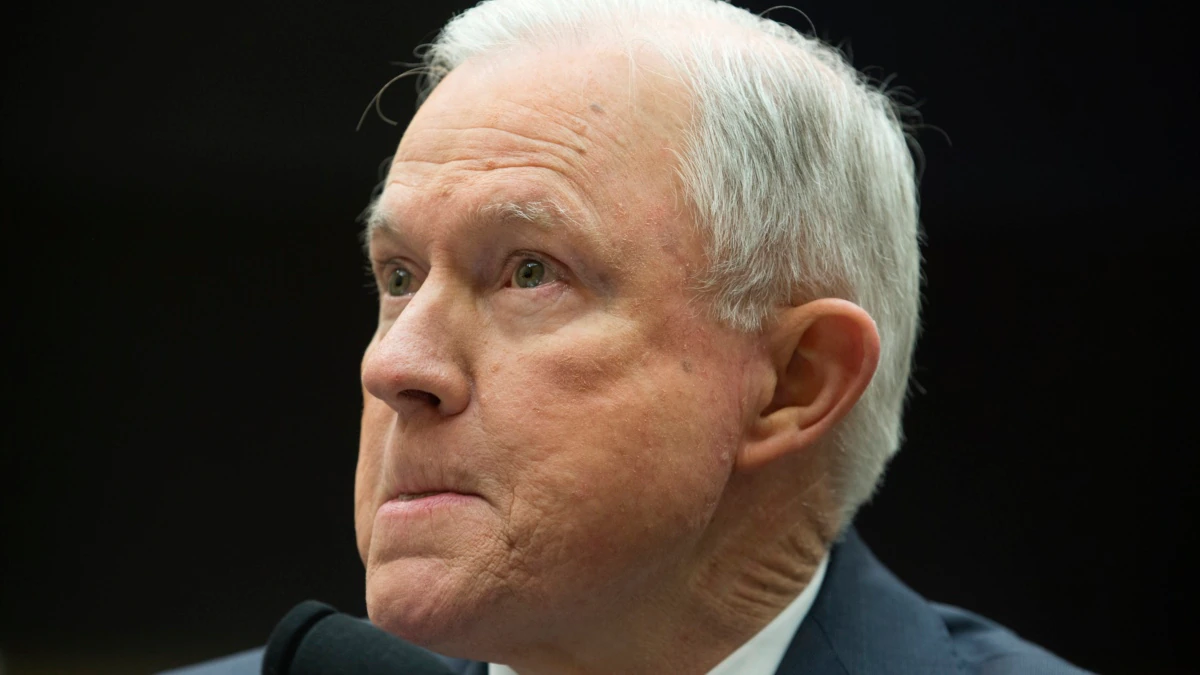
During that time the Post published a story about classified U.S. intelligence intercepts indicating that in 2016 Jeff Sessions, who would later become Trump’s attorney general, had discussed campaign issues with Russia’s then-ambassador, Sergey Kislyak.

The phone records include who called whom, when calls were made, and how long calls lasted, but do not include what was said in the calls. Investigators often hope such records will lead them to the sources who leaked sensitive information to reporters.

The letters sent to the reporters do not say when the Justice Department approved the decision to subpoena their records, but a department spokesman said it happened in 2020 before the end of the Trump administration.

Cameron Barr, the Washington Post’s acting executive editor, demanded that the Justice Department say why it seized the data.

“We are deeply troubled by this use of government power to seek access to the communications of journalists,” Barr said in a statement. “The Department of Justice should immediately make clear its reasons for this intrusion into the activities of reporters doing their jobs, an activity protected under the First Amendment.”

Justice Department guidelines for leak investigations mandate that such actions are allowed only when other avenues for obtaining the information have been exhausted, and that the affected reporters must be notified unless it’s determined that it would interfere with national security.

“While rare, the Department follows the established procedures within its media guidelines policy when seeking legal process to obtain telephone toll records and non-content email records from media members as part of a criminal investigation into the unauthorized disclosure of classified information,” department spokesman Marc Raimondi said in a statement quoted by the Post.

Raimondi said the targets such investigations are not the reporters but “those with access to the national defense information who provided it to the media and thus failed to protect it as lawfully required.”

The Justice Department also said it had received a court order to get e-mail records from the reporters but did not obtain them. The e-mail records sought would have indicated who e-mailed whom and when but would not have included the contents of the e-mails.

With reporting by the Washington Post and AP

ANALYSIS: By Phil Thornton

As chaos flows in Burma, journalists are being forced to hide in plain sight by the Burmese military, writes senior journalist and Myanmar expert Phil Thornton.


Journalists in Myanmar are being hunted and arrested by the country’s military for trying to do their job. Independent media outlets have been raided, licences revoked and offices closed.

To avoid arrest, independent journalists have gone into deep hiding, taken refuge in ethnic controlled regions or fled to neighboring countries. The military and its paid informers trawl through neighborhoods, coffee shops and scan social media for evidence to justify arresting journalists.

The military appointed State Administration Council revised and inserted a clause in the penal code, specifically tailored to gag its critics, politicians, activists and journalists.

Clause 505a of the penal code carries a sentence of three years in prison for actions, criticism or comment that question the coup, cause fear, spread false news or “upsets” government workers.

To stop journalists, photographers and activists sending reports and images of security forces abusing and killing civilians, the military coup leaders ordered telecommunication companies and internet services to shut down their social media platforms.

Brigadier General Zaw Min Tun fronts the military’s press conferences – a list of his titles is impressive: Deputy Minister of Information, head of the armed forces True News Information Team and boss of the military appointed State Administration Council’s media team.

A look at his name card reveals a much darker role – Zaw Min Tun has working directly for coup leader and Commander-in-Chief, General Min Aung Hlaing. Not only does the card boast that General Zaw Min Tun is Directorate of Public Relations, but he is also head of the army’s Psychological Warfare department.

Deceitful work
A Reuters report in 2018 gave an indication of the deceitful work his department of public relations and psychological warfare gets up to when it revealed a book it published on the Rohingya, had used “fake” photographs to claim Muslims were killing Buddhists.

The Reuters investigation into the origin of the photograph “showed it was actually taken during Bangladesh’s 1971 independence war, when hundreds of thousands of Bangladeshis were killed by Pakistani troops”.

The tactic might have been clumsily executed, but it worked, and helped ignite deadly racist attacks against Rohingya people and supported ultra nationalist views at a critical time.

In a more recent move, the Ministry of Information warned on May 4, viewers who watch or receive outside satellite broadcasts were now doing so illegally and were a threat to national security.

The military cautioned viewers on the state-owned television station, MRTV, that “satellite television is no longer legal. Whoever violates the television and video law, especially people using satellite dishes, shall be punishable with one-year imprisonment and a fine of 500,000kyat (US$320).”

Without the support of the shuttered, independent media outlets, getting paid work has been difficult to find, but many journalists took the tough decision to keep reporting, despite fear of arrest and of having internet and phone restrictions imposed on them.

Journalists who spoke to the International Federation of Journalists (IFJ for this article vowed to find a way to keep working and to continue to find ways to deliver news to people both inside the country and to the international community.

Witness to a revolution
Since the coup began on February 1, independent press freedom has been destroyed. The Assistance Association for Political Prisoners (AAPP) estimates 84 journalists have been detained and as of May 3, 50 are currently detained, 25 of these have been persecuted and arrests warrants have been issued for 29.

An AAPP report on May 6 said that 772 people have been killed, 4809 arrested and 1478 are now on the run, since the beginning of the coup.

Despite journalists being jailed, tortured and spied on, Naw Betty Han, a journalist with the magazine, Frontier Myanmar, is determined to keep reporting and explained to IFJ why that is, “In the current political situation, it is very difficult for a journalist to live and work in the country. But I will not stop doing my job.

“We’re witness to a revolution. I want to remain at the front of these developments, report on human rights violations and hopefully see the end of the military dictatorship.”

Naw Betty stressed the freedom to report, despite the dangers, is why she keeps working. “Journalism is much more than my job, it’s my mission. I’m willing to take the risk to keep reporting.”

Reporters, citizen journalists, activists and householders have all recorded police and army patrols shooting at and beating unarmed young men and women, ransacking shops and firing live ammunition into homes regardless of who might be hit.

Naw Betty said the military wants to stop any proof of its violence being recorded, “Police and soldiers are everywhere, at temporary checkpoints, on patrols…they check phones, if they find proof of protesting, being a journalist, a photo or a news item that supports the CDM movement… a social media post… they immediately beat and arrest them.”

No journalist identification
Naw Betty said she and her colleagues still working can no longer identify as journalists, “We have to delete our phone data when we go out in the field gathering news. Police and soldiers break open houses at night to surprise check the guest list. If you do not open the door, they will break in and arrest you anyhow.

“A former DVB reporter was beaten last week at his home after a search of his home and no evidence was found.”

Naw Betty is well aware of the risks of being arrested. In 2020 while investigating a multibillion-dollar Chinese investment on the Thai Burma border she and a photographer colleague were detained by a Burma Army sponsored militia – masked, handcuffed, driven to a rubber plantation and beaten, before finally being released.

“I am scared of being arrested and faced with the violence in interrogation. But I am positive, I am more afraid that I would not be able to continue as a journalist. I know that I am in danger of being arrested, but I want to keep working as a reporter.”

Naw Betty told IFJ the military, aided by its paid informers, are systematically increasing its crackdown on its opponents, squeezing their ability to move and forcing them into taking more dangerous risks, not knowing who to trust.

Naw Betty said “I’m worried about them [informers], I moved to a different place as soon as the coup happened, hopefully I can stay safe. Journalists in Myanmar are now trying to be as low profile as possible, but when there is a compelling situation, we have to go out to report and take risks.

“We are targets…74 journalists have been arrested and charged under 505 (A). Arrested journalists face physical and mental violence during interrogation before being sent to prison.”

We’re willing and ready
The military’s revoking of licenses and outlawing independent outlets has made it hard for many journalists to find paid work. Naw Betty said journalists have turned to freelance to try to earn a living from their reporting, “Many journalists I know are now faced with financial problems as they have no regular income anymore.

“Some photojournalists have tried to string for international news agencies, but the opportunities are limited – most are struggling with no income.”

A scan of social media postings by advocates offers links to what could become stories of interest to international media, but military refusal to give unfettered access to verify or follow-up accusations of corruption, rumours of security forces looting and bomb attacks has made it to difficult to follow-up.

Naw Betty encourages international media organisations to hire local journalists: “Give locals the chance to work on part-time assignments. We all are willing and ready to support on the ground reporting with international and foreign journalists – we can work together.”

Our priority is to keep broadcasting
Than Win Htut, a senior executive with Democratic Voice of Burma, now working from the edges of a neighboring country, said his priority, after his Yangon DVB operation was shutdown and outlawed, was to get back to operating at full capacity.

“Many journalists are on the run or in hiding. We have to review our network. When they closed us down we lost a lot of our capacity to broadcast – our newsroom, studio, talk show, on-line, research and data analysis.

“We now have to reorganise, rebuild and reintegrate. We need a new studio, live reporting, get journalists on the street, it won’t be easy.”

Than Win Htut’s operation has a whole range of challenges posed by the geography and weather. The monsoon wet season is about to hit his new mountainous location, flooding small rivers into deep, fast flowing hard-to-cross torrents.

The wet season brings dengue fever, malaria and dysentery, difficult at the best of time, but highly dangerous when the nearest medical help is a day away.

Than Win Htut said while searching for new premises maintaining security is of critical importance during forced exile. “They’ve cracked down on mobile phone services, internet is limited, the independent flow of information is blocked, arresting journalists, they won’t stop. We have to take our security serious. Many young journalists don’t have the experience of having to work in secret, going underground. Constantly changing your name, location, passwords, sim-cards, even your phone.”

Than Win Htut is worried sophisticated cyber surveillance equipment and technology the military acquired from Russia, China, Israel, US and Europe is now being used by the military to track and hunt its opponents.

Risks taken
“We have to take the position, the more you know the more the risk you are to yourself and to others. If a journalist gets arrested, you don’t know what they’ve been forced to give up during interrogation.

“We also have to now reconsider how we use photographs and footage of people protesting and of journalists.”

Than Win Htut stressed, international correspondents can endanger local journalists by not knowing the context, especially when following up leads on those arrested.

“You might be trying to help, but the arrested will be trying hard to not identify as a journalist or activist, but by running stories and photos you might be confirming the military’s suspicion someone is a journalist – that makes it dangerous.”

Than Win Htut is concerned the unity between journalists who went to neighbouring countries and those who stayed behind doesn’t divide. “We mustn’t let divisions stop us being united. We need to support each other, whether we are working from inside or outside the country, we’re all in this together.”

You’re either underground or with them
Toe Zaw Latt, an Australia citizen and production director of DVB, spent more than 80 days covering the military coup. With the help of the Australian Embassy in Myanmar, Toe Zaw Latt managed to leave his Yangon place of hiding and return to Australia last week.

Now in the middle of his 14-day quarantine in Adelaide, Toe Zaw Latt talked with IFJ about the ongoing anti-coup protests and the hounding of journalists by security forces.

Since the beginning of the coup, Toe Zaw Latt has been in daily contact with IFJ. He explained: “Most of the independent media have been closed down. Only independent papers left on the street before I left were Eleven Media and Standard Times. Journalists have to face a new threat from plainclothes Special Branch using stolen civilian cars to patrol neighborhoods.

“They turned up at a freelance journalist’s house to arrest her. She wasn’t there, so they took her husband instead. If they can’t arrest the journo it looks like they’ll just take a family member in their place.”

Toe Zaw Latt explained how journalists cannot do anything that identifies them to the police or army.

“No cameras, no notebooks, disguise yourself each time and what you are doing, make sure you carry nothing that can be used to identify you as a journalist and learn how to hide your phone.

“Smart phones are still good in the field, but we need to train young journalists to become more adept with using them to report and they need to know how to get footage out to be broadcast.”

International media interest
“Toe Zaw Latt is concerned that international media continues to maintain an interest in what’s happening with the daily civilian protests and they buy content from local providers.

“It’s important international media agencies keep employing or buying footage from local sources. Freelancers are risking their lives to get footage, they should be paid for it.

“Media news agencies should make a paid contribution and not just lift content off the internet. Journalists are helping each other. Those who are getting paid are sharing with those who aren’t.”

Toe Zaw Latt is impressed by the enthusiasm and resilience shown by activists and students to publish and broadcast news despite military threats of long prison sentences.

“Lots of underground media has emerged since the coup. Student activists fighting the military’s internet blackout have published newsletters – Molotov, Toward and Revolution. The National Unity Government are planning Public Voice TV, underground ethnic youth are running Federal FM and ethnic Mon media produce Lagon Eain.

“I respect their courage in fighting the military’s version of the truth and rejecting their misinformation.”

A senior ethnic journalist spoke to IFJ about the restriction she faces on a daily basis.

“No one can work in the military government-controlled areas. Special Branch have our photographs and our personal details. We’ve put up with it for years. Our houses have been visited, family interrogated.

Risks too stressful
“Some of our colleagues resigned, because the risks were too stressful. They felt they’d be no use to their families if they were in jail.”

The senior journalist explained news coverage now has to be underground.

“It’s either that or you report according to their instructions and that’s total rubbish, just propaganda. All they want is for journalists to legitimise the coup. If you stand up to that your only choice is to go underground.

“Some might play the margins, start by not covering anything sensitive.”

The senior journalists said media could be split into two groups.

“Those willing to be mouthpieces for the military. They don’t run stories upsetting the military and use terms dictated by the State Administration Council. Then there’s what the military classify as radicals.

Our websites are usually blocked, our reporters cannot operate on the surface, we have to go underground and anyone against the military is a target.”

Ethnic journalist difficulties
To give an indication of the difficulties ethnic journalists are working under, from March 27 to May 5, the Karen National Union report its soldiers were involved in 407 armed battles with the Burma Army.

Ethnic journalists told IFJ fighter jets have flown into Karen controlled territory 27 times and dropped 47 bombs , killing 14 civilians wounding 28 and forcing as many as 30,000 people into makeshift jungle camps.

“This is an emergency, it needs reporting and international aid. Villagers’ rice stores have been destroyed as well as homes, schools and clinics.

“To report we have to avoid landmines, army patrols that shoot on sight and the military’s paid informers and special branch who we have to think have our photographs.”

Phil Thornton is a journalist, author and senior adviser to the International Federation of Journalists in South East Asia.

Print Friendly, PDF & Email

Seg2 julia richard book

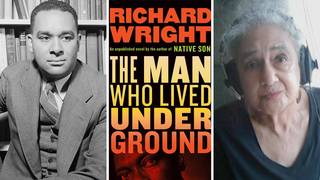
Nearly 80 years ago, Richard Wright became one of the most famous Black writers in the United States with the publication of “Native Son,” a novel whose searing critique of systemic racism made it a best-seller and inspired a generation of Black writers. In 1941, Wright wrote a new novel titled “The Man Who Lived Underground,” but publishers refused to release it, in part because the book was filled with graphic descriptions of police brutality by white officers against a Black man. His manuscript was largely forgotten until his daughter Julia Wright unearthed it at the Beinecke Rare Book & Manuscript Library at Yale University. “The Man Who Lived Underground” was not published in the 1940s because white publishers did not want to highlight “white supremacist police violence upon a Black man because it was too close to home,” says Julia Wright. “It’s a bit like lifting the stone and not wanting the worms, the racist worms underneath, to be seen.”

Seg1 reunification 1

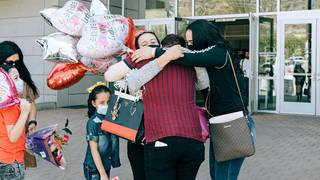
This week, four parents from Honduras, Guatemala and Mexico were reunited with their children in the United States after being separated under former President Trump’s “zero tolerance” immigration policy. They were the first families to be reunited on U.S. soil since the Biden administration began its reunification process. “Although we love to see the reunifications and they’re very moving, we have to keep in mind what led to that and that it should never have happened in the first place,” says Carol Anne Donohoe, managing attorney for the Family Reunification Project at Al Otro Lado. We also speak with Lee Gelernt, deputy director of the ACLU Immigrants’ Rights Project, who leads the ACLU’s lawsuit over family separations. He notes more than 1,000 children are still separated from their parents, and adds, “We have not even found the parents of 455 children.”