Two Russian nationals are among four men who have pleaded guilty to cybercrimes that targeted banks and companies across the United States, resulting in millions of dollars of losses, the Justice Department said on May 7.

The four men — Aleksandr Grichishkin, 34, and Andrei Skvortsov, 34, of Russia; Aleksandr Skorodumov, 33, of Lithuania; and Pavel Stassi, 30, of Estonia — provided so-called “bulletproof hosting” services to a network of cybercriminals, according to court documents.

The bulletproof hosting operation rented Internet Protocol (IP) addresses, servers, and domains to cybercriminal clients who in turn used the technical infrastructure to disseminate malware that could gain access to victims’ computers and steal banking credentials, the Justice Department said in a news release.

“Over the course of many years, the defendants facilitated the transnational criminal activity of a vast network of cybercriminals throughout the world by providing them a safe-haven to anonymize their criminal activity,” said Special Agent in Charge Timothy Waters of the FBI’s Detroit Field Office.

The malware hosted by the organization attacked U.S. companies and financial institutions between 2009 and 2015, the Justice Department said.

Acting Assistant Attorney General Nicholas L. McQuaid said organizations that aid cybercriminals in deploying malware are “no less responsible for the harms these malware campaigns cause, and we are committed to holding them accountable.”

According to court filings and statements made by the defendants, Grichishkin and Skvortsov were founding members of the operation and its proprietors.

All four pleaded guilty to one count of conspiring to engage in a Racketeer Influenced Corrupt Organization (RICO) in U.S. District Court in Michigan. Each defendant faces a maximum penalty of 20 years in prison at their sentencing hearing later this year.

Law enforcement partners in Germany, Estonia, and the United Kingdom assisted the FBI in its investigation.

U.S. prosecutors said they were seeking a 17-year prison sentence for a former U.S. Army Green Beret who pleaded guilty last year to years of providing classified information to a Russian military intelligence agent.

The filing on May 7 in U.S. federal court in Virginia follows Peter Debbins’s guilty plea last November to a federal Espionage Act charge.

According to the court filing, Debbins, 46, had a 15-year relationship with Russian intelligence dating back to 1996 when he was an exchange student from the University of Minnesota and on a visit to Russia for an independent study program gave an alleged Russian handler the names of four Roman Catholic nuns he had visited in Russia.

Two years prior, according to U.S. prosecutors, Debbins, whose mother was born in the Soviet Union, traveled to Russia for the first time and met his current wife in the central city of Chelyabinsk. Debbins’s father-in-law was a colonel in the Russian air force.

Debbins told Russian intelligence he considered himself a “son of Russia,” and “thought that the United States was too dominant in the world and needed to be cut down to size,” according to the indictment filed last year.

Court filings show that Debbins joined the U.S. Army as an active duty officer in 1998 and served through 2005, the last two years as a Special Forces officer.

While on assignment in Azerbaijan, he was discharged and lost his security clearance after violating protocols. That included bringing his wife with him to Azerbaijan and allowing her to use a government-issued cell phone, according to the court filing.

After being discharged from the military, he worked as a civilian for U.S. military contractors, in some cases in counterintelligence, including work as a Russian linguist.

The original charging indictment alleged that he provided information and names of his fellow Special Forces members while he was on assignment in Azerbaijan and Georgia.

According to his guilty plea, Debbins admitted that the Russian agents used the information he provided to evaluate whether other Special Forces officers could be persuaded to cooperate with Russia.

It wasn’t immediately clear when Debbins will be sentenced.

Reporters at major newspapers and magazines are hard to reach by telephone. Today it is increasingly hard to converse with them about timely scoops, leads, gaps in coverage, and corrections to published articles.

We started an online webpage: Reporter’s Alert. From time to time, we will use Reporter’s Alert to present suggestions for important reporting on topics that are either not covered or not covered thoroughly. Reporting that just nibbles on the periphery won’t attract much public attention or be noticed by decision-makers. Here is the fifth installment of suggestions:

1. Jamie Dimon, the CEO of JP Morgan Chase, has just reported staggering quarterly earnings. This achievement, no doubt assisted by policies of the Federal Reserve, makes the following statement by him on January 21, 2021, a wonderful opportunity for reportorial follow up:

“I’ve been to a lot of meetings with presidents and prime ministers and senators and congressmen, and the selfishness and parochialism with the business folks is just absolutely outrageous.”

What did Mr. Dimon mean by such a judgment of his peers in the business world? He is known to be outspoken. There might be a provocative story should he choose to elaborate. But first, he has to be asked.

2. The scrutiny of Internet advertising is much less than the attention formally given to print advertising before the Internet. The major trade journal, Advertising Age, led by the legendary columnist, Stanley Cohen, was often very critical of the advertising industry. The Federal Trade Commission (FTC) even required, at one time, specific advertising claims to have substantiation filed with the agency. Today, the giant’s Google, Facebook, and other masters of the Internet rely heavily on ad revenues, their Achilles Heel. How effective are these ads? Is their fine-tuned targeting based on privacy invasions? What is Google et al. doing in their backrooms?

3. Speaking of corruption, what safeguards are being placed over the trillions of dollars streaming into all corners of the country from Washington legislation? In the $31 billion proposed for the reservations of the First Nations, there is also $5 million allocated to oversee disbursements. What is being done to catch and punish any waste, fraud, and abuse on what is spent inside and outside the US? Wherever there are government contracts, grants, and loans, there must be consistent media digging and reporting.

4. Billions of dollars of imported foods are coming to the United States labeled as “organic.” How is this claim being verified? What does the U.S.D.A. do to assure its labels are truthful? Any inspectors? What evasions have been uncovered? The temptation to sell the organic label but not the real organic fruits, vegetables, and other foodstuffs are everywhere. Are any of the major environmental or consumer groups (Greenpeace, NRDC, Friends of the Earth, Consumer Reports) monitoring this situation? Is the Customs Bureau doing anything?

5. It is increasingly difficult, especially in an Internet Age, to quit your vendor. Some of these obstacles are due to complexities in the relationship. For example, compare banks today with banks in the 1960s. But much of this lock-in is deliberate – sometimes with penalties for leaving – requiring consumers to go through hoops. Try getting out of your Amazon Prime “Membership.” See how leaving Amazon compares to your one-click purchases from Mr. Jeff Bezos. Moving from brokerage and credit card firms is needlessly bureaucratic – after one spends hours trying to get through to the right persons (forget about one-stop quitting in an era of much-touted one-stop shopping).

Then there are the “dark moments,” where corporate coercion sells you stuff you didn’t ask for or know about. There are also vendor tricks for upgrading your sales category. This is a controlling mechanism by vendors which also dilutes the effects of competition – a kind of barrier to the mobile choice of vendors. There is much to investigate here that is sometimes rooted in the pits of the omnipresent fine print contracts.

6. Just who are those state legislators in the GOP brazenly harassing certain categories of voters? How dare they do such a thing in plain sight – after their right-wing corporate attorneys do the devious drafting of the bills? Creating crazy hurdles to block voters (such as difficult IDs, requiring notarized signatures, and many more obstacles reported often in the media) is over-regulating, harassing, intimidating, and purging voters. So too are bills in Florida and Texas criminalizing or entrapping free speech street protests.

Profile these incinerators of democracy, these closeted bigots, and venomous beasts of prey who target the most vulnerable and discriminated against wannabe voters. Do specific state laws provide criminal penalties for officials implementing these shredders of voting rights? If not, why not? Are private remedies too onerous or non-existent? These abuses should get at least as much opprobrium, censorship, and demands for resignation as “no-touch” sexual harassment receives.

7. During meetings or telephone conversations with newspaper editors, I urge them to do random surveys of how difficult it is for ordinary citizens to simply get through to their government agencies at the local, state, and federal levels. Editors immediately praise the suggestion and then do nothing.

Many zillions of hours are wasted waiting on the phone for government officials (e.g., the budget-strapped IRS). But apart from any budget excuses, for many agencies, avoiding calls or not responding to callers has become part of the culture at many government departments. Some agencies simply leave their phones off the hook for hours at a time. This occurred before the Covid-19 pandemic. Reporters may not experience this distress because they can get through more often, though they may not like the nature of the response non-response. Media surveys should be conducted by “ordinary people” with ordinary questions, for starters.

Getting through to corporations and their so-called “customer service” departments can offer similar hurdles. Telephone, insurance, and utility companies, for instance, all avoid talking to their customers. Emails are also easily dismissed and, anyhow, emails are not like two-way telephone conversations.

Hope all the above and the prior four Reporter’s Alert lists help stimulate some reporting on these important topics.

India — gripped by the second wave of the COVID-19 pandemic — has been endlessly witnessing desperate scrambles for hospital beds, the dire need for oxygen and mass cremation. Amid all this, the stock market is booming. In fact, Mumbai Sensex has signaled that bullish trends have been on the rise. Over the year ending April 1, 2021, while benchmark composite indices rose by 19% in the Philippines, 35% in Indonesia and 48% in Thailand, the rise was a staggering 77% in India, which experienced one of the sharpest real economy contractions in economic activity over that period. Moreover, India — unlike other Southeast Asian countries — has witnessed increased speculative investments at the expense of portfolio investments in bonds.

RBI’s Support for the Super-rich

Thriving stock market amid a general slowdown is a direct result of the Reserve Bank of India’s (RBI) over-friendly attitude. During the years, investors have been assured that if any kind of instability visits upon them, the authorities will immediately arrive to offer moratoriums, state-guaranteed loans and other liquidity-enhancing measures to make up for disappearing cash flows. Their expectations are entirely accurate. On May 5, 2021, RBI announced repayment relief, as well as $6.8 billion in three-year funding at its policy rate of 4% for banks. These liquidity infusion measures gave Indian equities a booster shot, lifting the benchmark indices 0.88% higher on the same day.

RBI’s supportive stance toward the stock market has proven to be extremely beneficial for the ruling class. When the stock market was entering a bear phase in 2020 — with crony capitalists like Mukesh Ambani and Gautam Adani suffering losses — the central bank instantaneously began its policy of regular credit injections and quantitative easing. Refilled coffers directly aided the concentration and centralization of capital, allowing businesses to begin a new round of speculation with less competition and higher profit margins.

When stock prices were falling in February-March 2020, powerful investors — rather than offloading their stocks — used the state’s money to buy up stocks from smaller owners who were busy panic-selling. Therefore, when stock prices increased after April, they got enormous capital gains. In spite of occasional ups-and-downs, the stock market scaled new heights in 2020, leading to an astronomic increase in wealth appropriation by the speculative super-rich class. The ranks of Indian dollar billionaires swelled from 102 to 140 in 12 months, their combined wealth doubling to $596 billion in 2020, when the oppressed masses of India were bearing the entire burden of the first wave of the pandemic. These 140 billionaires now eat up 22.7% of India’s GDP of $2.62 trillion.

Global Conditions

The situation of India’s financial sector is a part of the wider global conditions which have evolved since the 1990s. With low profit rates in the productive sectors of the economy, endemic overproduction and weak demand, investments decreased. Corporations turned to the financial sector and the stock exchange. The vast sums of capital that could not be profitably invested in the real economy produced a growing market for high-risk, high-reward investments. In other words, the expansion of the financial system, of the whole debt and credit apparatus, has been a way of utilizing the economic surplus which is not utilized in productive investment.  It is instead poured into speculation, and that creates a wealth effect that has a secondary stimulus to the underlying economy, because as people who benefit from asset price increases get wealthier, they spend more on consumption, and that stimulates the economy. Finance also provides some jobs, although not as much as other sectors of the economy.

While stock values represent future expected streams of earnings arising primarily from production, finance has become increasingly autonomous from production or the real economy, relying on financial bubbles and unsustainable explosions of credit/debt. This means that the speculative process depends for its very continuation on the piling up of greater and greater amounts of debt, and in order to do this, it needs to have constant cash infusions from the real economy to provide additional capital that can be leveraged. But as the underlying system remains stagnant, the bubble eventually bursts — typically after a speculative mania in which the rapid rise in quantity of debt leads to a marked decline in its quality.

At this point of time — when the liquidity has dried up — the monetary authorities intervene to keep the whole house of cards from collapsing. This serves to reduce the risk to speculators, thereby keeping the value of stocks and other financial assets rising on a long-term basis, along with the overall wealth/income ratio. In these circumstances, asset accumulation by speculative means has replaced actual accumulation or productive investment as a route to the increase of wealth, generating a condition which Costas Lapavistas calls “profits without production.” The recent actions of India’s central bank are structurally situated in this new global regime of profiteering which is geared toward irrational profit-making for the few.

Gustavo Petro is a force to be reckoned with in Colombian politics.  The senator – once a member of the M-19 guerilla group, later elected to the House of Representations in the 1990s and then the mayorship of Bogotá (2012-2016) – has become the candidate to beat in next year’s presidential election.  He is such a prominent opponent of right-wing politics in the country that while Donald Trump was campaigning in Florida in 2020 he included Petro in one of his anti-socialist diatribes, tweeting that “Biden is supported by socialist Gustavo Petro, a major LOSER and former M-19 guerrilla leader. Biden is weak on socialism and will betray Colombia. I stand with you!”

Petro previously ran for president in 2018 and made a strong showing, but ultimately lost to the far-right Iván Duque of the Democratic Center party by approximately 12%.  It is worth noting that leaked recordings pertaining to the 2018 election contain evidence that Duque’s party conspired with individuals linked to narcotraffickers to commit electoral fraud, and subsequent investigations have uncovered at least six cases of fraud in both the House and the Senate.

Since 2018, Petro’s grassroots appeal has only grown.  Polls for the upcoming 2022 election consistently place him in first place, and a survey conducted by pollster Invamer in April 2021 shows that “if elections were held tomorrow, no candidate would stand a chance against Petro.”  Nestor Morales of the Mañanas Blu radio program remarked:

Petro is right to be celebrating, because [this survey] is well above its historical averages… what is impressive is that Petro is winning in absolutely everything…He has votes in sectors that were not related to him; for example, the upper strata, the old men who were so anti-petrist. There is a change, a transformation of public opinion.

The discrediting of Duque and Uribismo, the far-right political project of his mentor former president Álvaro Uribe (2002-2010), has contributed to Petro’s rise in popularity.  His already solid base has been supplemented by those disillusioned by Duque’s failed COVID response and the brutal continuation of Uribista violence against former guerilla fighters and social activists, in contravention of the previous government’s peace deal with the FARC.  Furthermore, the Duque government’s recent decision to introduce a regressive tax reform that exempted the oligarchy while punishing ordinary workers has led to massive protests across Colombia.  Government forces have responded brutally, causing multiple deaths and leading the UN rights office to condemn their “excessive use of force.”  These protests have produced two general strikes thus far – one on April 28 and another on May 5 – and resistance to the austerity measures have grown to dominate the political discourse in the country, similar to how the 2019-2021 protests in Chile, which began due to a transit fare increase, soon snowballed into a nationwide indictment of neoliberal governance as a whole.

Gustavo Petro represents an alternative.  Despite his association with Latin American socialism, however, Petro’s political views have evolved greatly over time.  No longer an adherent of M-19’s revolutionary leftism, he now advocates a more moderate social-democratic model.  In interviews, he is quick to distance his favored politics from those introduced in Cuba and Venezuela – policies which, in addition to angering domestic elites, inevitably leads to aggression from Washington as well.  Instead, he compares himself to more gradualist figures, once stating that “I have more in common with Pepe Mujica [than Castro or Chávez],” referring to Uruguay’s famously modest left-wing president who served from 2010 to 2015 and oversaw notable macroeconomic growth as well as the legalization of marijuana and same-sex marriage.

Despite the softening of his views, Petro remains a target of the Colombian right and has received constant death threats during his public career.  He claims to have slept with an assault rifle over the course of the “parapolitics” scandal, during which dozens of politicians (many with links to the Uribe administration) were investigated and convicted for illegal ties to paramilitary groups with evidence that he helped present to Congress.  His brother was allegedly threatened with assassination (certainly no idle threat in Colombia), and his son Andrés is currently in exile, having been granted asylum by the Canadian government due to threats and political harassment from right-wing groups.  Furthermore, in March 2018 a Cuban man named Raul Gutierrez was arrested in Bogotá for plotting to bomb the Cuban embassy and assassinate both Petro and FARC leader Rodrigo “Timochenko” Londoño.  While imprisoned, he claimed that a right-wing Colombian group based out of Florida hired him to commit the attacks.

Leftism and social activism are dangerous business in Colombia.  In the first three months of 2021 alone, 40 activists were murdered and there were 23 massacres of predominantly poor and Indigenous peoples by paramilitary groups.  The impunity rate for the murder of trade unionists is approximately 87% and, as COVID-19 wracks the country, the Duque administration has continuously ramped up violence against areas which contain former FARC fighters.

One of the most horrific incidents so far this year was the murder of twelve children and two nineteen-year-olds in a bombing raid against an alleged armed group in Guaviare.  Petro commented publicly on the massacre, posting a list of the children’s names on Twitter and writing “14 children killed [including the two 19-year-olds] in a bombardment ordered by the Minister of Defence. These are their names. End the war, end the genocide of children in our country.”

Marcha Patriotica, a progressive umbrella organization that brings together historically marginalized groups within Colombia including peasants, people of color, women, and the LGBTQ community, has also faced persecution.  Almost two hundred of its members have been murdered since its founding in 2011, while an Inter-American Commission on Human Rights resolution from 2017 claimed that hundreds more are living under severe risks and that the government could protect them if it chose to act.

The Colombian right-wing has historically lumped together unionists, social activists, and left-wing figures with the longstanding peasant-led insurgencies in the countryside, labelling them “Castro-Chavistas,” “terrorists,” and “guerrillas posing as human rights defenders.”  These are extremely serious threats in Colombia, and not just due to ongoing atrocities.  One must also take into account the “political genocide” against the Patriotic Union (UP) in the 1980s and 1990s.

The UP was formed in 1985 during peace negotiations between the FARC and the Belisario Betancur administration.  Its purpose was to allow the FARC to participate in the electoral system in exchange for a ceasefire.  What followed, however, was a massacre: the party’s members were relentlessly attacked by paramilitaries and drug cartels and over 3000 of its members, including elected officials and presidential candidates, were murdered.  This led to a resumption of overt hostilities and proved to the guerillas that the Colombian state was an inherently oppressive, right-wing organization that would not allow fair elections to weaken its hold on power.

The US-backed military has historically been the arbiter of the political realm in Colombia, backing conservative figures and using paramilitaries to kill or intimidate those who organize for social change.  Their brutal acts have not shaken America’s diplomatic and material support or its military cooperation – as Joe Biden wrote during the 2020 election, it is the “keystone” of US policy in Latin America and has served as an indispensable ally in the region-wide imposition of a free-trade model vulnerable to American capital.  Scandals like the extermination of the UP, the murder of over 6000 civilians in the 2000s as a way of boosting the army’s kill-count against the insurgencies, and the almost universal impunity for the killing of trade union activists have not lessened America’s support in the slightest.

Nor have recent atrocities weakened Canada’s support for the Colombian government.  Stephen Harper made a point of deepening Canada’s ties to right-wing governments across the region, and Justin Trudeau has likewise taken a very active role in supporting the Latin American right against progressive movements.  Yves Engler writes that, in regard to Colombia, Ottawa quickly congratulated Duque after his fraud-riddled election win, refused to criticize the attempted overthrow of Venezuelan President Nicolás Maduro that was launched from Colombia in May 2020, and has consistently failed to draw attention to the ongoing injustices in the country.

This is the political climate – one of violent repression that receives the tacit or outright support of imperialist countries – in which Gustavo Petro has fought to present an alternative.  Although the presidential election will not be held for over a year, Petro’s dramatic rise in popularity is evidence that the Colombian people are seeking a break from the status quo, and that he may represent their best chance to achieve this.

Owen Schalk is a writer based in Winnipeg. His areas of interest include post-colonialism and the human impact of the global neoliberal economy. Read other articles by Owen.

George W. Bush is back. He is back, this time not to bomb countries and cause the death of thousands. This time the man is back as an artist who advocates for the rights of immigrants, and the U.S. media is on heat.

That death in Iraq is eliminated from the conversation makes it clear that to ‘them Americans’, ‘us Iraqis’ are non-existent.

Bush, the former US president, recently penned an Op-Ed for The Washington Post, and received a round of applause on ‘Jimmy Kimmel Live!‘ when the eponymous host complimented him on his painting of American politician Madeleine Albright. He appears on TV to speak about his new book of oil paintings of America’s immigrants, ‘Out of Many, One’, he is not wearing handcuffs, and all rehabilitated. It is all normal.

What is also normal is how the starvation and deprivation of medication that caused the early death of hundreds of thousands of Iraqi children because of the severe UN sanctions on the country in the 1990s, have fallen into oblivion. To Albright, speaking in a 1996 TV interview, the political price was “worth it“, though she would later express regret for her wording.

Bush’s grinning face seems to be traveling at a smooth pace from one TV show to the next. Kimmel admired his guest’s reflexes when he dodged Muntadhar al-Zaidi’s shoe throw, and the two had a laugh about it. Of course, it slipped Kimmel’s mind to ask his guest about his time ordering cluster bombs be dropped on my family’s house in Baghdad to “liberate it”. It also slipped the host’s mind to ask why in the first place a man would want to throw a shoe at the former president.

For their part, the cheering crowd gave the impression that the next rich guy to oversee the annihilation of inferior beings overseas could as well re-emerge from the gutter and be celebrated as a cool, funny grandpa.

Bush’s blood-stained past tells us the man is dangerous. If Richard Nixon—in the words of the late Hunter S. Thompson—”could shake your hand and stab you in the back at the same time”, you might lose a finger or two if you extend your hand to shake Bush’s.

And with the way things are going, there’s a big chance he will get away with it—again.

It is well known that columnists in the US were at war with Iraq even before depleted uranium was generously distributed among its citizens in 2003, but the slick anchors and boring television hosts of today seem to be suffering from amnesia.

George W. Bush is responsible for the destruction of an incalculable number of innocent Iraqi lives. Have the decency to remember his victims.

In an interview after a tour of Bush’s Texas ranch, CBS’s Norah O’Donnell told the former president that she thought the paintings in his new book were “beautiful”. And when she asked him about the 6 January storming of the Capitol, Bush said that it made him sick: “This sends a signal to the world, you know, like, we’re no different, and this book says we are different, much different”.

In the words of the great Iraqi poet Saadi Youssef:

“But I am not an American

Is it enough that I am not American for the Phantom pilot to send me back to stone age?”*

The entire charade reeks with hypocrisy. Even when preaching on immigration reforms, Bush failed to hide his ‘us versus them’ complex.

But the American exceptionalism is not what bothers me the most.

That death in Iraq is eliminated from the conversation makes it clear that to ‘them Americans’, ‘us Iraqis’ are non-existent. We are not worthy of receiving justice or of anybody at least bothering to ask Bush about that long-forgotten ‘blunder‘, as Iraqi scholar Sinan Antoon reminds us.

Meanwhile, war is ongoing in Iraq. Its signs are unmistakable; walls and road signs riddled with bullet holes, concrete barriers blocking main streets, dead youth staring from faded billboards and military choppers occupying the skies above.

In Baghdad, militiamen nurtured under the lawlessness birthed by the US invasion still fire rockets on the airport and the ‘Green Zone’. They still roam the streets, armed to the teeth, terrorizing the city’s traumatized residents who are left unprotected by empty promises from the Iraqi state.

While Iraq no longer receives aerial bombing from the West, death has become a permanent resident of Baghdad. The lethal failure of its subsequent ‘post-liberation’ rulers continues what George W. Bush started 18 years ago: non-stop civilian killings in Iraq.

The negligence behind the recent al-Amiriyah-like incineration of dozens of patients inside Ibn al-Khatib’s hospital is an example of the consequences of war faced by the people of Iraq since 2003.

George W. Bush is responsible for the destruction of an incalculable number of innocent Iraqi lives. Have the decency to remember his victims.

*From Saadi Youssef’s poem, America America. Translated by the author of the piece.

The Justice Department secretly obtained the phone records of three Washington Post reporters who wrote about the federal investigation into ties between Russia and former President Donald Trump’s 2016 campaign, the newspaper said on May 7.

The action appears to have been aimed at identifying the reporters’ sources for stories published in 2017 during the early months of Trump’s administration as federal investigators scrutinized whether Trump’s 2016 campaign had coordinated with Russia to sway the election.

The newspaper said the three reporters received notice that their phone records had been seized in letters dated May 3.

The Post said the Justice Department did not specify the purpose of the subpoena to obtain the records or identify any articles at issue, but the newspaper said the period in question was April 15, 2017, to July 31, 2017.

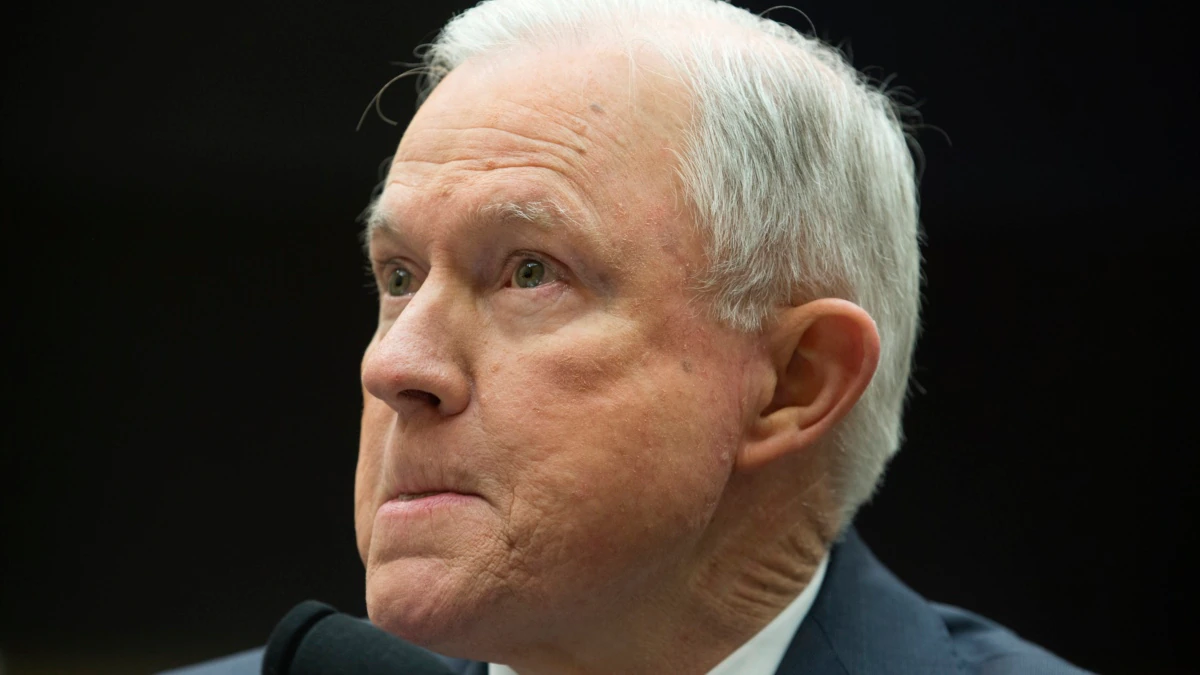
During that time the Post published a story about classified U.S. intelligence intercepts indicating that in 2016 Jeff Sessions, who would later become Trump’s attorney general, had discussed campaign issues with Russia’s then-ambassador, Sergey Kislyak.

The phone records include who called whom, when calls were made, and how long calls lasted, but do not include what was said in the calls. Investigators often hope such records will lead them to the sources who leaked sensitive information to reporters.

The letters sent to the reporters do not say when the Justice Department approved the decision to subpoena their records, but a department spokesman said it happened in 2020 before the end of the Trump administration.

Cameron Barr, the Washington Post’s acting executive editor, demanded that the Justice Department say why it seized the data.

“We are deeply troubled by this use of government power to seek access to the communications of journalists,” Barr said in a statement. “The Department of Justice should immediately make clear its reasons for this intrusion into the activities of reporters doing their jobs, an activity protected under the First Amendment.”

Justice Department guidelines for leak investigations mandate that such actions are allowed only when other avenues for obtaining the information have been exhausted, and that the affected reporters must be notified unless it’s determined that it would interfere with national security.

“While rare, the Department follows the established procedures within its media guidelines policy when seeking legal process to obtain telephone toll records and non-content email records from media members as part of a criminal investigation into the unauthorized disclosure of classified information,” department spokesman Marc Raimondi said in a statement quoted by the Post.

Raimondi said the targets such investigations are not the reporters but “those with access to the national defense information who provided it to the media and thus failed to protect it as lawfully required.”

The Justice Department also said it had received a court order to get e-mail records from the reporters but did not obtain them. The e-mail records sought would have indicated who e-mailed whom and when but would not have included the contents of the e-mails.

With reporting by the Washington Post and AP

ANALYSIS: By Phil Thornton

As chaos flows in Burma, journalists are being forced to hide in plain sight by the Burmese military, writes senior journalist and Myanmar expert Phil Thornton.


Journalists in Myanmar are being hunted and arrested by the country’s military for trying to do their job. Independent media outlets have been raided, licences revoked and offices closed.

To avoid arrest, independent journalists have gone into deep hiding, taken refuge in ethnic controlled regions or fled to neighboring countries. The military and its paid informers trawl through neighborhoods, coffee shops and scan social media for evidence to justify arresting journalists.

The military appointed State Administration Council revised and inserted a clause in the penal code, specifically tailored to gag its critics, politicians, activists and journalists.

Clause 505a of the penal code carries a sentence of three years in prison for actions, criticism or comment that question the coup, cause fear, spread false news or “upsets” government workers.

To stop journalists, photographers and activists sending reports and images of security forces abusing and killing civilians, the military coup leaders ordered telecommunication companies and internet services to shut down their social media platforms.

Brigadier General Zaw Min Tun fronts the military’s press conferences – a list of his titles is impressive: Deputy Minister of Information, head of the armed forces True News Information Team and boss of the military appointed State Administration Council’s media team.

A look at his name card reveals a much darker role – Zaw Min Tun has working directly for coup leader and Commander-in-Chief, General Min Aung Hlaing. Not only does the card boast that General Zaw Min Tun is Directorate of Public Relations, but he is also head of the army’s Psychological Warfare department.

Deceitful work
A Reuters report in 2018 gave an indication of the deceitful work his department of public relations and psychological warfare gets up to when it revealed a book it published on the Rohingya, had used “fake” photographs to claim Muslims were killing Buddhists.

The Reuters investigation into the origin of the photograph “showed it was actually taken during Bangladesh’s 1971 independence war, when hundreds of thousands of Bangladeshis were killed by Pakistani troops”.

The tactic might have been clumsily executed, but it worked, and helped ignite deadly racist attacks against Rohingya people and supported ultra nationalist views at a critical time.

In a more recent move, the Ministry of Information warned on May 4, viewers who watch or receive outside satellite broadcasts were now doing so illegally and were a threat to national security.

The military cautioned viewers on the state-owned television station, MRTV, that “satellite television is no longer legal. Whoever violates the television and video law, especially people using satellite dishes, shall be punishable with one-year imprisonment and a fine of 500,000kyat (US$320).”

Without the support of the shuttered, independent media outlets, getting paid work has been difficult to find, but many journalists took the tough decision to keep reporting, despite fear of arrest and of having internet and phone restrictions imposed on them.

Journalists who spoke to the International Federation of Journalists (IFJ for this article vowed to find a way to keep working and to continue to find ways to deliver news to people both inside the country and to the international community.

Witness to a revolution
Since the coup began on February 1, independent press freedom has been destroyed. The Assistance Association for Political Prisoners (AAPP) estimates 84 journalists have been detained and as of May 3, 50 are currently detained, 25 of these have been persecuted and arrests warrants have been issued for 29.

An AAPP report on May 6 said that 772 people have been killed, 4809 arrested and 1478 are now on the run, since the beginning of the coup.

Despite journalists being jailed, tortured and spied on, Naw Betty Han, a journalist with the magazine, Frontier Myanmar, is determined to keep reporting and explained to IFJ why that is, “In the current political situation, it is very difficult for a journalist to live and work in the country. But I will not stop doing my job.

“We’re witness to a revolution. I want to remain at the front of these developments, report on human rights violations and hopefully see the end of the military dictatorship.”

Naw Betty stressed the freedom to report, despite the dangers, is why she keeps working. “Journalism is much more than my job, it’s my mission. I’m willing to take the risk to keep reporting.”

Reporters, citizen journalists, activists and householders have all recorded police and army patrols shooting at and beating unarmed young men and women, ransacking shops and firing live ammunition into homes regardless of who might be hit.

Naw Betty said the military wants to stop any proof of its violence being recorded, “Police and soldiers are everywhere, at temporary checkpoints, on patrols…they check phones, if they find proof of protesting, being a journalist, a photo or a news item that supports the CDM movement… a social media post… they immediately beat and arrest them.”

No journalist identification
Naw Betty said she and her colleagues still working can no longer identify as journalists, “We have to delete our phone data when we go out in the field gathering news. Police and soldiers break open houses at night to surprise check the guest list. If you do not open the door, they will break in and arrest you anyhow.

“A former DVB reporter was beaten last week at his home after a search of his home and no evidence was found.”

Naw Betty is well aware of the risks of being arrested. In 2020 while investigating a multibillion-dollar Chinese investment on the Thai Burma border she and a photographer colleague were detained by a Burma Army sponsored militia – masked, handcuffed, driven to a rubber plantation and beaten, before finally being released.

“I am scared of being arrested and faced with the violence in interrogation. But I am positive, I am more afraid that I would not be able to continue as a journalist. I know that I am in danger of being arrested, but I want to keep working as a reporter.”

Naw Betty told IFJ the military, aided by its paid informers, are systematically increasing its crackdown on its opponents, squeezing their ability to move and forcing them into taking more dangerous risks, not knowing who to trust.

Naw Betty said “I’m worried about them [informers], I moved to a different place as soon as the coup happened, hopefully I can stay safe. Journalists in Myanmar are now trying to be as low profile as possible, but when there is a compelling situation, we have to go out to report and take risks.

“We are targets…74 journalists have been arrested and charged under 505 (A). Arrested journalists face physical and mental violence during interrogation before being sent to prison.”

We’re willing and ready
The military’s revoking of licenses and outlawing independent outlets has made it hard for many journalists to find paid work. Naw Betty said journalists have turned to freelance to try to earn a living from their reporting, “Many journalists I know are now faced with financial problems as they have no regular income anymore.

“Some photojournalists have tried to string for international news agencies, but the opportunities are limited – most are struggling with no income.”

A scan of social media postings by advocates offers links to what could become stories of interest to international media, but military refusal to give unfettered access to verify or follow-up accusations of corruption, rumours of security forces looting and bomb attacks has made it to difficult to follow-up.

Naw Betty encourages international media organisations to hire local journalists: “Give locals the chance to work on part-time assignments. We all are willing and ready to support on the ground reporting with international and foreign journalists – we can work together.”

Our priority is to keep broadcasting
Than Win Htut, a senior executive with Democratic Voice of Burma, now working from the edges of a neighboring country, said his priority, after his Yangon DVB operation was shutdown and outlawed, was to get back to operating at full capacity.

“Many journalists are on the run or in hiding. We have to review our network. When they closed us down we lost a lot of our capacity to broadcast – our newsroom, studio, talk show, on-line, research and data analysis.

“We now have to reorganise, rebuild and reintegrate. We need a new studio, live reporting, get journalists on the street, it won’t be easy.”

Than Win Htut’s operation has a whole range of challenges posed by the geography and weather. The monsoon wet season is about to hit his new mountainous location, flooding small rivers into deep, fast flowing hard-to-cross torrents.

The wet season brings dengue fever, malaria and dysentery, difficult at the best of time, but highly dangerous when the nearest medical help is a day away.

Than Win Htut said while searching for new premises maintaining security is of critical importance during forced exile. “They’ve cracked down on mobile phone services, internet is limited, the independent flow of information is blocked, arresting journalists, they won’t stop. We have to take our security serious. Many young journalists don’t have the experience of having to work in secret, going underground. Constantly changing your name, location, passwords, sim-cards, even your phone.”

Than Win Htut is worried sophisticated cyber surveillance equipment and technology the military acquired from Russia, China, Israel, US and Europe is now being used by the military to track and hunt its opponents.

Risks taken
“We have to take the position, the more you know the more the risk you are to yourself and to others. If a journalist gets arrested, you don’t know what they’ve been forced to give up during interrogation.

“We also have to now reconsider how we use photographs and footage of people protesting and of journalists.”

Than Win Htut stressed, international correspondents can endanger local journalists by not knowing the context, especially when following up leads on those arrested.

“You might be trying to help, but the arrested will be trying hard to not identify as a journalist or activist, but by running stories and photos you might be confirming the military’s suspicion someone is a journalist – that makes it dangerous.”

Than Win Htut is concerned the unity between journalists who went to neighbouring countries and those who stayed behind doesn’t divide. “We mustn’t let divisions stop us being united. We need to support each other, whether we are working from inside or outside the country, we’re all in this together.”

You’re either underground or with them
Toe Zaw Latt, an Australia citizen and production director of DVB, spent more than 80 days covering the military coup. With the help of the Australian Embassy in Myanmar, Toe Zaw Latt managed to leave his Yangon place of hiding and return to Australia last week.

Now in the middle of his 14-day quarantine in Adelaide, Toe Zaw Latt talked with IFJ about the ongoing anti-coup protests and the hounding of journalists by security forces.

Since the beginning of the coup, Toe Zaw Latt has been in daily contact with IFJ. He explained: “Most of the independent media have been closed down. Only independent papers left on the street before I left were Eleven Media and Standard Times. Journalists have to face a new threat from plainclothes Special Branch using stolen civilian cars to patrol neighborhoods.

“They turned up at a freelance journalist’s house to arrest her. She wasn’t there, so they took her husband instead. If they can’t arrest the journo it looks like they’ll just take a family member in their place.”

Toe Zaw Latt explained how journalists cannot do anything that identifies them to the police or army.

“No cameras, no notebooks, disguise yourself each time and what you are doing, make sure you carry nothing that can be used to identify you as a journalist and learn how to hide your phone.

“Smart phones are still good in the field, but we need to train young journalists to become more adept with using them to report and they need to know how to get footage out to be broadcast.”

International media interest
“Toe Zaw Latt is concerned that international media continues to maintain an interest in what’s happening with the daily civilian protests and they buy content from local providers.

“It’s important international media agencies keep employing or buying footage from local sources. Freelancers are risking their lives to get footage, they should be paid for it.

“Media news agencies should make a paid contribution and not just lift content off the internet. Journalists are helping each other. Those who are getting paid are sharing with those who aren’t.”

Toe Zaw Latt is impressed by the enthusiasm and resilience shown by activists and students to publish and broadcast news despite military threats of long prison sentences.

“Lots of underground media has emerged since the coup. Student activists fighting the military’s internet blackout have published newsletters – Molotov, Toward and Revolution. The National Unity Government are planning Public Voice TV, underground ethnic youth are running Federal FM and ethnic Mon media produce Lagon Eain.

“I respect their courage in fighting the military’s version of the truth and rejecting their misinformation.”

A senior ethnic journalist spoke to IFJ about the restriction she faces on a daily basis.

“No one can work in the military government-controlled areas. Special Branch have our photographs and our personal details. We’ve put up with it for years. Our houses have been visited, family interrogated.

Risks too stressful
“Some of our colleagues resigned, because the risks were too stressful. They felt they’d be no use to their families if they were in jail.”

The senior journalist explained news coverage now has to be underground.

“It’s either that or you report according to their instructions and that’s total rubbish, just propaganda. All they want is for journalists to legitimise the coup. If you stand up to that your only choice is to go underground.

“Some might play the margins, start by not covering anything sensitive.”

The senior journalists said media could be split into two groups.

“Those willing to be mouthpieces for the military. They don’t run stories upsetting the military and use terms dictated by the State Administration Council. Then there’s what the military classify as radicals.

Our websites are usually blocked, our reporters cannot operate on the surface, we have to go underground and anyone against the military is a target.”

Ethnic journalist difficulties
To give an indication of the difficulties ethnic journalists are working under, from March 27 to May 5, the Karen National Union report its soldiers were involved in 407 armed battles with the Burma Army.

Ethnic journalists told IFJ fighter jets have flown into Karen controlled territory 27 times and dropped 47 bombs , killing 14 civilians wounding 28 and forcing as many as 30,000 people into makeshift jungle camps.

“This is an emergency, it needs reporting and international aid. Villagers’ rice stores have been destroyed as well as homes, schools and clinics.

“To report we have to avoid landmines, army patrols that shoot on sight and the military’s paid informers and special branch who we have to think have our photographs.”

Phil Thornton is a journalist, author and senior adviser to the International Federation of Journalists in South East Asia.

Print Friendly, PDF & Email

President Joe Biden announced on Earth Day that under the Paris climate agreement, the United States will pledge a 50-percent reduction in greenhouse-gas emissions by 2030. He also reiterated his intention to “set a course” toward “net zero emissions economy-wide” by 2050.

This was a welcome change from life under the previous president, who had rejected all action on climate, even the toothless Paris emissions pledges (known to bureaucrats everywhere as “Nationally Determined Contributions,” or NDCs). Yet there are at least three things wrong with Biden’s climate vision: a 50 percent emissions reduction by 2030 is too slow; the “net zero emissions by 2050” goal is no more than a euphemism for continued burning of fossil fuels; and the president has not articulated any strategy or mechanism for achieving even these overly modest goals. In other words, there’s no plan in the Biden plan.

The only strategy, it seems, is to infuse the U.S. economy with trillions of dollars of funds for energy and other infrastructure, then hand the keys over to the corporate sector and wait for them to figure out how to wean the economy off of fossil fuels.

The Biden pledge to cut emissions in half within a decade has wowed the media, but it’s not as impressive as it seems. That reduction is relative to the year 2005, when our national emissions were significantly higher than they are now. The neat, round-number pledge of 50 percent takes credit, so to speak, for reductions that are already in the bag. Set those aside, and Biden’s goal is to cut current emissions by just 43 percent.

A 43-percent pledge falls well short of what is needed. The latest edition of the authoritative United Nations’ Emissions Gap Report shows that to give the Earth a fighting chance to avoid catastrophic heating of more than 1.5 degrees Celsius above the pre-industrial temperatures, we must, between 2021 and 2030, shrink global emissions by 57 percent. The NDC pledges of all nations combined, noted the report, would come nowhere close to achieving that necessary reduction. Adding in the Biden pledge, which came four months after the UN report was published, doesn’t substantially change the dismal math.

Annual U.S. greenhouse emissions remain second-highest in the world, and our cumulative historical contribution to atmospheric carbon is the largest of any nation; therefore, we have a moral obligation to make cuts that are much larger on a percentage basis than the minimum necessary global reductions. The Biden targets effectively shirk that responsibility. Whereas the Emissions Gap Report calls, as a minimum, for an almost 60 percent decrease from today’s global emissions, the Biden target would, by 3030, sustain U.S. emissions at almost 60 percent of today’s oversized greenhouse-gas output.

The “net zero” head-fake

Over time, government and industry have adopted ever more inventive circumlocutions designed to make climate-mitigation measures and technologies sound a lot more impressive than they are. (My favorite example is featured in an EPA-certified decal on the left rear window of our fourteen-year-old Honda Civic hybrid sedan: PARTIAL ZERO EMISSIONS VEHICLE.) Now in recent years, with the point of no return for decisive climate action fast approaching, the designers of climate policy have converged on a term that, while comprising only seven letters, is big enough to contain all of our hopes: “net zero.”

The adoption of “net zero” grows out of a longstanding desire to keep burning fossil fuels for decades to come—especially in power plants, where coal and gas are able to provide the steady, continuous “base load” that wind and solar sources cannot support. That desire is wrapped within another seemingly ambitious Biden’s pledge: to achieve a “carbon pollution-free power sector by 2035.” In this context, “carbon-free” is not the same as fossil-fuel-free.

Biden himself has noted that fossil-fueled power stations can be made ostensibly “carbon-free” by capturing exhaust from the smokestack, extracting almost all the CO2, and injecting it belowground. This has not actually been done in practice (except as a technique for extracting more oil, which does not reduce emissions), but just the idea of carbon burial has long enabled governments and utilities to formulate “net zero by year X” emissions targets.

In contrast, another nominally “net zero” process, electricity generation from plant biomass, has been widely adopted in the U.S. and elsewhere. The European Union classifies biomass burning as “renewable,” so over the past decade, biomass, mostly in the form of wood pellets, has come to account for well over half of the union’s “carbon-free” electricity supply. But, as always, there’s a catch. The wood is obtained mostly from live trees, leading to extensive deforestation in Eastern Europe. In Estonia, the land-use sector, which includes forestry, is traditionally a net accumulator of carbon from the atmosphere. Now, with extensive clearcutting underway to feed Europe’s power plants, Estonia’s forest lands are on course to become a net carbon emitter by 2030.

As it has become increasingly clear that neither old-school carbon capture nor electricity-from-biomass alone will be sufficient to achieve “net zero” emissions economy-wide, strategists have gravitated toward the clever idea of combining bioenergy with carbon sequestration, the goal being to achieve not just carbon neutrality but a net reduction of emissions. In the concept called “bioenergy with carbon capture and storage” (BECCS), harvests from large plantations of trees or other high-yield biomass crops would be dried and pelletized, hauled to power plants, and burned like coal to produce electricity, as in the EU’s “renewable” system. But with BECCS, the CO2 emitted from the biomass-fed power plants would be captured and buried before escaping the smokestack.

BECCS would be aimed at a double win: reduction of atmospheric CO2 plus electricity generation. But closer examination shows that it would fail on both counts, delivering less net energy and capturing less net carbon than promised. That’s because vast quantities of energy would have to be expended in growing and harvesting biomass crops, hauling the biomass to the processing factory, grinding and pelletizing, hauling pellets to the power plant, sucking CO2 out of the smokestack, liquefying the CO2, hauling the liquid to an abandoned oil or gas well, and injecting it under high pressure.

Energy expenditures for all of those processes would, in sum, reduce the net energy produced by the BECCS power plant by 25 to 100 percent. If the energy input comes from fossil fuels (as would be the case well into the future), a goodly portion of the carbon-capture benefits of BECCS also would be canceled out.

Growing the plantations to feed BECCS would do the kind of ecological and social damage to the entire Earth that Europe’s biomass-burning is doing to Estonia. To pull less than one-third of human-produced CO2 emissions out of the atmosphere would require the planting of bioenergy crops on as much land as is already used to grow the world’s food, feed, and fiber crops. As much as half of all natural forests, grasslands, and savannahs could be lost, wiping out more biodiversity than would die off with a global temperature rise of 2+ degrees above pre-industrial levels—the very scale of disaster that carbon sequestration is aimed at preventing.

Planting and harvesting vast new acreages of biomass crops would also break down organic matter in soils, releasing CO2 into the atmosphere and canceling out a big portion of what’s being captured. Indeed, if very large natural landscapes are brought into production of feedstocks for BECCS, the whole project could become a net carbon emitter.

It’s not surprising, given these problems, that there are no full-scale BECCS facilities in operation; nevertheless, the very idea that they can be deployed in the future will be incorporated into climate models to claim the theoretical possibility of “net zero by 2050” for a long time to come—or at least until 2045 or so.

As it becomes clearer that world-scale biomass burning would be a fiasco, those seeking an alternative route to “net zero” (including Biden) have latched onto the idea of pulling CO2 directly out of thin air, in an industrial process known as “direct-air capture.” But the technology is not safely applicable at large scale, and it has impossibly large energy requirements.

James Dyke, Robert Watson, and Wolfgang Knorr of the University of Exeter, the University of East Anglia, and Lund University, respectively, have been researching climate change for decades but they’d never raised objections to “net zero” claims until this year’s Earth Day, when they published an article admitting that “the premise of net zero is deceptively simple – and we admit that it deceived us.” Their conclusion: “We have arrived at the painful realization that the idea of net zero has licensed a recklessly cavalier ‘burn now, pay later’ approach which has seen carbon emissions continue to soar. It has also hastened the destruction of the natural world by increasing deforestation today, and greatly increases the risk of further devastation in the future.”

If legislation emerges from the Biden climate plan as it’s currently conceived, its Congressional sponsors should level with the American people and call it the “Not Zero by 2050 Act.”

A hole that must be plugged

The gaping hole in the middle of Biden’s climate vision—a deficiency shared by the Green New Deal and almost all other such plans—is the lack of any policy to directly phase out the extraction and burning of fossil fuels on a strict deadline.

Instead, the mainstream climate movement is counting on indirect nudges from market competition, carbon pricing, disinvestment, etc., along with partial withdrawal of federal support for fossil fuels (by, for example, ending subsidies to the industry or banning new leases for exploration and drilling on federal land).

If our nation and world had committed to such measures in, say, 1990, when the world was just waking up to climate change, there might have been enough time for such gradualist policies to have an impact. But if, at this late date, high-emitting countries were at long last to drag themselves across the starting line and declare ambitious 2030 emissions targets, it would be much too late for market nudges and regulatory half-measures to succeed.

The 2020 Emissions Gap Report notes that if the world were to begin cutting emissions tomorrow, the rate of reduction required to stay below 1.5 degrees of warming would have to be four times as fast as the rate that would have been required had we started just in 2010. An 8 percent annual decrease in fossil fuel use will be obligatory through the 2020s and beyond, and that can be achieved only through nationalization of the fossil fuel industries, followed by imposition of mandatory, fast-falling limits on the numbers of barrels of oil, cubic feet of gas, and tons of coal coming out of the ground and into the economy each year. I realize that such a proposal would be a non-starter in the current White House and Congress. But that doesn’t change the fact that such steep reductions are necessary.

When the new White House fact sheet on the climate plan tells us there are “multiple paths” to reaching “carbon free” electricity and other goals “while supporting a strong economy,” it’s not talking about eliminating fossil fuels; rather, it’s implicitly referring to reliance on gimmicks like carbon-capture schemes or forest-based offset programs. (Under the latter, landowners can simply refrain from cutting their trees and thereby earn carbon credits that they sell to utilities or other companies, which can use the credits as permits to keep burning fossil fuels. The result is an overall increase in emissions.) Electric utilities are counting on the continued federal laxity toward fossil energy as they make plans to build a staggering 235 new natural gas–fired power plants in coming years.

As if tolerating fossil fuels was not dangerous enough, the White House fact sheet also assumes a continued dependence on nuclear energy—not only to help cobble together a nominally “carbon-free” power sector but also for generating “green hydrogen” that can be burned to, among other things, keep the airline industry aloft.

The fact sheet furthermore declares an intention to “ship American-made, clean energy products — like EV batteries— around the world.” In other words, U.S. companies will increase their imports of lithium, cobalt, rare earths, and other metals—mined and processed in other lands at incalculable ecological and humanitarian costs—in order to manufacture and export electric-vehicle batteries at a sweet “green” profit.

With a quest underway to replace the entire U.S. fleet of private cars and trucks with hundreds of millions of battery-powered vehicles while soon attempting to equip a brand-new national electric grid with at least 6 trillion pounds worth of batteries, I doubt that U.S. corporations will even have any surplus batteries to export under Biden’s plan. And I do not expect that either our current case of battery fever or the broader pursuit of mineral resources required by the entire high-tech “green” infrastructure will end well.

Those resources, like oil, are non-renewable and, like oil, most of them lie under someone else’s soil. America’s desperation to satisfy its prodigious energy appetite by pursuing fossil fuels across the globe over the past century led to political oppression and repeated military invasions—a dirty history of imperialism that could continue, this time with the prize being metals. Writing for CounterPunch way back in 2014, Don Fitz warned of “green wars” over minerals for use in renewable energy, asking,

Would the Green World Order mean that Venezuela might have less reason to fear an invasion aimed at gaining access to its heavy oils? Or, would it mean an additional invasion of Bolivia to grab its lithium for green batteries? Would northern Africa no longer need to fear attacks to secure Libyan oil? Or, would new green armies to secure solar collectors for European energy be added to existing armies? Across the globe, those marching with the red, white and blue banner of the War for Oil would continue to invade. But they could be joined by those marching with a green banner.

Which FDR will show up?

In April, an array of civil society organizations that included Friends of the Earth U.S. and the Sunrise Movement submitted a report titled “United States of America: Fair Shares Nationally Determined Contribution” to the UN body overseeing the Paris agreement. The report urges a 70 percent cut in U.S. emissions by 2030. That is a much more robust NDC than Biden proposes, and it’s also more realistic—not realistic in the current political context, of course, but rather in its acknowledgement that very aggressive action will be necessary if we are to avoid a torrid 2-degree future.

While the U.S. and other affluent countries need to go on an energy diet, the majority of people in many other countries, many of them in Africa and South Asia, are starved of energy, whether from fossil or renewable sources. At the same time, many face severe exposure and vulnerability to climate disruption. Accordingly, the Fair Shares report calls for Washington to provide $800 billion over the next decade in climate reparations to low-income countries for mitigation, adaptation, and loss and damage. In addition, it proposes up to $3 trillion to help those countries implement the UN Sustainable Development Goals and Paris Agreement goals.

On the downside, the Fair Shares report has a deficiency in common with the Biden non-plan and the Green New Deal. It suggests no surefire mandatory mechanism to fulfill its goal of driving fossil fuel use down by 70 percent by 2030 and down to (real) zero in time to avoid catastrophe.

We are faced with an urgent need to completely ditch our primary sources of energy—oil, gas, and coal—on a crash schedule and partially replace them with new systems. Given the urgency, we do not have the luxury of reducing fossil-fuel use at the same gradual rate at which non-fossil energy capacity, with its wholly new, coast-to-coast electric grid big enough to support “the electrification of everything,” can be built.

Fossil fuels will have to be phased out at a rate that can prevent catastrophic warming—that is, much faster than a new renewable-energy system can be developed to compensate. Therefore, the necessary energy transformation will, by necessity, be a time of smaller total energy supply.

The White House’s climate ambitions don’t follow such logic. They aim to satisfy, throughout the transition, as much energy demand as the market can bear. Whether that entails “multiple paths to carbon-free” or “net zero,” the result will be long-term dependence on fossil fuels and nuclear energy. A direct, mandatory, accelerated phase-out of fossil fuels would rule out such self-delusion, bringing us face to face with our predicament and spurring creative adaptation to a new, low-energy reality.

Like the Green New Deal, the Biden vision has some laudable features that really will be essential to getting us through the coming decades. We do need a buildup (modest, not overblown) of non-fossil energy sources. Even more importantly, provisions to ensure economic justice, security, and equity for the non-affluent majority are all urgently needed.

In calling for such policies as part of broader infrastructure legislation, President Biden has explicitly invoked the example of Franklin D. Roosevelt, who fostered Congress’s passage in his first term of the National Industrial Recovery Act, the Works Progress Administration, the Social Security Act, the National Labor Relations Act, and the Civilian Conservation Corps.

Now that he is embracing forceful government action to solve urgent problems, Biden must be pushed further, to recognize the need for a federal cap-and-adapt policy that rapidly phases out fossil fuels while managing the consequences with economic fairness and sufficiency. In that, he would have to emulate not just the FDR of 1933-35 but the FDR of 1941 as well.

By 1941, I’m referring not to the armament buildup for World War II but rather to the federal government’s redirection of the civilian economy toward restraint in the use of scarce energy and material resources, the allocation of those resources toward essential goods and services, and the guarantee, through rationing, of universal, fair, equitable access to food and energy.

Biden’s hundred-days speech to Congress on April 28, and the broader Democratic legislative agenda, suggest that the party has explicitly abandoned the idea that the market can solve our thorniest problems in areas of economic inequality, racial justice, health care, and other issues. The global ecological emergency requires that Washington likewise ditch the naïve belief that markets can end the fossil-fuel plague. That hole in our climate policies must be plugged immediately.

Calling global vaccine inequality “morally objectionable,” Sen. Bernie Sanders said Sunday the U.S. must do its part to ensure the sharing of Covid-19 vaccine technology.

“Not only do we have a moral responsibility to help the rest of the world, it’s in our own self interest because if this pandemic continues to spread in other countries, it’s going to come back and bite us at one point or another,” the Vermont Independent said in an interview on NBC‘s “Meet the Press.”

In addition to the nation sharing its surplus vaccine doses, Sanders said the U.S. must take action at the World Trade Organization (WTO) regarding pharmaceutical companies’ intellectual property rights on pandemic-related technology.

South Africa and virus-ravaged India are leading a widely backed proposal at the WTO for a temporary suspension of intellectual property rules to enable a boost in global manufacturing of vaccines. Wealthy nations including the U.S. have thus far opposed the proposed TRIPS waiver, though the Biden administration, the Washington Post reported FRiday, is now considering backing it. 

“I think what we have got to say right now to the drug companies, when millions of lives are at stake around the world is… yes, allow other countries to have these intellectual property rights so that they can produce the vaccines that are desperately needed in poor countries,” he said. “There is something morally objectionable about rich countries being able to get that vaccine and yet millions and billions of people in poor countries are unable to afford it.”

Sanders also said in the interview that the country needs “progressive taxation” to address massive economic inequality. He also reiterated his call for a broadening of Medicare coverage to include dental, vision, and hearing aids.

The Vermont senator has previously backed the intellectual property waiver proposal. At a virtual event last month hosted by Public Citizen and joined by public health advocates, he said, “Ending this pandemic requires collaboration, solidarity, and empathy. It requires a different mindset… the mindset that tells the pharmaceutical industry that saving perhaps millions of lives is more important than protecting their already excessive profits.”

“To me,” said Sanders, “this is not a huge debate, this is common human morality.”