Climate warnings

With the exception of fossil fuel beneficiaries, most of the leaders of the world are taking climate change, if not seriously, at least under advisement. They observe the effects of higher temperatures, increasing destructive forest fires, rising sea water levels, thunderstorms, and more difficulties in raising food and catching fish.

The UN Panel on Climate Change informed the world leaders in 2018 that things are going from bad to worse. Some weather and climate extremes mirror temperatures in the range of 1.5Celsius above the pre-industrial age temperature (1850-1900).

In its State of the Global Climate 2020 report, the World Meteorological Organization was more dismal in its conclusions, though the study itself is a model of science: building on the investigations of previous scientific studies, examining the evidence carefully, and asking other scientists to evaluate the reliability of the findings. The State of the Global Climate 2020 reflects good science.

The Meteorological Organization reached these conclusions: The year 2020 was very warm, one of the three warmest ever. The average temperature of the planet was about 1.2° C above the pre-industrial era. The six years following 2015 have been the warmest on record. The decade 2011-2020 has also been the warmest decade we know.

In addition, the Meteorological Organization says that the perpetuation of the current dependence on fossil fuels makes certain that the world will exceed the temperature  thresholds of 1.5° C or 2° C above the temperature of pre-industrial societies. This likely fact “would increase the risks of pervasive climate change impacts beyond what is already seen.”

We already see climate change causing “health, food and water security,” including threats and risks to livelihoods, economies, biodiversity and ecosystems.

Risking nature is risking life. These risks, the report of the Meteorological Organization says, come in the form of droughts, violent and sometimes uncontrolled wildfires in forests, peatlands, land degradation, sand and dust storms, and desertification.

The burning of fossil fuels causes air pollution. And the warming of the planet triggers floods, and diminishing drinking water. In the seas and oceans, meanwhile, climate change is melting the ice, causing sea-level rise, “ocean acidification, reduced levels of ocean oxygen, mangrove decay and coral bleaching.”

In other words, science (speaking through the Meteorological Organization) is telling us that climate change is systematically dismantling the foundations of life on Earth. We are talking about ecumenical ecocide that, unless stopped, will include us, the perpetrators of climate change.

The plight of the poor

Poor countries in Africa, Asia, and Latin America barely pay attention to UN reports or any other news. Their populations keep increasing and suffering from all the accompanying harmful poverty and hunger. Next to war, the only reasonable way out of their immediate misery, thousands of people of the tropics are becoming climate refugees. So, for example, most Latin Americans are struggling to get close to the US borders. EU countries have shut their borders to migrants.

The United States and China

The situation is different for the world’s largest and strongest countries: the United States and China. Not that climate change is not affecting them. They, too, suffer from vast fires, hurricanes, flooding, property loss and destruction, higher temperatures and severe pollution.

China came into destructive capitalist practices in the last fifty years, borrowing global warming agriculture and industry primarily from America. China, however, still has about two hundred million peasants who produce most of its food, but largely without affecting climate change.

The United States, meanwhile, has been inventing and employing industrial capitalism since its inception. And despite the anomaly of Trump denying climate change, most presidents and their administrations have acted promoting global warming capitalism. They danced to the tunes of climate change agriculture and industry for at least a century and a half.

Like China’s peasants, America’s organic farmers are also largely neutral to global warming, though the amounts of certified organic food they raise are small, supplying boutique markets and supermarkets for high profits.

Despite these economic similarities, the US and China are different. The US pretends to be the sole superpower, a claim unsettling several countries, including China. Both the US and China antagonize each other and compete fiercely for world leadership.

These hegemonic ambitions make the US and China very reluctant to alter or abandon global warming capitalism that gave them the power they now have: vast industries, weapons of mass destruction, huge influence in the world – primarily because of their vast militaries, which in the case of America, they are spanning the globe.

Nevertheless, US and Chinese industries and the industries and agricultures of the rest of the countries of the world have been feeding this global monster of climate change. This weather and climate dinosaur is far superior and dangerous to any and all states combined.

Limitations of climate science

The UN climate reports are telling us enough, though with difficulty they cover the tip of the melting iceberg: barely mentioning the cataclysm affecting non-human beings: the extinction of countless species primarily because of malicious “developments”: spraying carcinogenic and neurotoxic pesticides over vast regions of the planet, including most crops of most farms all over the world, leaving little space or uncontaminated healthy food for insects, birds, and small and large wild animals. Or making forests, including the vast Amazon, into soybean feed for the billions of cattle, hogs, and chicken on the dinner plates of the rich, North and South, as well as toilet paper for the euro and dollar people of Europe and America.

The other secret of climate change that has escaped climate science is that climate change at the present scale of reliance on fossil fuels will reduce world wealth significantly, rich people and countries will become less rich. Higher temperatures will make food crops and industrialized agriculture less productive while spreading diseases are sowing chaos and coastal cities are being obliterated by rising sea levels and violent storms and hurricanes.

Swiss Re, a giant Swiss insurance company insuring other insurance companies, is reporting that climate change will wipe out at least 11 percent to 14 percent “off global economic output by 2050.” Such loss amounts to about $ 23 trillion annual loss in global economic production and wealth.

None of the deleterious global warming consequences are secret to the US and China. Both have middle and upper classes with tastes and lifestyles inimical to a healthy natural world, and, therefore, having an unwelcome and lasting climate footprint.

In its Emissions Gap Report 2020, the UN Development Program examined the lifestyle of the affluent and said about two-thirds of world gas emissions into the atmosphere from burning fossil fuels come from “household activities.” That is, what individuals do and “consume” makes a difference. In fact, the lifestyle of those relatively few rich people making up the exclusive club of 1 percent in their societies is responsible for greenhouse gas emissions “more than twice the combined share of the poorest 50 percent.”

Joe Biden and Xi Jinping

All these dismal statistics are probably floating in the mind of Joe Biden and Xi Jinping. April is bringing them together. April is symbolic for the celebration of the Earth Day, and Joe Biden is a new president.

These leaders will be telling the world they, the US and China, and every other state, must do more to domesticate climate warming, not allowing fossil fuel greed to push global temperature beyond 1.5C from the temperature prevailing in the pre-industrial age.

John Kerry, climate envoy of Biden, went to China and reported that America and China “will address climate change with the seriousness and urgency that it demands.” This means cutting carbon emissions, the more, the better.

Xi Jinping, president of China, does also want to cut greenhouse gas emissions, though he suggested Western industrialized countries should promise “deeper” cuts in their carbon emissions. He warned that climate change should not become a bargaining chip in geopolitics or in trade barriers, much less in trade wars.

Zhao Lijian, spokesman for the Chinese Foreign Ministry, said Biden remains silent on how he “plans to make up for the lost four [climate] years [of the Trump administration].

True, America lost four years. But those lost years cannot be made up. American industry and big agriculture benefited from Trump’s license to pollute. But Biden can show his seriousness on climate by breaking up polluting large farms, companies, and billionaires. The Anti-Trust laws, beyond the purview of the Republicans, can help us, the entire country, restore decency, justice, and ecology – eliminate most pollution.

Biden’s opportunity for a climate deal

Biden, however, chose Gina McCarthy, Obama EPA administrator, to be his senior climate advisor. Almost nothing she did for Obama survived the wrath of the Republican Trump administration. Yet she now has a chance to learn from past mistakes and put into the $ 2.3 trillion Biden infrastructure legislation bold initiatives for phasing out fossil fuels by 2030 and for zero-carbon emission technologies for the transformation of agriculture, transportation, electricity generation, and the military.

This new direction is close to the New Green Deal for the creation of high-paying green jobs, the restoration of the degraded natural world, and for uplifting the livelihoods of millions of neglected Americans. Some scholars see a calamity without the New Green Deal.

With these potential US initiatives, it would be easy to open the doors for a constructive dialogue with China and other major climate polluters so that we lessen the unforgivable and cataclysmic price the world will pay from the continuation of business as usual: the continuation and uncontrolled greenhouse gas emissions from industrialized farming, industry, petroleum-fueled transportation and the ecocide of the militaries.

The silver lining of climate change

Climate change is giving the US and China an opportunity to act like responsible and ethical adults. Saving the world is saving the US and China.

China has had an ancient civilization with an ecological bend: Chinese lived for millennia without much harm to the natural world. America has had a tradition of technological achievements. Share this Chinese ecological civilization and mixed it with American knowhow and we will all be the better for It – in the long term.

If Joe Biden and Xi Jinping join forces to save the planet, there’s a good chance they may succeed.

China is responsible for 28 percent of world total carbon emissions. The US is emitting 15 percent. Together, the US and China, are throwing into the atmosphere  43 percent of all world greenhouse gases. Thus acting together would be decisive. They could put a break to global temperature. In which case, they will win more than the Nobel prize. They will win immortality for wisdom, courage, foresight, and ethics.

The US and China could promote ecological civilization without fossil fuels. Green and renewable energy and technology from the Sun and wind will become the new norm of business and life on this beautiful Earth. Second, the US and China could become world leaders and friends for generations.
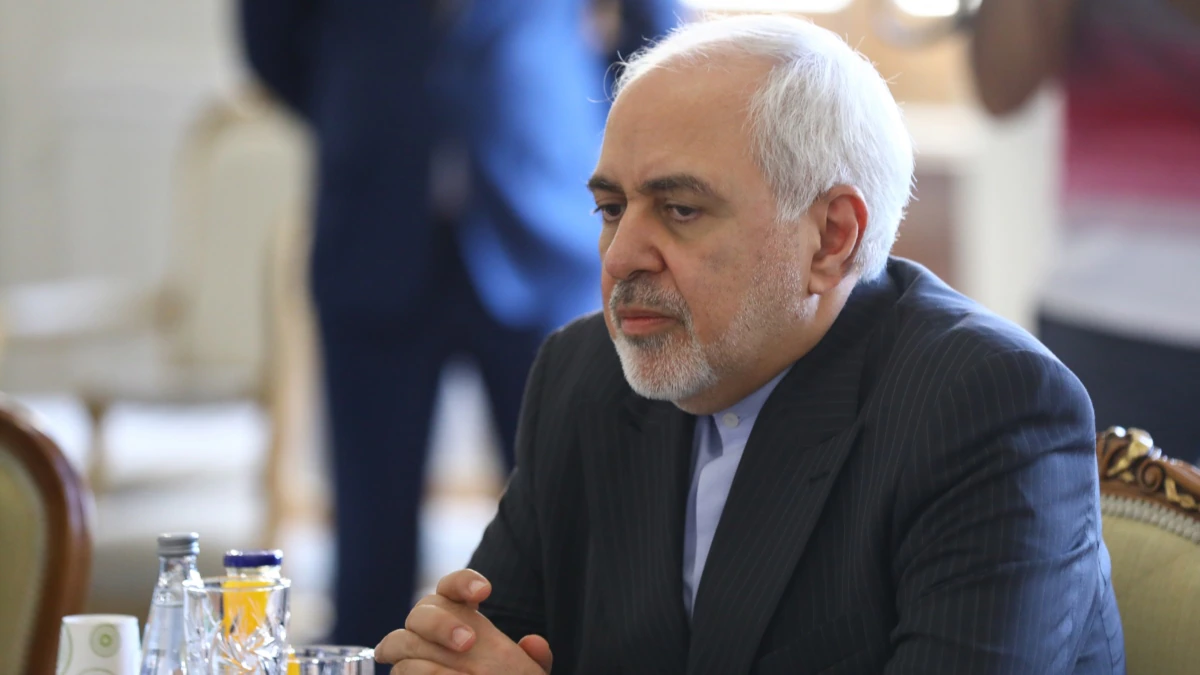
Embattled Iranian Foreign Minister Mohammad Javad Zarif has apologized for comments he made in a recording that was leaked last week in which he criticized the Islamic Revolutionary Guards Corps (IRGC) and the powerful late General Qasem Soleimani.

Zarif wrote on Instagram on May 2 that he hoped Soleimani’s family and the Iranian people would forgive him for the controversial comments.

The leaked recordings have touched off a firestorm in Iran less than two months ahead of a presidential election. On the recording, Zarif criticizes the IRGC’s involvement in diplomacy and charges that Soleimani maintained separate relations with Russia.

He also criticized his lack of influence within the country’s theocratic political system, saying that he was often left in the dark on important foreign-policy decisions.

Soleimani was killed by a U.S. drone strike near Baghdad in 2020 and, since then, has been lionized in Iran as a martyr. Prosecutors in Tehran have launched a criminal investigation into the leak, while hard-liners have accused Zarif of “betrayal” and the “defamation” of Soleimani.

The leaked audio was from an interview with Zarif that was recorded on February 24 as part of an “oral history” series, the interviewer, prominent economist Saeed Laylaz, said in an audio file that was posted online.

Zarif can be heard repeatedly saying his comments are not for publication.

After the disclosure, the Foreign Ministry said the most controversial excerpts were taken out of context from a seven-hour conversation.

Zarif has said he does not plan to participate in the June presidential election. In the past he has been often mentioned as a possible challenger to the hard-line faction.

Russia has long been one of Iran’s closest allies and has consistently supported Tehran at the United Nations. Moscow called the assassination of Soleimani a “reckless step” that threatened regional stability.

On April 28, Zarif posted on Instagram a video of himself visiting the memorial to his “longtime friend” Soleimani in Baghdad. He wrote that he favored a “smart adjustment” between the diplomatic and military spheres in Tehran.

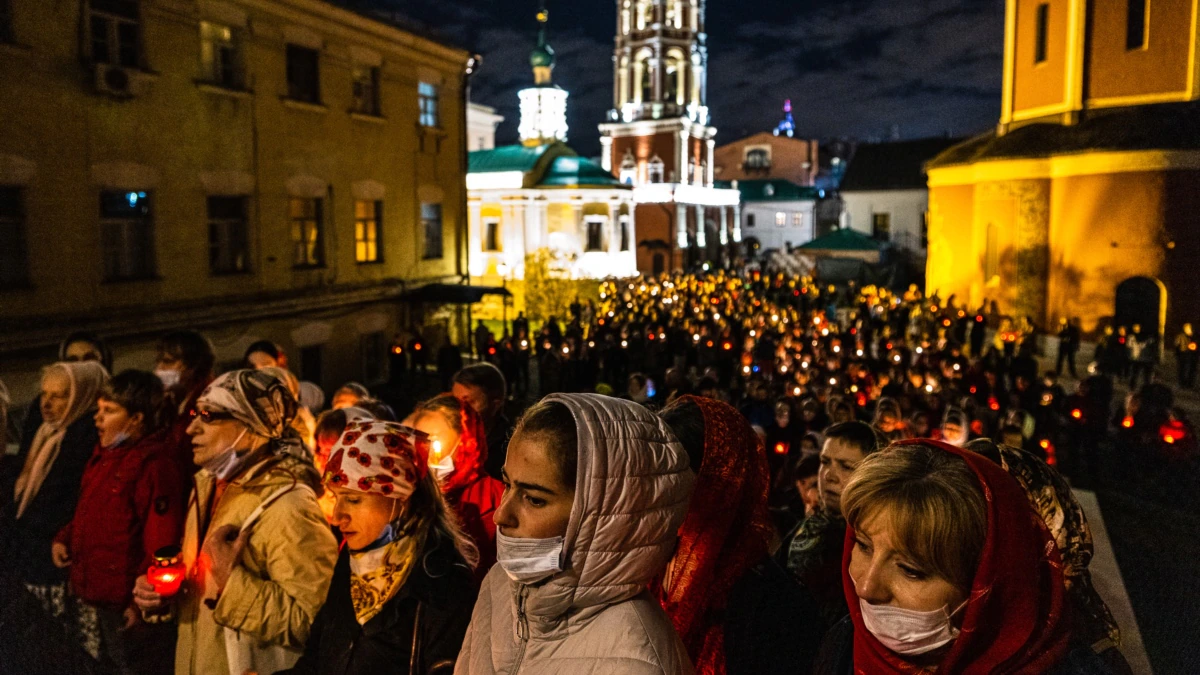
Orthodox Christians are marking Easter in largely toned-down celebrations due to coronavirus restrictions, with prayers going out that the pandemic will soon be over.

In Jerusalem, on the eve of Easter believers flocked to the Church of the Holy Sepulchre, packing the revered site where they believe Jesus was crucified and resurrected for the Holy Fire ceremony.

Entry to the church was restricted to those who were fully vaccinated.

Israel has lifted most restrictions, including mask-wearing in public, after a world-leading vaccination drive.

In normal years, Orthodox Easter draws tens of thousands of tourists and pilgrims to holy sites in Jerusalem and Bethlehem, but this year air travel from abroad is still restricted due to the pandemic.

In Russia, Patriarch Kirill of Moscow and all Russia led an Easter divine service at the Christ the Savior Cathedral, attended by President Vladimir Putin.

“This Easter is special and its special nature lies in the hope that the bane of the pandemic will pass and, leaving us with a number of important lessons, will after all abandon us forever,” Kirill told the Russia-24 TV channel.

Many countries are restricting normal Orthodox Easter celebrations, after last year much of the world lived in lockdown.

Ecumenical Patriarch Bartholomew I, the spiritual leader of the world’s Orthodox Christians based in Istanbul, has conducted various Easter celebrations over the weekend with limited attendance, as Turkey is under a strict lockdown.

In Greece, the government kept pandemic restrictions in place through the Easter holiday while preparing to restart services for tourists next week. Many church services were held outdoors and those indoors required social distancing and mask wearing.

In Lebanon, a curfew was in effect to curb the spread of coronavirus and churches were allowed to hold Easter Mass and prayers only at 30 percent capacity.

In Egypt, home to about 10 million of Coptic Christians, churches were told to limit attendance to 25 percent or less.

In the Egyptian coastal city of Alexandria, Greek Orthodox Patriarch Theodore of Alexandria and all Africa prayed for the joy of Christ’s resurrection to “drive away all the clouds of the pandemic and bring back the smile on your face, the love in your heart, the optimism in our eyes.”

In Serbia, which has a fairly high rate of 50 vaccine doses administered per 100 people, believers are expected to attend church services.

RFE/RL’s Balkan Service reported concerns that churches may continue a tradition of sharing communion from a common spoon.

Last year, 90-year-old Serbian Orthodox Church Patriarch Irinej died from COVID-19 a month after leading a service for Metropolitan Amfilohije, the head of the Serbian Orthodox Church in Montenegro, who also died from the virus.

With reporting by AP, RFE/RL’s Balkan Service, Orthodox Times, and TASS

By Talebula Kate in Suva

Fiji has reported no new case of coronavirus infection after the screening of 7560 Fijians and 1212 tests conducted by the Ministry of Health and Medical Services.

However, at this evening’s covid-19 daily press briefing, Health Secretary Dr James Fong stressed that there was no need to celebrate.

Dr Fong said it did not mean there were no further cases in Fiji – it meant that none have been detected over the past 24 hours.

“We are certain there are more cases that will develop or – worryingly – that an unconfirmed case of the virus has already developed into a highly-contagious disease,” he said.

“Our biggest fear right now is that someone, with symptoms, has not reported to a screening clinic or called 158.”

As of today, Sunday, May 2, 2021, there are still 49 active confirmed covid-19 cases in isolation, 16 of which are border quarantine cases, with 31 locally transmitted cases and two currently still under being investigated to determine the source of transmission.

Print Friendly, PDF & Email

The Green New Deal has attracted perhaps the greatest attention of any proposal for decades. It would guarantee Medicare-for-All, Housing-for-All, student loan forgiveness and propose the largest economic growth in human history to address unemployment and climate change.

But the last of these hits a stumbling block. Creation of all forms of energy contributes to the destruction of nature and human life. It is possible to increase the global quality of life at the same time we reduce the use of fossil fuels and other sources of energy.  Therefore, a “deep” GND would focus on energy reduction, otherwise known as energy conservation. Decreasing total energy use is a prerequisite for securing human existence.

Recognizing True Dangers

Fossil fuel (FF) dangers are well-known and include the destruction of Life via global heating. FF problems also include land grabs from indigenous peoples, farmers, and communities throughout the world as well as the poisoning of air from burning and destruction of terrestrial and aquatic life from spills. But those who focus on climate change tend to minimize very real danger of other types of energy production.  A first step in developing a genuine GND is to acknowledge the destructive potential of “alternative energy” (AltE).

Nuclear power (nukes). Though dangers of nuclear disasters such as Three Mile Island, Chernobyl and Fukushima are horrific, problems with the rest of its life cycle are often glossed over.  Mining, milling, and transporting radioactive material to supply nukes with fuel and “dispose” of it exposes entire communities to poisoning that results in a variety of cancers.  Though operation of nukes produces few greenhouse gases (GHGs), enormous quantities are released during production of steel, cement and other materials for building nuclear plants.  They must be located next to water (for cooling), which means their discharge of hot water is an attack on aquatic life.  Radioactive waste from nukes, kept in caskets for 30-50 years, threatens to poison humanity not for decades or centuries, but for millennia (or eternity), which makes nukes at least as dangerous as FFs.  Inclusion of nuclear power as part of a GND is not the slightest bit green.  The only way to address nuclear power is how to abolish it as rapidly as possible while causing the least harm to those who depend on it for energy and income.

Solar power requires manufacturing processes with chemicals which are highly toxic to those who work with them.  Even before production begins, many different minerals must be mined and processed, which endangers workers and communities while destroying wildlife habitat.  Additional minerals must be obtained for batteries.  Once solar systems are used, they are discarded into large toxic dumps.  Though few GHGs are created during use of solar panels, large amounts are created during their life cycle.

Wind power creates its own syndrome of nerve-wracking vibrations for those living next to “wind farms,” along with even larger issues with disposal of 160-foot blades.  Like solar farms, wind farms undermine ecosystems where they are located.  The life cycle of wind power includes toxic radioactive elements to produce circular rotation of blades.

Hydro-power from dams hurts terrestrial as well as aquatic life by altering the flow of river water.  Dams undermine communities whose culture center around water and animals.  Dams destroy farms.  They exacerbate international conflicts when rivers flow through multiple countries, threaten the lives of construction workers, and result in collapses which can kill over 100,000 people at a time.

Several problems run through multiple AltE systems:

  • Despite claims of “zero emissions,” every type of AltE requires large amounts of FFs during their life cycle;
  • Every type of AltE is deeply intertwined with attacks on civil liberties, land grabs from indigenous communities, and/or murders of Earth defenders;
  • Many have cost overruns which undermine the budgets of communities tricked into financing them.
  • Transmission lines require additional land grabs, squashing of citizen and community rights, and increased species extinctions; and,
  • Since the most available resources (such as uranium for nukes, sunny land for solar arrays, mountain tops for wind farms, rivers for dams) are used first, each level of expansion requires a greater level of resource use than the previous one, which means the harvesting of AltE is increasingly harmful as time goes by.

Taking into account the extreme problems of the life cycle of every type of energy extraction leads to the following requirements for a genuine GND: Nuclear energy must be halted as quickly and as safely as possible with employment replacement.  FF extraction should be dramatically reduced immediately (perhaps by 70-90% of 2020 levels) and be reduced 5-10% annually for the next 10 years thereafter.  Rather than being increased, extraction for other forms of energy should be reduced (perhaps 2-5% annually).

Since honesty requires recognition that every form of energy becomes more destructive with time, the critical question for a deep GND is: “How do we reduce energy use while increasing employment and the necessities of life?”

The Naming of Things

But before exploring how to increase employment while reducing production, it is necessary to clean up some greenwashing language that has become common in recent years.

Decades ago, Barry Commoner used the phrase “linguistic detoxification” to describe the way corporations come up with a word or phrase to hide the true nature of an ecological obscenity.  One of the best examples is the nuclear industry’s term “spent fuel rods” which implies that, once used, fuel rods are not radioactive, when, in fact, they are so deadly that they must be guarded for eternity.  An accurate term would be “irradiated fuel rods.”

Perhaps the classic example is the way agribusiness came up with “biosolids” for renaming animal sewage sludge containing dioxin, asbestos, lead, and DDT.  As John Stauber and Sheldon Rampton describe in Toxic Sludge Is Good for You (1995), industry persuaded the Environmental Protection Agency to reclassify hazardous animal waste to “Class A fertilizer” biosolids so they could be dumped on fields where food is grown.

Rather than preserving traditions of early environmentalists, many current proponents of AltE use the terms “clean” and “renewable” to describe energy which is neither.  AltE is not “clean” due to the many GHG emissions throughout the life cycle of all types of energy in addition to assaults on ecosystems and human health.  Though the sun, wind and river power may be eternal, products that must be mined are very much exhaustible, meaning that no form of AltE is renewable.

An honest GND would never refer to AltE as either “clean” or “renewable.”  Such a GND proposal would advocate the reduction of FFs but would not suggest a goal 0% of FFs by such-and-such a date because it is unattainable.  Every type of AltE requires FFs.  While it may be possible to produce some steel and some cement by AltE, it is impossible to produce massive quantities of energy for the entire world with AltE.  Instead, a genuine GND would explain that the only form of clean energy is less energy and specify ways to use less energy while improving the quality of life.

A genuine GND would never imply that FFs are the only source of monstrously negative effects.  Privileging AltE corporations over FF corporations is stating that environmental problems will be solved by choosing one clique of capitalists over another.  This means that (a) if FFs should be nationalized, then all mining, milling and manufacturing processes to produced materials needed for AltE should be nationalized; and, (b) if FFs should remain in the ground, then all components for operating nuclear plants, dams, solar facilities and wind farms should also remain in the ground.

A Shorter Work Week for All

The greatest contradiction in current versions of the GND is advocating environmental improvement while having the most massive increase in production the world has ever seen.  These two goals are completely irreconcilable.  A progressive GND would address this enigma via shortening the work week, which would reduce environmental damage by using less energy.

It is quite odd that versions of the GND call for Medicare-for-All, Housing-for-All, Student Loan Forgiveness-for-All; but none of them suggest a Shorter-Work-Week-for-All.  The absence of this old progressive demand could be due to the incorrect neoliberal assumption that the best way to solve unemployment is via increased production.

Increased production of goods cannot create a long-term increase in employment. (It was WW II and not Roosevelt’s New Deal that consistently increased employment.)  US production increased 300-fold from 1913 to 2013.  If employment had increased at the same pace, everyone would be working at dozens of jobs today.

Unemployment increases from recent economic disruptions like the 2008 financial crisis and Covid in 2020 were due to the inability to shift work from some areas of the economy to others.  A planned shrinking of the economy would require including the entire workforce in deciding to shift from negative to positive employment.

As the work week is reduced, every group of workers should evaluate what it does, how labor is organized, and how jobs should be redefined so that full employment is preserved.  The only part of this idea which is novel is making changes democratically – job categories continuously change, with some types of work shrinking (or disappearing entirely) and other types of work expanding or coming into existence.  Just as economic growth does not guarantee increases in employment, economic shrinking need not worsen unemployment if the work week is shortened.

However, a shorter work week will not accomplish environmental goals if it is accompanied by an “intensification of labor” (such as requiring workers at Amazon to handle more packages per hour or increasing class size for teachers).  This means that a genuine GND requires workers’ forming strong unions which have a central role in determining what is produced as well as working conditions.

Producing According to Need Instead of According to Profit

If a core part of a GND becomes a shorter work week (without speed-up), the question naturally arises: “Will lowering the amount of production result in people going without basic necessities of life?”  It is important to understand that production for profit causes the manufacture of goods that have no part of improving our lives.

Current versions of the GND are based on the neoliberal assumption that the best way to provide for necessities of life is through increased payments for purchases (ie, market economics).  A progressive GND would advocate that the best way to provide the necessities of life is by guaranteeing them as human rights.  This is often referred so as replacing individual wages with “social wages.”  For example, the neoliberal approach to healthcare is offering medical insurance while a progressive approach is to offer medical care directly (without giving a cut to insurance companies). Likewise, a neoliberal GND would offer cash for food, housing, transportation, education and other necessities while a progressive GND would provide them directly to people.  Green economics must be based on making dollar amounts less important by replacing individual wages with social wages.

Current versions of the GND seek to provide necessities by increasing the quantity of products rather than focusing on creating things that are useful, reliable and durable. A massive increase in production is an unnecessary attack on ecosystems when there is already much more production than required to provide essentials for everyone on the planet.  Needs are not being met because of production which …

  • … is negative, including war materials, police forces and production which destroys farmland and habitat (all of which should be reduced immediately);
  • … is wasteful, which includes both (a) playthings of the richest 1%, and (b) things which many of us are forced to buy for survival and getting to work, the most notable being cars;
  • … requires unnecessary processing and transportation, the most notable example being food which is processed to lose nutritional value, packaged to absurd levels, and shipped over 1000 miles before being consumed; and,
  • … involves planned obsolescence, including design to fall apart or go out of style.

One important aspect of reducing production is often ignored.  Each product manufactured must have a repairability index.  At a minimum, criteria for the index should include (a) availability of technical documents to aid in repair, (b) ease of disassembly, (c) availability of spare parts, (d) price of spare parts, and (e) repair issues specific to the class of products. The index should become a basis for strengthening production requirements each year.  A durablility index should similarly be developed and strengthened annually.  Since those who do the labor of manufacturing products are more likely than owners or stockholders to attain knowledge of how to make commodities that are more reliable and durable, they must have the right to make their knowledge public without repercussions from management.

There will always be differences of opinion regarding what is needed versus what is merely desired.  A progressive GND should state how those decisions would be made.  A major cause of unnecessary production is that decisions concerning what to manufacture and standards for creating them are made by investors and corporate bosses rather than community residents and workers manufacturing them.  A genuine GND would confront problems regarding what is produced by involving all citizens in economic decisions, and not merely the richest.

Reparations!

Perhaps the issue which is least likely to be linked to the GND is reparations to poor communities in Africa, Latin America, and Asia who have been victims of Western imperialism for 500 years.  This connection forces us to ask: “Since most minerals necessary for AltE lie in poor countries, will rich countries continue to plunder their resources, exterminate what remains of indigenous cultures, force inhabitants to work for a pittance, jail and kill those who resist, destroy farmland, and leave the country a toxic wasteland for generations to come?”

For example, plans to massively expand electric vehicles (EVs) undermine the vastly more sustainable approach of urban redesign for walkable/cyclable communities.  Plans would result in manufacturing EVs for the rich world while poor and working class communities would suffer from the extraction of lithium, cobalt and dozens of other materials required for these cars.

Africa may be the most mineral-rich continent.  In addition to cobalt from the Democratic Republic of the Congo for EVs, Mali is the source of 75% of the uranium for French nukes, Zambia is mined for copper for AltE and hundreds of other minerals are taken from dozens of African countries.

If there are to be agreements involving corporations seeking minerals for AltE, who will those agreements be with?  Will the agreements be between the ultra-rich owners of the Western empire and its puppet governments?  Or, will extraction agreements be with villages and communities which will be most affected by removal of minerals for the production of energy?

Discussions of relationships between rich and poor countries make much of having “free, prior and informed consent” prior to an extraction project.  Such an agreement is far from reality because (a) corporate and governmental bodies are so mired in corruption that they contaminate bodies which define and judge the meaning of “free, prior and informed,” (b) no prediction of the effects of extraction can be “informed” since it is impossible to know what the interaction of the multitude of physical, chemical, biological and ecological factors will be prior to extraction taking place, and (c) affected communities are typically bullied into accepting extraction because they fear that families will die from starvation, lack of medical care or unemployment if they do not do so.  Thus, the following are essential components of a socially just GND:

  • Reparations which are sufficient to eliminate poverty must be paid prior to signing extraction agreements; and,
  • Every community must have the right to terminate an extraction agreement at any stage of the project.

This is where the other meaning of “deep” comes in.  When people hear “deep green,” they often think of how industrial activity deeply affects ecosystems.  “Deep” can also refer to having a deep respect for poor communities whose lives are most affected by extraction.  Respect is not deep if it is unwilling to accept an answer of “No” to a request for exorbitant, profit-gouging extraction.  Peoples across the world may decide that since they have received so little for so long, it may be time for rich countries to share the wealth they have stolen and dig up new wealth much, much more slowly.

A New Green Culture

Just to make sure that it is clear and not forgotten, the fundamental question regarding extraction of material needed for AltE is: “Will rich countries continue to plunder minerals underneath or adjacent to poor communities at a rate that corporations decide?  Will they expect poor communities to be satisfied with a vague promise that, for the very first time, great things will happen after the plundering?  Or should reparations be fully paid for past and current plundering, with poor communities deciding how much extraction they will allow and at what speed?”

Essential for building a New Green World is the creation of a New Green Culture which asks all of the billions of people on the planet to share their ideas for obtaining the necessities of life while using less energy.  Such a culture would aim for one idea to spark to many ideas, all of which strive more toward living together than on inventing energy-guzzling gadgets.

In order to build a New Green Culture which puts the sharing of wealth above personal greed, several things that must happen:

  1. To bring billions of people out of economic misery, every country should establish a maximum income which is a multiple of the minimum income, with that multiple being voted on (no less than every five years) by all living in the country.
  2. Every country should establish a maximum wealth which is a multiple of the minimum wealth, with that multiple being voted on (no less than every five years) by all living in the country.
  3. Global reparations, including sharing wealth and technological know-how between rich and poor countries, is essential for overcoming past and ongoing effects of imperialism. Establishing maximum incomes and maximum wealth possession within countries must be quickly followed by establishing such maximum levels between countries.

A core problem of current versions of the GND is that they propose to solve employment, social justice and energy problems with increased production, which is not necessary to solve any of these.  Attempts to solve problems by increasing wealth feeds into the corporate culture of greed and become a barrier to creation of a New Green Culture.  Increasing production beyond what is necessary increases environmental problems that threaten the Earth.  It tells those who are already rich that they should grab more, more and more.  It tells those who are not rich that happiness depends upon the possession of objects.  The survival of Humanity depends on the building of a green culture that prizes sharing above all else.

(A webinar at 7 pm CT on May 5, 2021 on “Envisioning a Greener New Deal” will explore concerns with alternative energy, the need for global reparations and ask how to create a better world while using much less energy.  Email the address of the author below for details.)

May Day is celebrated in more than 90 countries around the world as International Workers’ Day, with large-scale marches and protests, in honor of the struggles of the working class. But not in the country where it began, the United States of Amnesia.

The history of May Day has its origins in the summer of 1884 when the Federation of Organized Trades and Labor Unions decided to launch a nationwide movement to secure an eight-hour workday and called for May 1, 1886 to be the beginning of this campaign.  

On May 1, 1886, hundreds of thousands of American workers staged a nationwide march demanding the creation of the eight-hour workday. Chicago was the epicenter of the protests as they were scheduled to go on for days.

Eventually, the protests turned violent when the police attacked picketing workers on May 3, killing one person and injuring several, at the McCormick Harvesting Machine Company, an event which led the next day to a bloodier confrontation between police and demonstrators in Haymarket Square.

What happened at Haymarket Square is an event of immense historical significance in its own right.

More than 170 policemen carrying rifles attacked those that had gathered at Haymarket Square to protest police brutality, even though the city’s mayor, Carter Harrison, had given permission for the meeting.

Ironically enough, most of the people had already left the protest meeting when the police attacked in an attempt to disperse the crowd. But during the confrontation, someone threw a dynamite bomb. The police panicked and opened fire in return. After the explosion and the subsequent gun fire, four workers and seven policemen were dead and dozens injured.     

The next day, martial law was declared in Chicago and other parts of the country. Immediately thereafter, scores of labor leaders were rounded up, and eight men, most of them German-born, were eventually found guilty of murder and sentenced to death in a highly controversial trial in which no solid evidence was presented linking them to the bombing of May 4 at Haymarket Square.   

The Haymarket Affair also led to an explosion in xenophobia and started the first “Red Scare” in the United States, courtesy of big business and the government.

Additionally, it led to a much more reformist labor movement with the birth to the American Federation of Labor whose first and longest-serving president, Samuel Gompers, was a core capitalist and had no interest in uniting the working class.

In the years following the dramatic events of 1886, the labor movement in the US would experience a series of ups and downs, all while American capitalism continued to operate on the basis of a brutal economy, down to this very day.

The “Red Scare” resurfaced in the late 1910s, with industrialists branding union members as “anti-American radicals,” all while anti-union violence became a widespread practice until well into the mid-20th century.  

In celebrating May Day in 2021, we must keep alive the memory of the early struggles of the working-class movement for a better future. We must draw strength and inspiration from the accomplishments of the labor movement through time in order to challenge more effectively the brutality of today’s capitalist socioeconomic order.

Indeed, the struggle against neoliberal capitalism requires a well-organized working-class movement that hasn’t succumbed to the form of historical amnesia imposed by the powers that be. For as Milan Kundera once put it, “the struggle of man against power is the struggle of memory against forgetting.”

As India is being devastated by COVID-19 cases that have now passed a daily rate of 400,000, affluent and callous Australia has taken the decision to suspend all flights coming into the country till mid-month.  The decision was reached by the Morrison government with the blessing of the State Premiers and the Labor opposition.

Not happy with banning flights from India, the Morrison government promises to be savage in punishing returnees who find ways to circumvent the ban (for instance, by travelling via a third country).  Citizens who breach the travel ban can face up to five years’ imprisonment and fines up to AU$66,000.  “We have taken drastic action to keep Australians safe,” explained the Treasurer Josh Frydenberg.  The situation in India was “serious”; the decision had only been reached after considering the medical advice.

According to a statement from Health Minister Greg Hunt, it was “critical the integrity of the Australian public health and quarantine systems is protected and the number of COVID-19 cases in quarantine is reduced to a manageable level.”

The decision fails to carry any weight.  It did not take long for more alert medical practitioners to wonder why the approach to India was being so selectively severe.  Health commentator and GP Vyom Sharma thought the decision “incredibly disproportionate to the threat that it posed”.  Sharma is certainly correct on this score in terms of international law, which requires the least restrictive or least intrusive way of protecting citizens.

Then there was the issue about the previous policies Canberra had adopted to countries suffering from galloping COVID-19 figures.  A baffled Sharma wondered, “Why is it that India has copped this ban and no people who have come from America?” Former race discrimination commissioner Tim Soutphommasane seconds the suspicions.  “We didn’t see differential treatment being extended to countries such as the United States, the UK, and any other European country even though the rates of infection were very high and the danger of its arrivals from those countries was very high.”

The Australian Human Rights Commission has also asked the federal government to justify its actions. “The government must show that these measures are not discriminatory and the only suitable way of dealing with the threat to public health.”

In the face of such behaviour, aggrieved citizens are left with few legal measures.  Australia, among liberal democratic states, is idiosyncratic in refusing to adopt a charter of rights. Down Under, parliamentarians are supposedly wise and keen to uphold human rights till they think otherwise.  (Human rights, the argument goes, would become the fodder of lawyers and judges, interfering with the absolute will of Parliament and the electors.)  The Australian Constitution is hopelessly silent on the issue of citizenship.  Left at the mercy of legislative regulation, Parliament and the executive can be disdainful towards their citizens without consequences.

One avenue remains the Geneva-based UN Human Rights Committee.  On April 15, the UNHRC ruled on the case of two petitioners of FreeAndOpenAustralia.org (formerly StrandedAussies.org) that the Morrison government had to “facilitate and ensure their prompt return to Australia.”

Represented by the notable sage of international law Geoffrey Robertson QC, the petitioners argued that Australia was in breach of Articles 12(4) and 2(3) of the International Covenant on Civil and Political Rights.  The first article provides that no one shall be arbitrarily deprived of the right to enter his own country; the second provides for “effective” remedies to be granted to those whose rights and freedoms have been breached under the ICCPR.  The petitioners also freely admitted that they had no issue with quarantining for 14 days on returning to Australia.

In the words of Free and Open Australia spokesperson Deb Tellis, the Commonwealth should “use its power to expand quarantine facilities, and end travel caps that are being dictated by the states.  There are thousands of our fellow citizens suffering loss of their relatives and loss of their jobs.”

The government has preferred a meaner, penny pinching approach in coping with quarantine, reducing flights when needed rather than expanding facilities to accommodate a greater number of infected arrivals.  The hotel quarantine system continues to receive effusive praise from the Australian Prime Minister Scott Morrison as being 99.99 percent effective.  But it is impossible for him, and his ministers, to conceal the fact that they do not trust, and are unwilling, to use other facilities and expand existing ones.

Since last November, there have been 16 COVID-19 leaks across the cities of Melbourne, Sydney, Brisbane, Adelaide and Perth from quarantine hotels.  At this writing, another quarantine leak is being reported in Western Australia, involving the now customarily infected hotel security guard and the inevitable seepage into the community.  The problem of airborne transmission continues to plague, as does the uneven provision of Personal Protective Equipment.  No national standard of quarantine has been formulated through the country, with each state adopting its own approach.  Audits of the ventilation systems in many such hotels remain sketchy.

Western Australian Premier Mark McGowan, who recently imposed a lockdown of the Perth and Peel areas and may well do the same thing over the next few days, suggested that the Commonwealth be generous with some of its facilities.  Why not use the RAAF Curtin Air Base, or the immigration detention centres of Yongah Hill and Christmas Island?  “It’s kind of staring us in the face and there are things that could assist, it’s just that the Commonwealth doesn’t want to do it.”

The evidence so far is that facilities such as Howard Springs in the Northern Territory tend to work.  It features single-storey cabins, segregated air conditioning systems, outdoor veranda space and, in the vicinity, a fully functioning hospital.  No leaks have been recorded.  And location is everything: distant from densely populated areas.  This government, however, is miserly on the issue of quarantine, an obligation it has transferred without constitutional justification to State premiers who fear both the virus and its electoral consequences.

COMMENT: By Matt McCarten

It’s time for progressive activists to step up. The working class needs you.

On May Day – International Workers Day – we have launched a new union: UTU for Workers Union. Our mission is to build a working class, grassroots, campaigning movement to stop exploitation and end workplace abuse in Aotearoa-New Zealand.

The international trade union movement is in a fight for relevancy to the majority of the working class. Decades of relentless attacks on the workers’ movement have been devastating.

In New Zealand, out of more than 1.5 million private sector workers, less than one in fourteen (7 pecent) are members of a union. If we exclude the large private companies, unionisation in the private sector is effectively non-existent.

More than half of the workers employed in the private sector do not even have the option to join a trade union nor be covered by a collective agreement.

Despite the good work the present unions do for their own members, the rest of the working class has lost ground in terms of income and protections.

Non-unionised workers have no power to improve their position. They are at the mercy of their boss.

As a result, when workers in non-unionised workplaces have an employment dispute, they must seek support from an expensive lawyer, lay advocates, or a friend. Most exploited private sector workers receive no access to justice. Unscrupulous bosses know this.

The increase in vulnerable migrants and widespread casualisation, along with the growth of labour hire companies and dependent sole contractors, has seen the number of precariat workers in New Zealand explode.

This has led to a culture of fear and isolation. As a result, workers’ power, incomes, job security and self-confidence have declined.

The situation is similar in most Western countries, and if we don’t shake it up, the international union movement in the private sector will descend into irrelevancy.

It is unacceptable that we morph into a network of staff associations for relatively better-off workers. That would be a betrayal of our history and all the working-class fighters who came before us.

A new activist movement
The old ways no longer work for the overwhelming number of private sector workers. The only question any serious worker rights activist must consider, is not if we protect and organise all workers, but only: how?

It is clear we need new forms of organisation.

I have been part of the One Union project group for the last three years. We have been actively trialing various models in our attempt to find a sustainable and effective way to meet the new challenge.

We believe we now have the solution. Today we announce the formation of the UTU for Workers Union.

The mission of UTU for Workers Union
Our purpose is to build a mass movement to stop exploitation – migrant and non-migrant – and end unchecked workplace abuse that non-unionised workers routinely suffer.

The use of UTU is deliberate. We summarise it in Māori terms – justice. When a victim is exploited or abused, their mana has been diminished and it must be restored. That is UTU.

As the first step, we have to actually help individual workers with their immediate problem. For the last year we have been providing representation to any worker from non-unionised workplaces who needs help.

The jungle of predator employment advocates and lawyers scamming vulnerable workers is sickening. They get screwed by the boss, and then again by their advocates, some of whom do sweetheart deals with bosses.

The advocate gets their fee, but the worker is forced to accept a few crumbs. Simply outrageous.

The good news is that when we have backed up our representation with a direct campaign, through picketing or media exposure, the exploitative boss has realised the power of the worker feeling they have got justice.

More careful in future
The boss knows to be more careful in the future. We have had some success in having bosses agree to ongoing compliance monitoring.

We have found that workers want to join a union. In almost all occasions, there is no union. If there is, they don’t use their resources to help non-members.

That might make sense if you look at unions as business units, but completely wrong if you see them as a justice movement for workers. There are only two categories of workers – those in unions, and those we must get into unions.

Up until now we have not asked workers to join us. From today we will accept workers as members and supporters.

Our membership is open to everyone, whether they are employees, or dependent contractors. We will help any worker who is in distress.

What must unite us is not what work we do, or who our boss is. Instead, we have to join together as a working class.

The old and true clarion call, “an injury to one, is an injury to all”, is as relevant today as it ever was. All unionists must fight for justice for all workers.

If any applicant is from a unionised site or sector covered by another union, then of course they must join that union. It must be noted that we are solely focused on the vast majority of non-unionised private sector workers who are exploited and abused in the non-unionised world.

By having an inclusive and broad strategy, we believe many workers and allies will step up to build a powerful workers movement dedicated to stopping exploitation and workplace abuse.

How do we rebuild working class confidence?
We can do this in three phases.

Help victims first
If we claim to be pro-worker, we have to earn the right. Our first priority is to resolve individual workers’ immediate problems. This is the most important thing to anyone. Support any victim, and they become a union ally – and in time, an activist.

We currently force exploiters to pay thousands of dollars of unpaid wages and backpay legal underpayments. We have prevented unfair sackings, stopped harassment and bullying, and won compensation and fair outcomes for hundreds of workers.

In the last year alone, we have won hundreds of thousands of dollars for victims. This is only the tip of the iceberg. We need more people to help. Until they do, exploitation will continue.

Our case work is now carried out by the One Union Trust, which operates in partnership with the union. The trust has a dedicated legal team of three lawyers led by a former senior trade union official.

Confront criminal bosses directly
We have a dedicated UTU Squad. We hold UTU Vigils for Justice actions directly outside the businesses and homes of exploiters and abusers. Every community needs a local UTU Squad.

We name criminal bosses and expose injustices on our union website, utu.org.nz, and our Facebook page, @UTUForWorkersUnion.

We host a weekly radio programme on 104.6 Planet FM, Wednesdays at 12.40pm. We tell the truth about these exploiters and abusers.

We organise online Action Station petitions to mobilise support for victims, and let communities know about their local exploiters.

Build solidarity
After a boss has been found to breach minimum employment standards, we monitor compliance and enforce legal minimum codes. Thousands of workers in small workplaces don’t get their minimum entitlements. We can fix that through constant vigilance.

We also monitor visa compliance. 350,000 workers are reliant on a boss for their visas.
Workers will feel safer by regular check ins. Over time, we will patiently build a more collective confidence in their workplace.

Migrant exploitation
The most exploited and abused group of workers are migrant workers on temporary visas. Any project to eliminate worker exploitation in New Zealand must include campaigns that focus on migrant workers. We are judged as unionists on our commitment to the most vulnerable members of the working class.

The Migrant Workers Association partners with us and leads this work. The One Union Trust provides practical case representation for victims. MWA and UTU spearheads campaigns that rally the community against specific cases of injustice. Their fight is our fight.

A call to action
Progressive activists have to step up now. We need action. Go to this page for 8 practical steps you can do right now.

Matthew “Matt” McCarten is a New Zealand political organiser and trade unionist, of Ngāpuhi descent. He has been involved with several leftist or centre-left political parties, most prominently as the leader of the Alliance.

.pf-button.pf-button-excerpt { display: none; }

A Russian LGBT activist and artist on May 1 announced a hunger strike to protest the proceedings of her closed-door trial on pornography charges.

Yulia Tsvetkova’s trial began on April 12 after a nearly 1 ½ year investigation, during which time she has been fined for spreading LGBT “propaganda” and put under house arrest in the city of Komsomolsk-on-Amur, in Russia’s Far East region.

Tsvetkova, 27, is charged with producing and distributing pornographic material for administering a page on social media called The Vagina Monologues showing abstract art of female genitalia.

The artist, an activist who draws women’s bodies, is known for her advocacy of LGBT issues.

Her trial, which has been repeatedly drawn out, is ostensibly being held behind closed doors because prosecutors need to show evidence in the form of artistic vagina images and drawings of women’s bodies.

In a Facebook post declaring a hunger strike, Tsvetkova wrote that the state’s “cowardly” handing of her case and ruining of her life amounted to “torture.”

She said the hunger strike would continue until the state could “be a man” and open the trial to the public and allow her to defend herself.

According to Amnesty International, the case against Tsvetkova amounts to political repression and “Kafkaesque absurdity.”

“A woman has been criminally charged with ‘producing pornography’ simply for drawing and publishing images of the female body and freely expressing her views through art,” Natalia Zviagina, Amnesty International’s Moscow Office Director, said ahead of her trial this month. “During this ordeal, Yulia has spent time under house arrest and twice been subjected to extortionate fines under the so-called ‘gay propaganda’ law.”

With reporting by RFE/RL’s Russian Service

By Thierry Lepani in Port Moresby

Only seven governors out of Papua New Guinea’s 21 provinces and Bougainville attended a meeting in the capital Port Moresby to discuss issues surrounding the covid-19 pandemic crisis and the National General Elections due next year.

However, while Prime Minister James Marape confirmed seven had attended, only four were counted at the event. They were NCD Governor Powes Parkop, Enga Governor Sir Peter Ipatas, Chimbu Governor Michael Dua and Gulf Governor Chris Haiveta.

The meeting on Thursday was held with Health Minister Jelta Wong and Secretary Dr Osbourne Liko to discuss the covid-19 crisis with the vaccine roll out also on the agenda.

At least 10,997 cases have been recorded in Papua New Guinea with 107 deaths and the nation’s health system has been severely stretched. Less than 1 percent of the population of almost 9 million have been vaccinated.

Issues have been raised about the lack of cohesion over covid policy between the national government and provinces.

Discussions were also held with Electoral Commissioner Simon Sinai about plans for next year, and how the provinces will prepare for the ballot.

Poor turnout
But, the poor turnout of governors as they face various hardships back in their provinces raised concerns about how aligned the government’s strategy will be implemented.

The Post-Courier spoke to the West New Britain Governor Sasindran Muthuvel who said: “I was aware of the meeting but needed to travel back home for launching of several projects.”

He added that he needed to discuss the vaccination roll out with provincial officials as they had received doses just last week.

West Sepik Governor Tony Wouwou told the Post-Courier that he was not even informed that such a meeting was taking place.

Marape said moving forward the provinces would be empowered to “tailor make” their solutions, as the government will not micromanage.

He urged all provinces to provide their own response plan to the government as a uniformed approach is not possible given the unique sets of challenges facing each province.

Thierry Lepani is a PNG Post-Courier reporter.

Print Friendly, PDF & Email